
Saudi Pact Puts Pakistan's Nuclear Umbrella Into Middle East Security Picture
- Date & Time:
- |
- Views: 73
- |
- From: India News Bull
Saudi Pact Integrates Pakistan's Nuclear Capability Into Middle East Security Framework
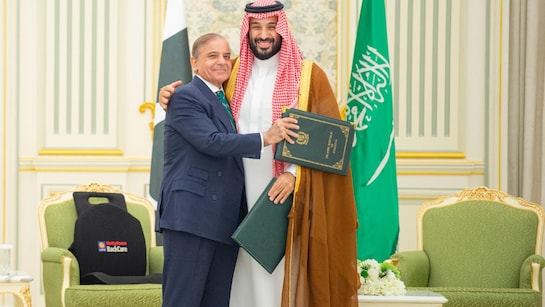
Riyadh signals potential access to a de facto nuclear deterrent under the newly signed agreement
Islamabad/Dubai:
As Arab nations increasingly perceive heightened threats from Israel, this week's Saudi-Pakistan defense agreement introduces Pakistan—and potentially its nuclear capabilities—into the regional security equation.
Analysts suggest the "Strategic Mutual Defense Agreement" signed between Pakistan and Saudi Arabia on Wednesday effectively combines Riyadh's financial resources with Pakistan's substantial nuclear-armed military forces.
While specific details remain limited and Pakistan maintains that its nuclear arsenal is exclusively targeted at India, Riyadh has implied that the agreement provides it with an effective nuclear shield.
Security experts note that Israel, widely considered the Middle East's only nuclear power, will be monitoring developments closely.
Pakistani Defense Minister Khawaja Muhammad Asif clarified to Reuters that nuclear weapons were "not on the radar" within the agreement's scope. He added that the pact could potentially extend to other Gulf nations.
"This arrangement is not intended for aggressive purposes," Asif stated. "However, should either party face threats, the agreement would naturally become operational."
Riyadh may interpret the nuclear implications differently.
Gulf Arab states have identified Israel as a direct threat following its unprecedented strikes against Qatar recently. Saudi Arabia has also declared that it would pursue nuclear capabilities should Iran acquire such weapons.
When questioned whether Pakistan would now provide Saudi Arabia with nuclear protection, a senior Saudi official told Reuters: "This comprehensive defensive agreement encompasses all military capabilities."
Experts indicate the agreement also reflects diminishing confidence in American security guarantees to the region.
"From Saudi Arabia's perspective, this agreement addresses strategic and conventional deterrence shortfalls against nuclear-armed Israel," explained Hasan Alhasan, senior fellow for Middle East Policy at London's International Institute for Strategic Studies.
Saudi Arabia's official statement indicated the agreement "aims to enhance defense cooperation between both nations and strengthen joint deterrence." The Saudi government media office has not responded to inquiries regarding Pakistan's nuclear arsenal being included in the agreement.
Washington and Israeli foreign policy officials have not immediately commented. The pact could potentially raise concerns in both India and Iran.
Pakistan's Nuclear Arsenal
Pakistan, the only Muslim nation with nuclear weapons, faces economic challenges but maintains a formidable military exceeding 600,000 personnel. Pakistan has engaged in three major wars with India, alongside numerous skirmishes, including significant fighting in May that represented their most intense conflict in decades.
Pakistan's nuclear capacity is estimated between 100-120 nuclear warheads.
Wednesday's announcement made no reference to nuclear weapons or financial arrangements with Pakistan. "The agreement stipulates that aggression against either country shall be considered aggression against both," Pakistan declared.
Pakistan's Prime Minister Shehbaz Sharif expressed gratitude to Saudi Crown Prince Mohammed bin Salman for "his keen interest in expanding Saudi investments, trade and business ties" in a Thursday statement.
India and Pakistan developed nuclear capabilities in the late 1990s, with Pakistan creating missiles capable of striking deep into Indian territory. Theoretically, if redirected, Pakistan's longest-range missiles could reach Israel.
Adil Sultan, former military officer who worked with Pakistan's Strategic Plans Division overseeing nuclear assets, confirmed their missiles can target all of India's extensive territory.
"Israel has always been uncomfortable with Pakistan's nuclear arsenal," noted Sultan, currently dean of the Faculty of Aerospace and Strategic Studies at Islamabad's Air University. "But this capability is modest and India-focused."
Last year, a senior White House official suggested Pakistan was developing extended-range ballistic missile capabilities potentially allowing strikes beyond South Asia. Islamabad rejected these claims.
Abdulaziz Sager, chairman of the Saudi-based Gulf Research Center, cautioned against premature conclusions regarding nuclear components.
"Recent events have highlighted the limitations of depending solely on external protection, particularly from the United States," Sager observed.
U.S. President Donald Trump has expressed interest in expanding the Abraham Accords to include Saudi Arabia during his second term. However, Riyadh has clearly stated it won't establish diplomatic relations with Israel until the Gaza conflict ends and Palestinian statehood advances.
Pakistan's Middle East Strategic Expansion
While Pakistan has historically maintained a small military presence in Saudi Arabia, this week's agreement indicates significantly greater involvement.
"For Pakistan, projecting power into the Middle East represents a major development, though it involves engagement in a volatile region," stated Maleeha Lodhi, Pakistan's former ambassador to the United States.
Mushahid Hussain, former chairman of Pakistan's Senate defense committee, noted that Pakistan has maintained pan-Islamic perspectives since its founding.
"Pakistan provides military capabilities while receiving economic strengthening in return," Hussain explained. "Pakistan represents a new strategic option for Gulf nations."
Pakistan struggles to match India's defense budget, which is approximately seven times larger, meaning potential Saudi funding could help balance this disparity. Saudi Arabia has provided financial assistance to Islamabad for decades, most recently through a $3 billion loan.
India announced Thursday it would "study the implications of this development for our national security as well as for regional and global stability".