
Taliban Bans Books Written By Women In Afghan Universities, 18 Courses Dropped
- Date & Time:
- |
- Views: 94
- |
- From: India News Bull
Taliban Prohibits Female-Authored Books in Afghan Universities, Eliminates 18 Academic Programs
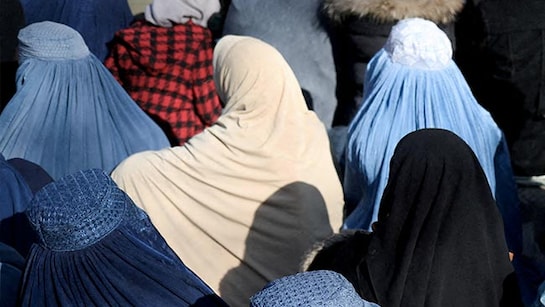
The prohibition is part of numerous restrictions implemented by the Taliban regime.
The Taliban administration has imposed a ban on books written by women as part of an extensive overhaul of Afghanistan's higher education curriculum. Additionally, eighteen university courses, including subjects focused on human rights, sexual harassment, and women's studies, have been eliminated.
According to documentation obtained by Independent Persian and verified by BBC Afghan, 679 textbooks have been outlawed, including 140 authored by women and 310 by Iranian authors or publishers.
The prohibited works include titles such as Safety in the Chemical Laboratory, Globalisation: A Critical Introduction, Comparative Human Rights, along with several fundamental texts in sociology, law, and journalism.
In a letter signed by Deputy Minister Ziaur Rahman Aryubi, the Taliban's Ministry of Higher Education directed universities to immediately cease using these textbooks and substitute them with materials considered compliant with Islamic law.
The ministry stated that the books were evaluated for "ideological, cultural, religious, and scientific" content, and were determined to conflict with Sharia principles and the policies of the Islamic Emirate.
In addition to the book ban, universities were instructed to eliminate 18 courses, including Gender and Development, Women's Sociology, Human Rights, Afghan Constitutional Law, and Globalisation and Development. A further 201 courses have been identified as "problematic" and are currently under review.
"Their removal creates a substantial void in higher education," a professor at Kabul University informed the BBC.
This ban is part of a series of restrictions enforced by the Taliban since regaining power in 2021. Women and girls have faced particularly severe limitations, including prohibitions on education beyond sixth grade and the closure of midwifery courses in late 2024. Courses specifically about women, such as The Role of Women in Communication, have also been targeted.
The Taliban has previously defended their actions, claiming they respect women's rights within the framework of Afghan culture and Islamic law.
Earlier this year, the Taliban's Ministry of Information and Culture also confiscated hundreds of books from libraries and bookstores in major cities, including Kabul and Herat.
Since returning to power, the Taliban has dismissed hundreds of professors, particularly from law, political science, economics, psychology, journalism, and fine arts faculties. Professors are now required to attend weekly Sharia sessions, and dozens of clerics have been appointed to teach Islamic principles across universities.