
Nepal's Long Road to Justice: War Victims Face Renewed Hope Amid Political Transformation
- Date & Time:
- |
- Views: 67
- |
- From: India News Bull
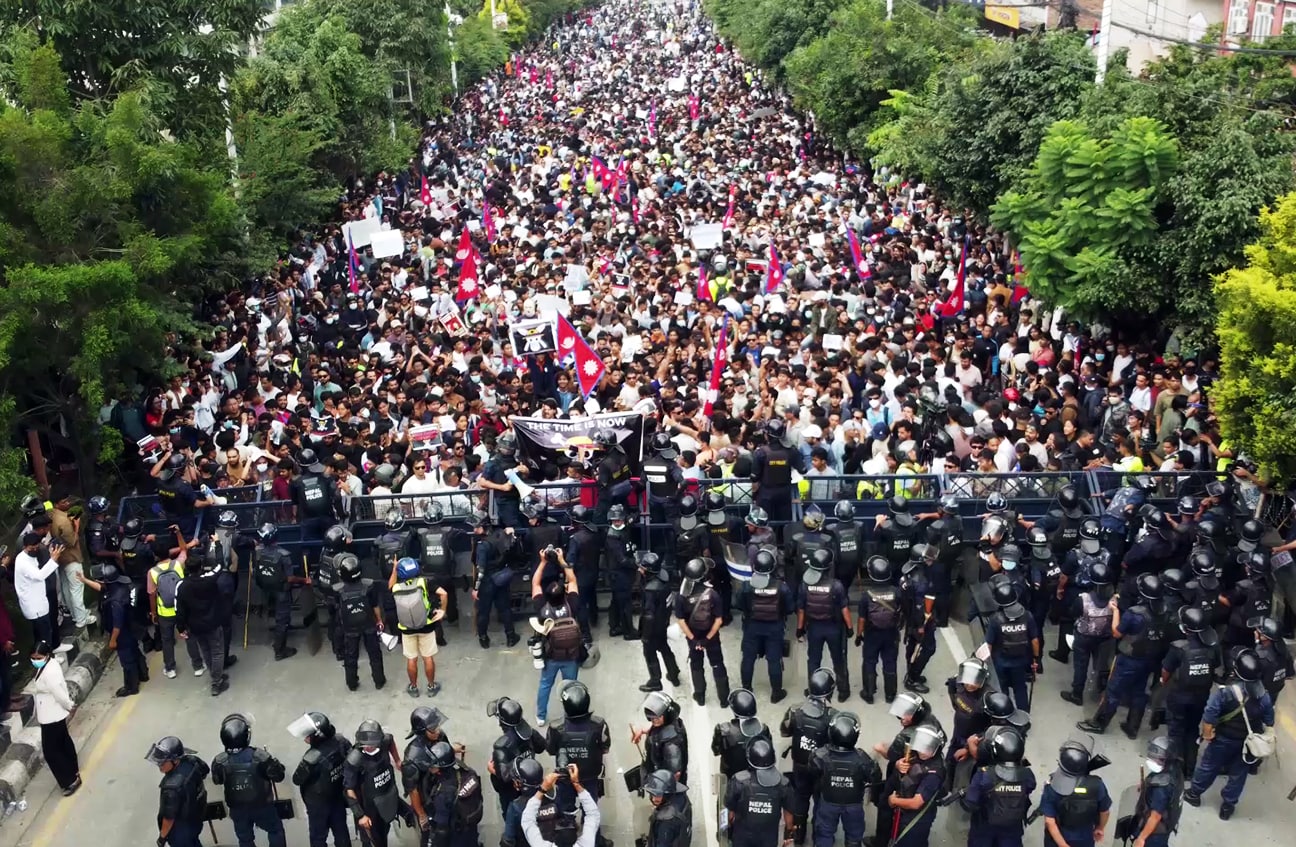
Nepal currently faces a new wave of political turbulence amidst lingering wounds from its past conflicts.
When families of those who perished in Nepal's recent September protests demanded accountability, Sunamati Chaudhari experienced a haunting sense of déjà vu.
Her husband, who taught English, was apprehended by security forces 22 years ago during the height of Nepal's decade-long civil war, never to return home.
For 62-year-old Chaudhari, the search for truth regarding her husband's disappearance has been relentless.
"We exhausted every possibility searching for my husband. We approached the courts, sought assistance from numerous organizations, and even traveled to Geneva," she explained to AFP, referencing her appeals to the United Nations. "But our efforts yielded no results."
Chaudhari represents thousands of families still awaiting resolution since the 2006 peace agreement that ended a conflict claiming over 16,000 lives, with 1,400 individuals still missing.
Both Maoist insurgents and government forces perpetrated human rights violations during the conflict.
"I would see him in my dreams every night," Chaudhari shared.
The path to justice has moved at an excruciatingly slow pace in this Himalayan nation.
Nepal's authorities have faced persistent criticism for inadequately investigating wartime atrocities.
Two transitional justice commissions established in 2015 have yet to resolve a single case, despite receiving more than 65,000 complaints concerning rape, murder, and forced disappearances.
Nepal now confronts another round of political instability.
Youth-driven demonstrations against social media restrictions, deteriorating economic conditions, and governmental corruption erupted nationwide in September, resulting in at least 76 fatalities during violent crackdowns.
Parliament buildings, courts, and civil service offices were set ablaze, leading to the government's collapse.
Sushila Karki, the 73-year-old former chief justice, was appointed interim prime minister to guide Nepal until elections scheduled for March 2026.
For numerous families still haunted by the civil war's legacy, this political restructuring has evoked a delicate mixture of optimism and apprehension.
Preeti Tharu, 22, whose father was taken by rebels before her birth, worries that history might repeat itself.
"The previous administration only offered empty promises," she stated. "I fear that with these changing circumstances, the government's priorities may shift elsewhere."
Gita Rasaili, who leads the Conflict Victim Women National Network, expressed hope that they could find solidarity with the younger generation demanding governmental accountability.
"We worried our cause might be forgotten, as there are now new victims' families and new martyrs," she told AFP.
"But we all share a common struggle against a culture of impunity."
In August, before the uprising, families gathered to commemorate the International Day of the Disappeared at a newly established memorial park in western Nepal's Bardiya district.
Relatives of some of the 258 missing individuals from the district planted trees and lit candles in remembrance.
Park coordinator Niranjan Kumar Chaudhari, whose father was taken by military forces, noted that the incoming interim government officials were among the few who had previously supported their cause.
"The current prime minister and home minister have both advocated for victims of war crimes," Chaudhari remarked.
"However, the political landscape remains unstable."
During Karki's tenure as chief justice in 2017, a court sentenced three soldiers to 20-year imprisonment for murdering a teenage girl.
At that time, this represented only the second conviction for crimes perpetrated during the conflict.
The Commission of Investigation on Enforced Disappeared Persons has affirmed that its work will proceed regardless of political fluctuations.
"We have received 2,610 complaints thus far," noted commission chief Lila Devi Gadtaula, who aims to complete investigations within four years, though progress has been hampered by limited forensic capabilities.
Yet for families like Chaudhari's, time has already elapsed.
In July, she and her two sons performed the death rites for her husband.
"It's already too late," she lamented. "Many prime ministers have come and gone, but none have addressed our plight."
Source: https://www.ndtv.com/world-news/nepals-war-victims-watch-political-changes-with-fragile-hope-9619091