
Mysterious Comet C/2025 V1 Approaches Earth: Similarities and Differences to Interstellar Object 3I/ATLAS
- Date & Time:
- |
- Views: 46
- |
- From: India News Bull
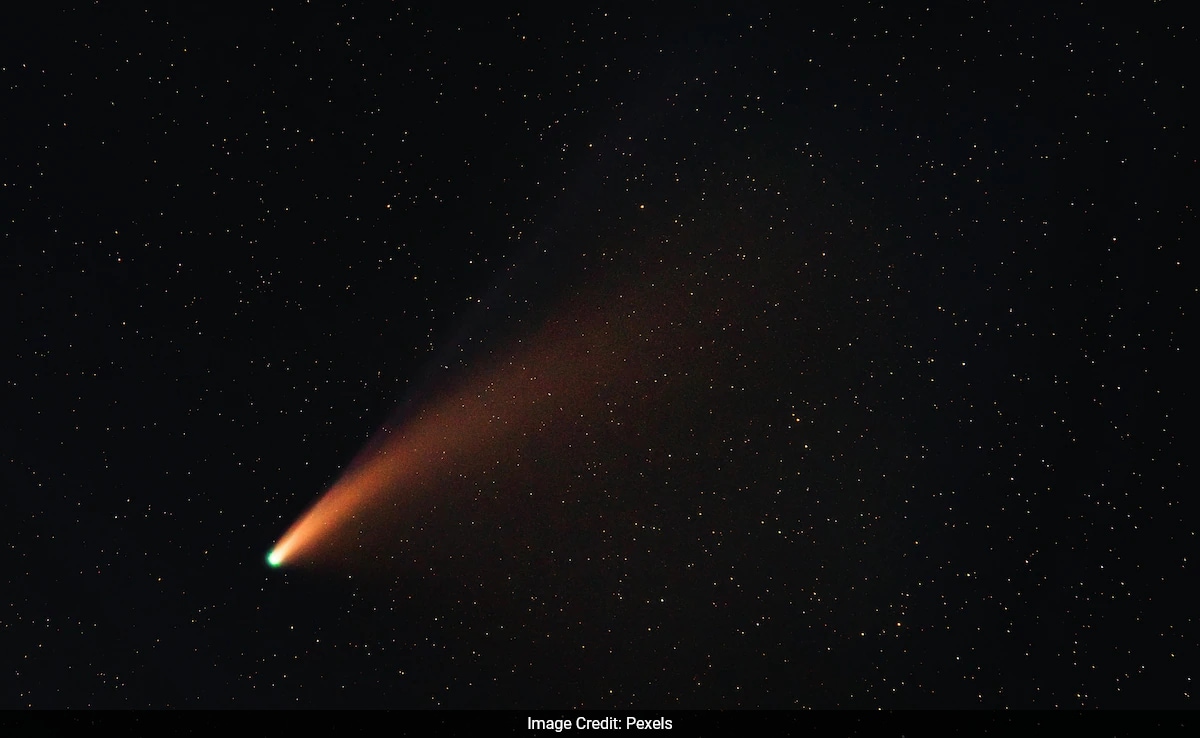
Astronomers have detected a mysterious comet speeding through our solar system toward Earth and the Sun, drawing comparisons to the notable interstellar object 3I/ATLAS.
This newly discovered comet, projected to make its closest approach to Earth on November 11, exhibits minor similarities to 3I/ATLAS. However, experts have dismissed comparisons, indicating it most likely originated within our solar system rather than from interstellar space, according to USA Today reports.
3I/ATLAS, believed to be a comet by scientists, came from beyond our solar system. It has unfortunately become entangled in conspiracy theories, with some falsely claiming it to be an alien spacecraft.
Between November 2 and 5, astronomers submitted their observations of the new comet to the Minor Planet Center (MPC), the official organization responsible for tracking and documenting new asteroids, comets, and other small solar system objects.
Officially designated C/2025 V1 (Borisov), the comet was first identified by Gennadiy Borisov, an amateur astronomer from Crimea. Research indicates the comet will reach its closest point to Earth on November 11 and approach the Sun most closely on November 16.
Despite its proximity to Earth, the comet was still expected to maintain a distance of approximately 64 million miles (103 million kilometers), about 270 times farther than the Moon.
Borisov has earned recognition for discovering comets originating outside our solar system, including the 2019 Comet Borisov, which followed the first known interstellar object, Oumuamua, discovered in 2017.
Harvard astrophysicist Avi Loeb, who studies 3I/ATLAS, described the new comet as "nearly interstellar" in a Medium post. He noted that the comet's trajectory is highly inclined at approximately 113 degrees relative to the ecliptic plane.
Loeb also highlighted differences from typical comets, mentioning its path is almost perpendicular to 3I/ATLAS's orbit and lacks the usual visible tail.
Comet C/2025 V1 is too faint for naked-eye observation, requiring a telescope or powerful binoculars to view. Currently positioned in the Virgo constellation, the optimal viewing time is before sunrise, according to The Sky Live.
Source: https://www.ndtv.com/science/comet-similar-to-interstellar-object-3i-atlas-fast-moving-towards-earth-9619996