
India Defends Paris Agreement Integrity and Calls for Climate Finance Commitments at COP30
- Date & Time:
- |
- Views: 65
- |
- From: India News Bull
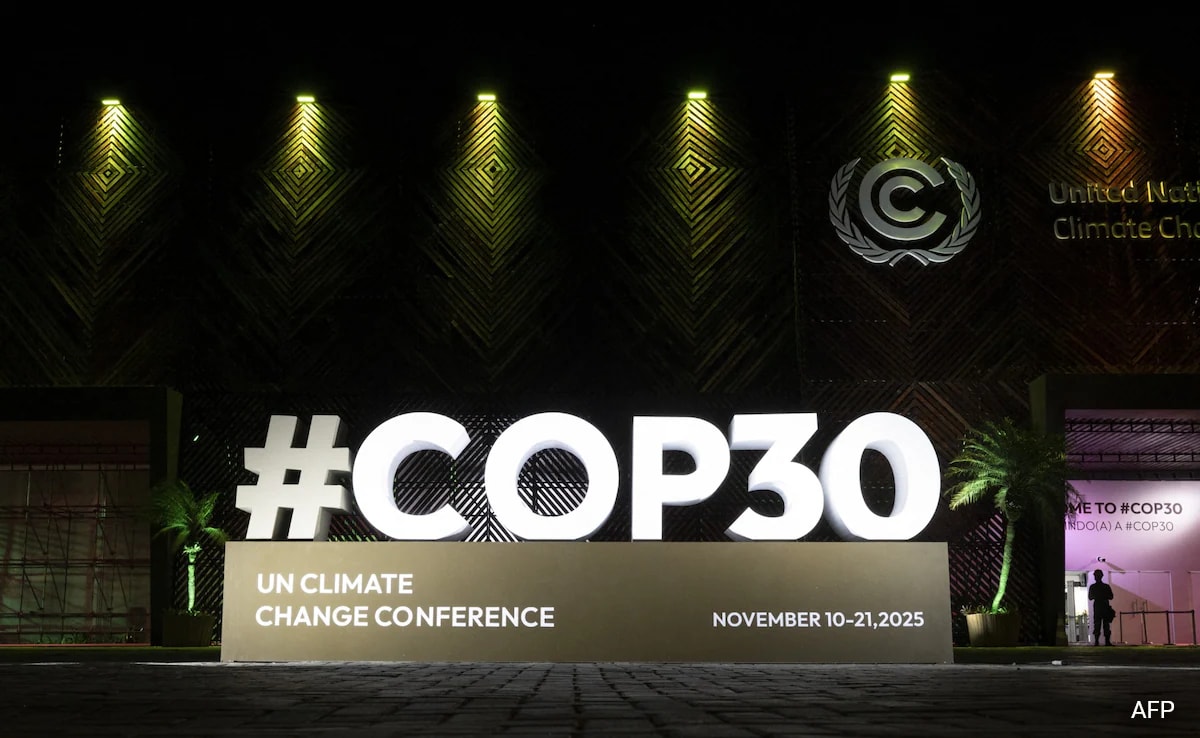
India on Tuesday emphasized its steadfast dedication to multilateralism and equity in global climate efforts, asserting that developed countries must honor their legal commitments regarding finance, technology transfer, and capacity building for developing nations.
During the opening plenary of the 30th UN Climate Conference (COP30) in Belem, Brazil, India delivered statements on behalf of both the BASIC group (Brazil, South Africa, India, and China) and the Like-Minded Developing Countries (LMDC). India highlighted that climate finance remains the greatest obstacle to enhanced ambition and advocated for a clear definition of climate finance, alongside strengthened and increased public funding for adaptation initiatives.
India underscored that Article 9.1 of the Paris Agreement imposes a binding obligation on developed countries to provide financial resources to developing nations. The country stated that adaptation finance needs to increase fifteen-fold to address the needs of billions of vulnerable individuals who have minimally contributed to global warming.
Demonstrating complete support for multilateralism and international cooperation, India called for outcomes that uphold principles of equity and common but differentiated responsibilities and respective capabilities (CBDR-RC). India urged for reliable, affordable, and equitable access to climate technologies and pressed for the elimination of intellectual property and market barriers that obstruct technology transfer to developing countries.
India maintained that the Paris Agreement's architecture must remain intact, with CBDR-RC continuing as its foundation. The country reminded developed nations of their historical and ongoing responsibilities, urging them to achieve net-zero earlier, invest in negative emissions technologies, and fulfill their long-standing financial and technological commitments.
India also warned against unilateral climate-related trade measures, cautioning that such actions risk becoming protectionist tools and violate Article 3.5 of the UN Framework Convention on Climate Change, which prohibits trade restrictions disguised as climate action.
Previously, Bolivia, representing the LMDC group, submitted a proposal to the UN climate body requesting the inclusion of unilateral trade measures, such as the European Union's Carbon Border Adjustment Mechanism, on this year's climate talks agenda.
India argues that unilateral measures compel developing and low-income nations to bear the costs of transitioning to low-carbon economies, undermining climate finance commitments from developed countries that have historically benefited from industrialization and contributed most significantly to greenhouse gas emissions.
This issue, repeatedly raised at annual climate conferences since 2023, has yet to be formally addressed. This year, the matter has been delegated to the COP30 Presidency to handle through consultations outside the formal negotiation process.
Other politically sensitive and unresolved issues under consultation by Brazil's Presidency include implementing Article 9.1 of the Paris Agreement, which legally obligates developed countries to provide climate finance to developing countries; addressing the 1.5-degree Celsius ambition and implementation gap; and ensuring transparency in national climate data.
Source: https://www.ndtv.com/world-news/at-cop30-india-says-architecture-of-paris-agreement-must-not-be-altered-9618862