
China's Singles' Day: The World's Largest Shopping Festival Generating $202 Billion in Sales
- Date & Time:
- |
- Views: 108
- |
- From: India News Bull
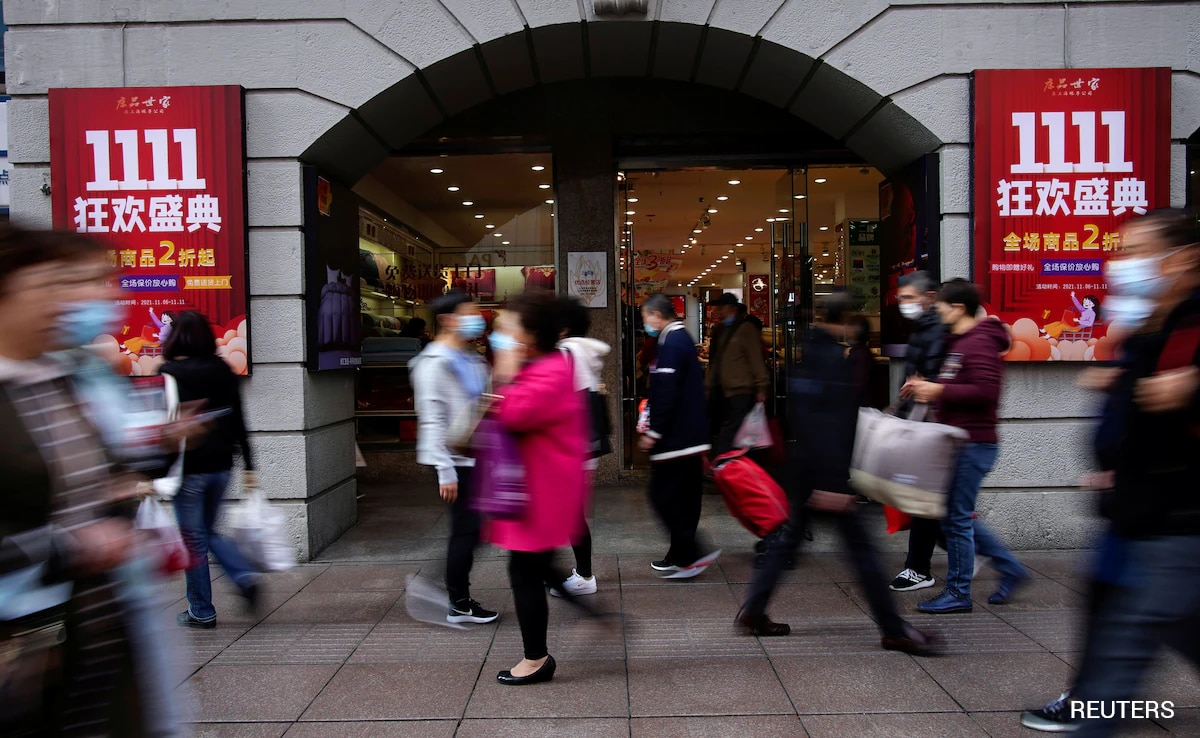
In China, single individuals celebrate themselves with self-gifting during the world's largest shopping event.
Shanghai:
Forget Black Friday, Cyber Monday, or Prime Day. China hosts the globe's biggest shopping extravaganza annually – Singles' Day. Initially a celebration for those without romantic partners (contrasting Valentine's Day), this event has transformed into an extensive online shopping festival spanning several weeks. This year's edition began October 9 and continues through November 11, marking the longest Singles' Day sales period in history.
Singles' Day originated at Nanjing University in 1993, initially dubbed "Bachelor's Day." During this celebration, unattached individuals purchase gifts for themselves while organizing social gatherings and festivities.
According to data provider Syntun, last year's shopping bonanza – also known as "Double 11" – generated total sales of 1.44 trillion yuan ($202 billion). This figure dwarfs American shopping figures, being nearly five times greater than the $41.1 billion spent by US consumers during Cyber Week (Black Friday through Cyber Monday), as reported by Adobe Analytics.
While Cyber Monday follows Black Friday (the day after US Thanksgiving), major Chinese e-commerce platforms have found growth increasingly challenging. To stimulate consumer spending, they've extended the Singles' Day period and heavily invested in subsidies and coupon offerings. Last year's 27% growth rate largely resulted from the extended festival timeframe.
Alibaba Group committed 50 billion yuan in subsidies for its 88VIP members during this year's Singles' Day period. In recent years, the event has lost some distinctive appeal with the emergence of other shopping festivals in China, including the midyear "618" sales event, the country's second-largest shopping festival.
Although Alibaba launched "Double 11" in 2009 to attract online shoppers with discounts, all major Chinese e-commerce platforms now participate. JD.com joined in 2012, while PDD Holdings' Pinduoduo has become a significant competitor, offering budget-friendly products that compete with Alibaba's Tmall and Taobao platforms.
Last year, categories covered by a national 150 billion yuan household appliance subsidy program outperformed others. However, with this higher comparative baseline, those categories are expected to decline this year. Nomura analysts predicted in October that home appliance sales would drop 20% during China's fourth quarter.
Instant retail – one-hour delivery service for online purchases – is a major focus this year. Both Alibaba and JD.com have invested billions in subsidies throughout 2025 to attract consumers to rapid-delivery channels, which are growing faster than traditional e-commerce.
Numerous global brands, including Nike, Estee Lauder, and Procter & Gamble, maintain significant presences on Chinese e-commerce platforms like Tmall and JD.com.
Aggressive discounting has characterized Chinese shopping festivals since pandemic restrictions ended in late 2022, though overall consumption has remained sluggish as consumers save more amid macroeconomic challenges and a prolonged property crisis.
According to Alibaba, 35 brands – including Nike, L'Oreal, and local companies Anta and Proya – sold merchandise exceeding 100 million yuan within the first hour of this year's sale.
During a press conference early in its Singles' Day sales period, JD.com announced it would offer over 100,000 "hit" products at their lowest prices of the year, including 50,000 pairs of thermal long johns for just 2 yuan each, shipping included.
Smartphone sales are anticipated to be particularly strong this year, following recent launches of Apple's iPhone 17 series and Xiaomi's 17 series in September. Within the first two hours, iPhone sales on Apple's Tmall store surpassed the full-day total for the same period last year, according to Alibaba, though specific figures weren't disclosed.
Source: https://www.ndtv.com/world-news/chinas-singles-day-is-a-shopping-festival-202-billion-sales-done-in-2024-9612620