
China's K-Visa Program: Competing With US H-1B to Attract Global Tech Talent in Evolving Immigration Landscape
- Date & Time:
- |
- Views: 51
- |
- From: India News Bull
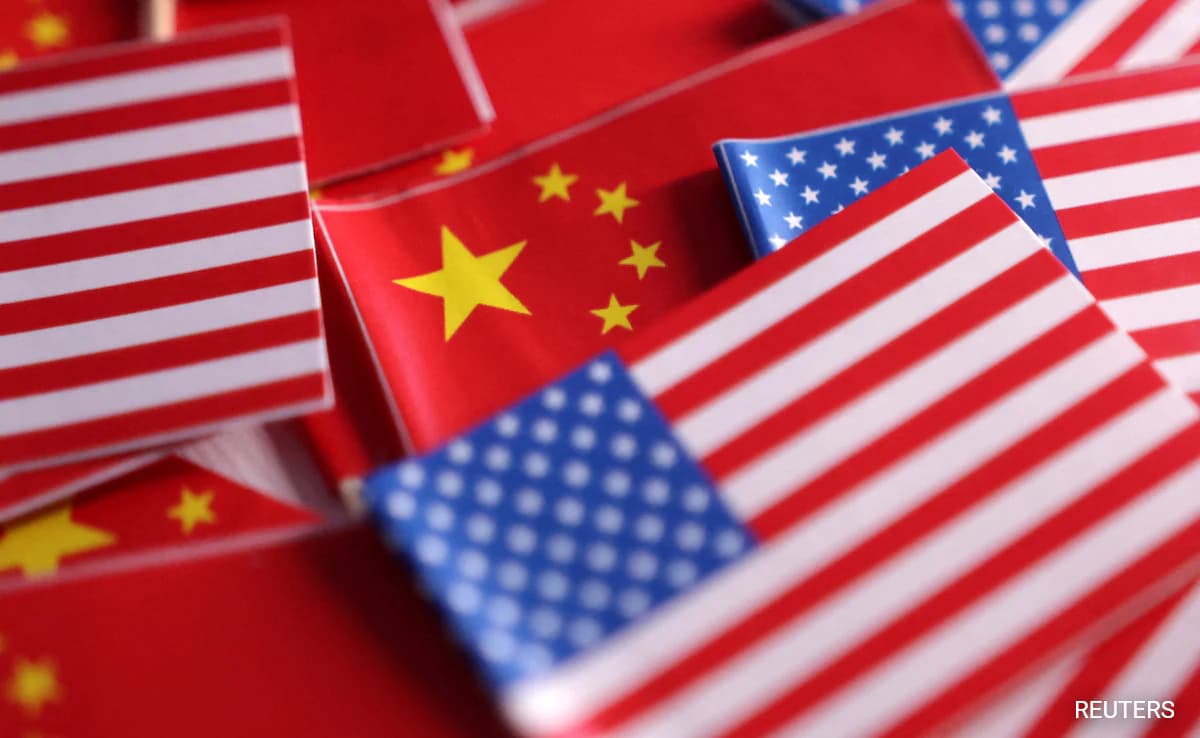
China has been experiencing a talent drain to developed nations as many skilled professionals choose to remain and work in the United States and Europe after completing their education.
Hong Kong:
Vaishnavi Srinivasagopalan, an experienced Indian IT professional who has worked in both India and the United States, is currently seeking employment opportunities in China. Beijing's newly introduced K-visa program, specifically targeting science and technology workers, could potentially fulfill her career aspirations.
The K-visa, launched by Beijing last month, represents a significant component of China's expanding efforts to compete with the United States in attracting global talent and advancing cutting-edge technology. This initiative coincides with growing uncertainties surrounding the US H-1B program due to stringent immigration policies implemented under President Donald Trump's administration.
"The K-visa for China serves as an equivalent to the H-1B for the US," remarked Srinivasagopalan, who developed an interest in China's professional environment and cultural landscape after her father's tenure at a Chinese university several years ago. "It presents a valuable opportunity for professionals like myself seeking international work experience."
The K-visa complements China's existing visa frameworks, including the R-visa designed for foreign professionals, but offers more relaxed requirements, such as eliminating the necessity for applicants to secure job offers prior to application submission.
The increasingly restrictive US policies toward international students and scholars under Trump, including the substantial increase in H-1B visa fees to $100,000 for new applicants, are prompting non-American professionals and students to explore alternative destinations.
"Students pursuing education in the US traditionally hoped for an H-1B visa, but this has become problematic in the current climate," observed Bikash Kali Das, an Indian master's student studying international relations at China's Sichuan University.
China is capitalizing on this opportune moment.
The ruling Communist Party has established global leadership in advanced technologies as a principal objective, allocating substantial government subsidies to support research and development in fields including artificial intelligence, semiconductors, and robotics.
"Beijing perceives the tightening of immigration policies in the US as an opportunity to position itself globally as welcoming foreign talent and investment more broadly," explained Barbara Kelemen, associate director and head of Asia at security intelligence firm Dragonfly.
While unemployment rates among Chinese graduates remain elevated and competition for scientific and technical positions is fierce, there exists a skills gap that China's leadership is eager to address. For decades, China has been losing top talent to developed countries as many professionals chose to remain in the US and Europe after completing their studies there.
The reversal of this brain drain remains incomplete.
Many Chinese parents continue to view Western education as superior and eagerly send their children abroad for studies, according to Alfred Wu, an associate professor at the National University of Singapore.
Nevertheless, recent years have witnessed an increasing number of professionals, including AI experts, scientists, and engineers, relocating to China from the United States, including Chinese-Americans. Notable examples include Fei Su, a chip architect at Intel, and Ming Zhou, a leading engineer at US-based software firm Altair, both of whom accepted teaching positions in China this year.
Numerous skilled workers from India and Southeast Asia have already expressed interest in the K-visa, according to Edward Hu, a Shanghai-based immigration director at consultancy Newland Chase.
With unemployment rates for Chinese citizens aged 16-24 (excluding students) approaching 18%, the initiative to attract foreign professionals has raised certain questions.
"The current job market already faces intense competition," noted Zhou Xinying, a 24-year-old postgraduate student in behavioral science at Zhejiang University in eastern China.
While foreign professionals could contribute "new technologies" and diverse international perspectives, Zhou acknowledged, "some young Chinese job seekers may feel additional pressure due to the introduction of the K-visa policy."
Kyle Huang, a 26-year-old software engineer based in Guangzhou, mentioned that his colleagues in scientific and technological fields are concerned that the new visa program "might threaten local employment opportunities."
A recent commentary published by the state-backed Shanghai Observer downplayed these concerns, asserting that integrating foreign professionals will benefit the overall economy. As China advances in sectors such as AI and cutting-edge semiconductors, there exists a "gap and mismatch" between qualified job candidates and the demand for specialized skills.
"The more complex the global environment becomes, the more China will open its arms," the commentary stated.
"Beijing will need to emphasize how select foreign talent can create, not take, local jobs," observed Michael Feller, chief strategist at Geopolitical Strategy consultancy. "But even Washington has demonstrated that this argument is politically challenging to make, despite decades of supporting evidence."
Recruitment and immigration specialists highlight various challenges facing foreign workers in China. The language barrier represents a significant obstacle. Additionally, the Communist Party's internet censorship system, known as the "Great Firewall," serves as another deterrent.
Despite having a population of approximately 1.4 billion, China hosted only an estimated 711,000 foreign workers residing in the country as of 2023.
The United States maintains its leadership in research and benefits from widespread English usage. For many, there also remains a relatively clearer pathway to permanent residency, according to David Stepat, country director for Singapore at consultancy Dezan Shira & Associates.
Nikhil Swaminathan, an Indian H1-B visa holder working for a US non-profit organization following his graduate studies there, expresses interest in China's K-visa but remains skeptical. "I would have considered it. China offers excellent opportunities in the tech sector, if not for the complicated relationship between India and China," he stated.
Given options, many job seekers are still likely to prioritize positions with leading global companies outside of China.
"The US faces greater risk of losing potential H-1B applicants to other Western economies, including the UK and European Union, rather than to China," suggested Feller from Geopolitical Strategy.
"While the US may be undermining its own position, it does so from a considerably more competitive standing in terms of attractiveness to talent," Feller added. "China will need to implement measures beyond convenient visa pathways to attract the most qualified professionals."
Source: https://www.ndtv.com/world-news/k-visa-chinas-competition-to-the-us-in-wooing-global-tech-talent-9606485