
Generational Divide: How Zohran Mamdani's Victory Reveals a Shifting Landscape in New York's Jewish Politics
- Date & Time:
- |
- Views: 51
- |
- From: India News Bull
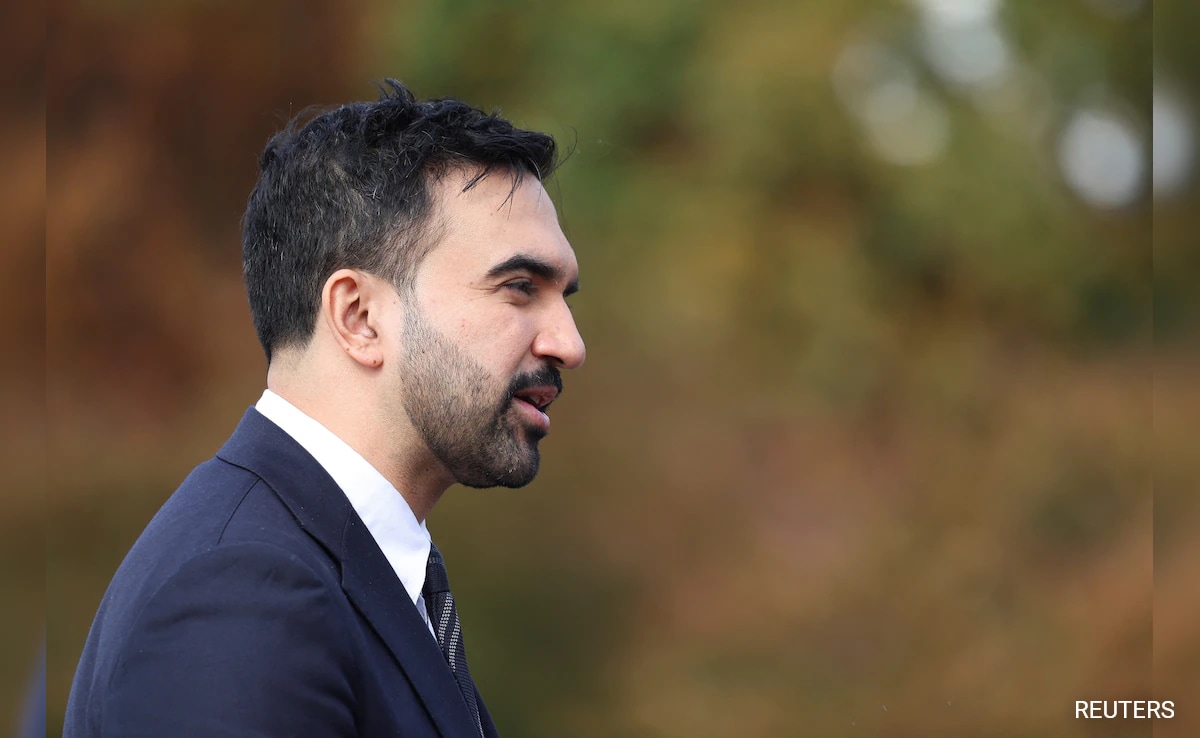
Mamdani's Jewish supporters assert that his election demonstrates the Jewish vote is far from unified in perspective.
New York:
Zohran Mamdani's mayoral victory in New York has revealed a growing division between traditional Democratic Jewish voters and younger progressive Jews—a split that could transform politics for years to come in the metropolitan area hosting the largest Jewish population outside Israel.
The 34-year-old democratic socialist convincingly defeated Andrew Cuomo, the former Democratic governor who ran as an independent, while successfully countering accusations of antisemitism related to his support for Palestinians in Gaza.
Mamdani, a Muslim immigrant, capitalized on widespread discontent among some Democrats and Jewish Americans regarding Israel's actions in Gaza. Many who initially supported Israel's position grew increasingly disillusioned over time. This shift became evident during last year's Columbia University protests, which Mamdani supported and from which he gained political momentum.
According to a Pew Research Centre poll last year, only half of Jewish Americans under 35 considered Israel's war conduct acceptable, compared to 68% of Jews aged 50 and older who approved.
Exit polls from Tuesday's election showed approximately one-third of New York's Jewish voters supported Mamdani, contributing to a victory that unsettled his Jewish opponents, who are unaccustomed to backing the losing candidate.
"The morning after the election, many members of our community woke up with a sense of unease," said Hindy Poupko, a senior vice president at the UJA-Federation of New York, a prominent Jewish nonprofit. "There's a lot of uncertainty about how Mayor Mamdani might act once in City Hall."
Mamdani faced an immediate test when antisemitic graffiti appeared on a Brooklyn Jewish Day School shortly after his election. The mayor-elect promptly condemned the act.
"As Mayor, I will always stand steadfast with our Jewish neighbours to root the scourge of antisemitism out of our city," he posted on X.
Jewish critics of Mamdani have expressed concern about his reluctance to condemn the phrase "globalise the intifada," a Palestinian solidarity slogan that some interpret as inciting violence against Jewish people. After securing the nomination, Mamdani reportedly told business leaders privately that he would not use the phrase and would discourage others from using it, according to a July New York Times report.
He has publicly supported the Boycott, Divestment, Sanctions (BDS) movement, which advocates for economic and cultural boycotts of Israel.
The Anti-Defamation League recently launched a "Mamdani Monitor" to track his executive appointments and actions for potential impacts on the Jewish community, along with establishing a tip line for New York residents to report antisemitism incidents.
"Our job is quite simple - to protect the Jewish people," said Jonathan Greenblatt, the organization's chief executive.
Amid Democratic divisions over Israel's Gaza operations, Republican President Donald Trump, a staunch supporter of Israeli Prime Minister Benjamin Netanyahu, has argued that Jewish voters would be better served by his party.
This appeal persisted despite Democrat Kamala Harris winning 79% of the white Jewish vote in 2024, according to exit polls.
Trump stated on Tuesday that any Jewish voter supporting Mamdani was a "stupid person."
Meanwhile, the Republican Party faced its own antisemitism controversy after right-wing commentator Tucker Carlson conducted a sympathetic interview with white nationalist Nick Fuentes on his podcast.
Carlson, formerly of Fox News, was criticized by Republican lawmakers, including Senator Ted Cruz of Texas, who remarked, "a handful of voices are spreading this garbage, and it is giving every one of us a time for choosing."
Republicans plan to leverage Mamdani's election to attract more Jewish support in next year's midterms, when congressional control is at stake. This support could prove decisive in competitive districts like the one north of New York City currently held by Republican Mike Lawler.
"Mamdani's ascent to Gracie Mansion could rewrite the playbook for Republicans, tightening their hold on the US House," said Ford O'Connell, a Republican strategist, referring to the New York mayor's official residence.
Mamdani is expected to influence next year's New York gubernatorial race as well. Elise Stefanik, a key Trump ally, announced her candidacy for the Republican nomination last week and criticized Democratic Governor Kathy Hochul for endorsing Mamdani.
The city's high costs and affordability issues were central to Mamdani's campaign, fueling strong support among young progressive voters. Even some critics, including Greenblatt, acknowledge that his victory stemmed from his persistent focus on economic concerns.
Jewish supporters of Mamdani maintain that the election demonstrates the diversity within Jewish political thought.
"I support Mamdani not in spite of his views on Israel and Palestine but because of them," said Roni Zahavi-Brunner, 26, an Israeli who campaigned for the candidate. "I don't think that speaking out against genocide is that big of a risk."
Others backed Cuomo, 67, due to his support for Israel.
"I feel deflated," said Alison Devlin, 50, a Jewish resident of Manhattan's Upper East Side who voted for Cuomo. "I definitely feel concerned because I am openly Jewish, I am openly Zionist."
She added, "I don't know what is going to happen. I don't know if I'm staying in the city after this."
Corinne Greenblatt, 27, who works in higher education in the city, appreciated Mamdani's approach to "reaching out to a really broad range of the Jewish community, not just those who are completely in political agreement with him, because the Jewish community is very politically diverse."
The Gaza war has triggered a "sea change in Jewish politics now, where it's very clear that there are pro-Palestine Jews, there are pro-Israel Jews. There are Jews who have no relationship to Israel," Corinne Greenblatt observed.
Andrue Kahn, a Brooklyn rabbi, noted that Mamdani has repeatedly affirmed his commitment to fighting antisemitism and criticized organizations like the ADL for "deepening division by using Jewish fear as a reason for surveillance."
"Let's give him a chance to show that his commitment to fighting antisemitism is legitimate, and work with him to build the kinds of cross-community solidarity that make all New Yorkers safer," Kahn said.
Source: https://www.ndtv.com/world-news/zohran-mamdanis-win-exposes-deep-rift-in-new-yorks-jewish-voters-9603775