
Super Typhoon Fung-Wong: Over 1 Million Evacuated in Philippines as Second Major Storm Makes Landfall
- Date & Time:
- |
- Views: 47
- |
- From: India News Bull
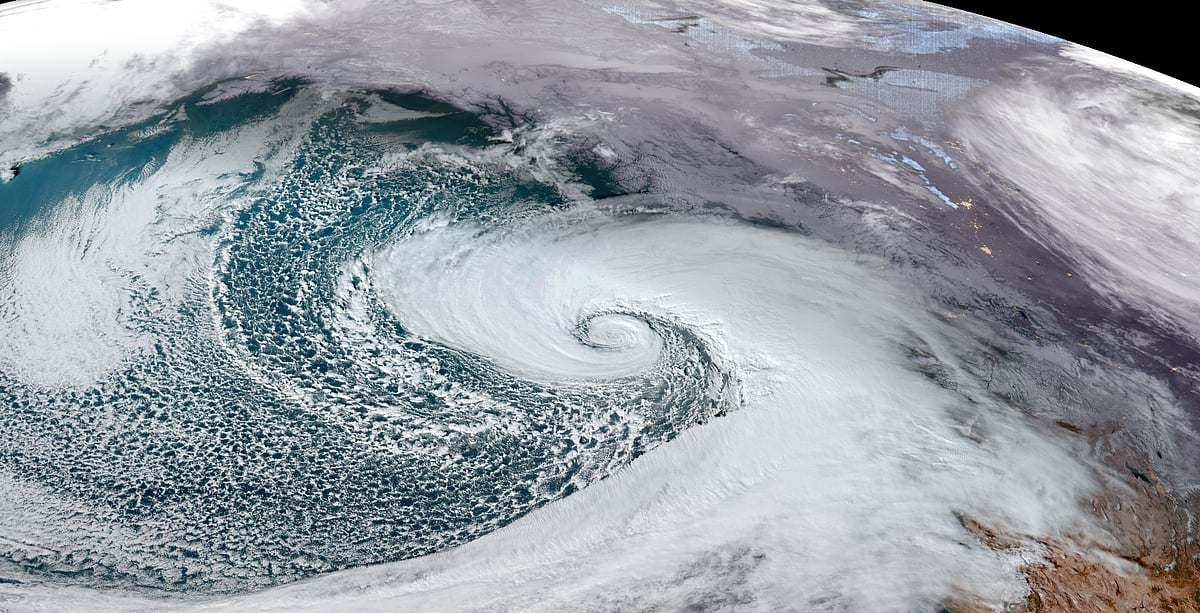
Fung-Wong will make landfall Sunday night or early Monday. (Image Source: satlib.cira.colostate.edu)
More than a million people have been evacuated, and at least one person has been killed as floodwaters rose in the Philippines on Sunday ahead of Super Typhoon Fung-wong's anticipated landfall on the eastern coast.
The powerful super typhoon, arriving just days after another devastating storm hit the country, is expected to strike Aurora province between 8:00 pm and 11:00 pm, according to state weather forecaster Charmagne Varilla.
With a massive radius covering nearly the entire Philippines, Fung-wong threatens to bring severe winds and heavy rainfall across large portions of the archipelago nation, which recently suffered over 220 casualties from Typhoon Kalmaegi last week.
On Sunday, officials confirmed the first fatality attributed to Typhoon Fung-wong in one of the previously storm-affected provinces in the central Philippines.
Rescuer Juniel Tagarino from Catbalogan City reported that the body of a 64-year-old woman attempting to evacuate had been recovered from beneath debris and fallen trees.
"Last night, the wind was extremely powerful and the rainfall was intense... According to family members, she may have returned to her house to retrieve something," Tagarino explained, noting that her relatives were merely 50 meters away when they realized she was missing.
In Aurora province, where the storm's eye is projected to make landfall, 34-year-old government worker Aries Ora told reporters he was reinforcing his home in Dipaculao town with steel sheets and wooden boards while rain remained light.
"What truly frightens us is that the expected landfall will occur during nighttime," he said.
"Unlike previous typhoons, we won't be able to clearly observe wind movements and surrounding conditions."
Schools and government offices have been ordered closed Monday throughout Luzon island, including Manila, where nearly 300 flights have been canceled.
'The Ground Was Shaking'
Earlier Sunday, Catanduanes island, which weather services warned could face a "direct hit," was already experiencing intense winds and rain, with storm surges propelling waves across streets and causing rising floodwaters in several areas.
"As we speak, they are feeling the typhoon's impact, particularly in Catanduanes, as the storm's eye is closest to that location," civil defense deputy administrator Rafaelito Alejandro stated during a news briefing.
"The waves began roaring around 7:00 am. When waves crashed against the seawall, it felt as though the ground was shaking," described 33-year-old Edson Casarino, a resident of Catanduanes' Virac town.
Verified video footage showed a church in the town surrounded by floodwaters reaching halfway up its entrance.
Flooding was also reported across southern Luzon's Bicol region, according to Alejandro, who later confirmed the preemptive evacuation of nearly 1.2 million people nationwide.
In Guinobatan, a town of approximately 80,000 residents in the region's Albay province, verified video showed streets transformed into raging torrents of floodwater.
According to government meteorologists, Typhoon Fung-wong is expected to deliver at least 200 millimeters (eight inches) of rain to numerous regions of the country.
Scientists caution that storms are growing more powerful due to human-induced climate change. Warmer oceans enable typhoons to strengthen rapidly, while warmer atmospheres retain more moisture, resulting in heavier rainfall.
'Strapping Down The Roofs'
On Saturday, Catanduanes residents rushed to prepare for the impending storm, securing their homes with ropes and placing weights on rooftops.
"They decided to follow our tradition of strapping down roofs with large ropes and anchoring them to the ground to prevent them from being blown away by winds," provincial rescue official Roberto Monterola explained.
In Sorsogon, a city in southern Luzon, some residents sought shelter in a church.
Just days earlier, Typhoon Kalmaegi had sent floodwaters surging through towns and cities on Cebu and Negros islands, sweeping away vehicles, riverside shanties, and massive shipping containers.
The typhoon, recorded as 2025's deadliest according to disaster database EM-DAT, killed at least 224 people and left 109 missing, based on government figures updated Sunday morning.
Search and rescue operations in Cebu were suspended Saturday due to safety concerns regarding the approaching super typhoon.
Source: https://www.ndtv.com/world-news/1-dead-1-million-evacuated-in-philippines-as-super-typhoon-fung-wong-nears-9603504