
Former CIA Officer Reveals US Knowledge of Pakistan's Nuclear Capability on F-16 Jets Despite Official Denials
- Date & Time:
- |
- Views: 69
- |
- From: India News Bull
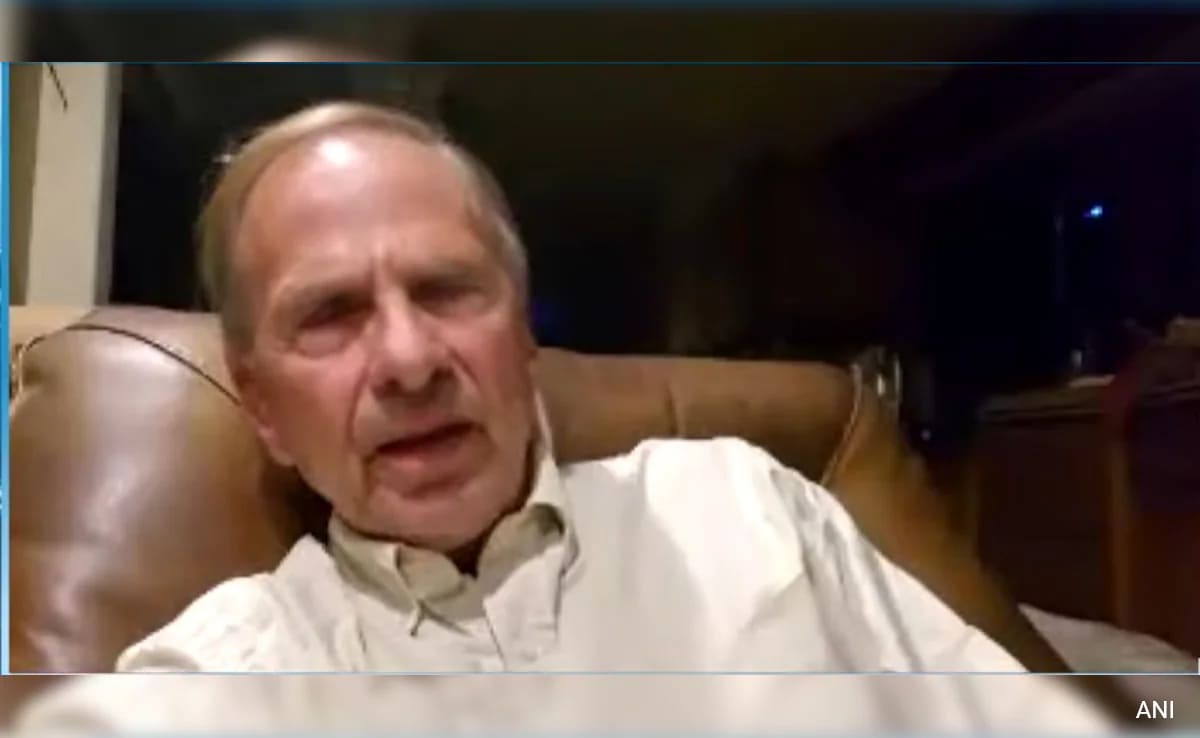
Former CIA officer Richard Barlow revealed that consecutive US administrations continued to certify Pakistan as non-nuclear through 1989 despite intelligence showing Islamabad could mount nuclear weapons on American-supplied F-16 fighter jets.
"The President continued to certify that Pakistan did not possess nuclear weapons all the way through 1989. Most of us in the CIA were not comfortable with that, to say the least. But we're not elected officials. All we can do is provide elected officials and senior policymakers with accurate intelligence information. What they do after that is not our place," Barlow explained during his interview with ANI.
Barlow served as a counterproliferation officer during Pakistan's clandestine nuclear activities in the late 1980s. He noted that renowned investigative journalist Seymour Hersh published interviews in The New Yorker documenting these events. During the 1987 Brass Tacks crisis, Dr. Abdul Qadeer Khan, considered the father of Pakistan's nuclear program, explicitly stated in an interview that Pakistan possessed nuclear weapons as a deterrent.
"The intelligence community observed nuclear weapons being transported to air bases and loaded onto F-16s. The nuclear weapons that Pakistan supposedly didn't possess, according to the US President, were actually being mounted on aircraft," Barlow stated.
The Brasstacks Crisis created nuclear tension between Pakistan and India following an Indian Army exercise from November 1986 to January 1987, which Pakistan interpreted as a potential existential threat.
"In essence, intelligence community experts and national laboratories had conducted studies for years. We knew everything about Pakistan's nuclear weapons design and the F-16s. We knew without doubt that F-16s could deliver Pakistan's nuclear weapons as they existed then. Engineers and physicists had confirmed this - it's a straightforward engineering question. Yet the government proceeded with the sale," he added.
US intelligence believed Prime Minister Benazir Bhutto had been excluded from Pakistan's nuclear program decisions. The military under General Mirza Aslam Beg and President Ghulam Ishaq Khan maintained actual control.
Only after Soviet forces withdrew from Afghanistan in 1989 did the US administration under President George Bush Senior take a firmer stance, informing Bhutto that it could no longer certify Pakistan as non-nuclear in 1990.
This crisis remained hidden because the Reagan and Bush administrations had been complicit in Pakistan's nuclear development. Pakistan was an essential US ally in the proxy conflict against the Soviet Union in Afghanistan - a foreign policy objective prioritized above all other concerns.
Barlow mentioned that he wasn't serving during the 1990s having been dismissed, but he heard from high-level CIA contacts that the Indo-Pak crisis was extremely serious.
"I spoke with senior CIA officials who gave interviews to Seymour Hersh... they described it as the most frightening situation since the Cuban missile crisis," he recalled.
"There were serious concerns about the ongoing situation. By 1990, I was working for the Secretary of Defense when I was removed from my position and had my security clearance suspended. So I wasn't serving during that crisis between India and Pakistan," he explained.
The situation was ultimately defused after President George H.W. Bush sent Secretary of Defense Robert Gates to Islamabad and Delhi. Barlow believes the Brass Tacks crisis posed greater dangers than recent India-Pakistan tensions due to limited command and control structures and higher potential for miscalculation.
"My former supervisor, Robert Gates, was the NSC Advisor then. The president was so concerned that he dispatched Gates to Islamabad and New Delhi to defuse the crisis. By this point, I had been dealing extensively with CIA Inspector General Frederick Hitz, who advised me to 'Do the interview and don't mess up.' I did, and the director later informed me I had done well, protected sources and methods, and caused no harm to the CIA," he said.
Following the 1990 crisis, Barlow noted that some US officials still wanted to maintain the Pressler Amendment certification - a 1985 US law requiring the President to annually certify Pakistan didn't possess nuclear weapons to receive most aid.
"After the 1990 nuclear crisis, my agency superiors, including the director, refused to participate further. They firmly rejected additional certifications. Surprisingly, some government officials still wanted to certify under the Pressler Amendment. They were panicking because they knew this would trigger the end of aid programs," he explained.
In May 1990, however, global attention focused on the Bush-Gorbachev summit and the Cold War's conclusion.
"Officials at the Pentagon and State Department regional offices were extremely anxious. However, it became less significant as the Cold War ended. The Soviet Union collapsed around that time," Barlow noted.
He emphasized that the 1990 crisis was more severe than this year's Operation Sindoor tensions, as it was harder then to determine the extent of nuclear weapons deployment.
"I don't have complete details about this spring's events. However, from what I know, the 1990s situation was far more concerning for several reasons. First, actual nuclear weapons were being removed from hidden storage and moved to delivery platforms. I don't know if that happened this year," he explained.
Barlow highlighted command and control issues and potential miscommunication risks during that earlier period.
"Additionally, there were command and control issues. Pakistan possessed very few nuclear weapons then and lacked missile delivery capabilities. They're much more advanced now, as are the Indians. Therefore, miscalculation and miscommunication risks were significantly higher in 1990. I believe that period was far more dangerous. While this spring's tensions involved two nuclear-armed nations, I haven't seen specific reports about nuclear weapons being moved or deployed," he stated.
Barlow recalled that Edward "Skip" Gnehm assigned him to evaluate Pakistan's nuclear program.
"When I worked at the Office of the Secretary of Defense, I met Deputy Assistant Secretary of Defense Skip Gnehm, who later became Ambassador to Kuwait. After I briefed him on Pakistan's nuclear program intelligence, he responded, 'this charade must stop.' He tasked me with preparing a comprehensive assessment of Pakistan's nuclear weapons program, covering everything from delivery systems to weapons development," he said.
Barlow then revealed that a regional action officer attempted to pressure him to alter his assessments.
"I prepared this report for our new Secretary of Defense, Dick Cheney, for an upcoming National Security Council meeting on Pakistan. The regional action officer for Pakistan from another Pentagon department pressured me to modify my assessments, which aligned with my Langley colleagues' findings," he recounted.
"I also had the Defense Intelligence Agency develop a separate assessment specifically addressing the F-16 delivery capability," he added.
As a leading CIA analyst on Pakistan's nuclear program, Barlow tried to expose the cover-up. In 1987, he discovered State Department and CIA officials were deceiving Congress about Pakistan's illegal nuclear acquisitions.
After consistently raising objections and continuing his investigations, he was forced to resign from government service in 1989. The State Department's Inspector General later determined his allegations were credible.
Source: https://www.ndtv.com/world-news/we-knew-f-16s-could-carry-nukes-ex-cia-officer-richard-barlow-on-us-sale-to-pakistan-9596989