
How AI-Generated Disinformation Is Undermining Climate Action Ahead of COP30
- Date & Time:
- |
- Views: 60
- |
- From: India News Bull
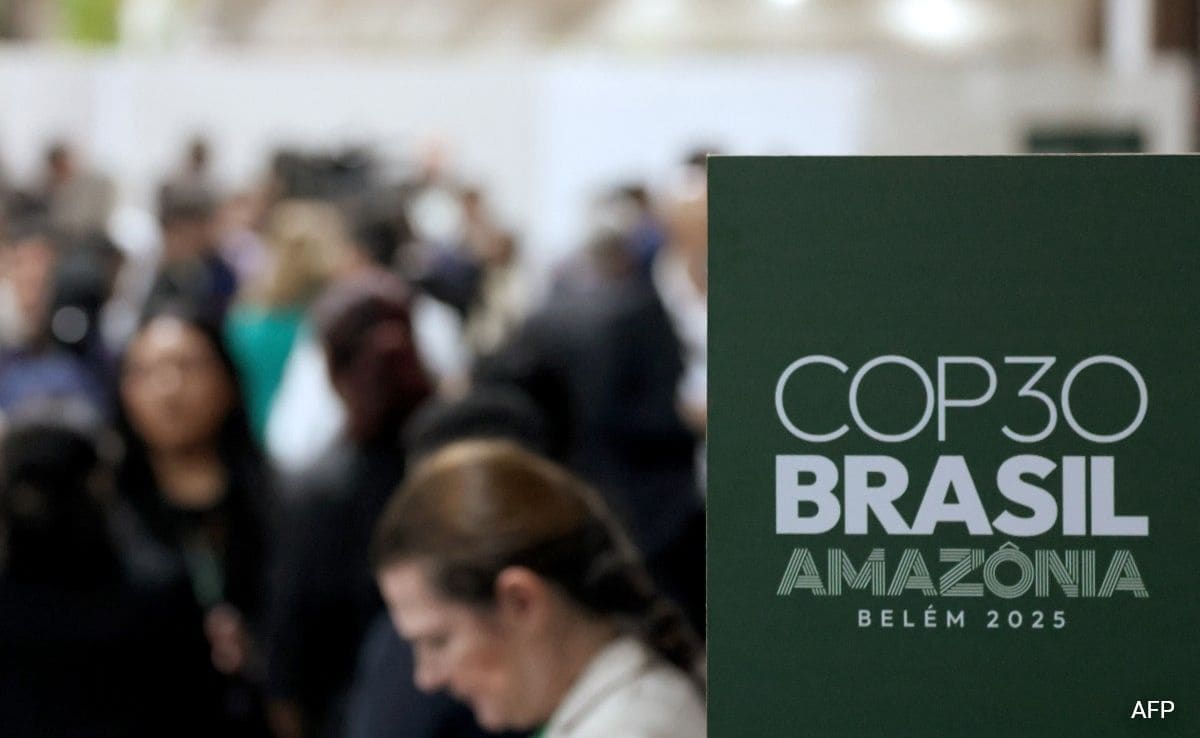
AI-generated disinformation is increasingly influencing public perception as COP30 approaches.
In the United States, a widely circulated video allegedly showing severe flooding in the Amazonian city scheduled to host the UN climate summit exemplifies how artificially generated content is shaping opinions about COP30.
According to a report released Thursday by the Climate Action Against Disinformation coalition (CAAD), despite growing support for climate policies, persistent online falsehoods amplified by AI continue to foster skepticism toward scientific consensus.
CAAD and the Observatory for Information Integrity (Oii) documented a staggering 267 percent increase in COP-related misinformation between July and September, identifying over 14,000 examples.
Several videos misleadingly suggested that Belem would be unsuitable for hosting the conference. One was actually filmed in Tbilisi, Georgia, while another repurposed footage from two years prior.
Regarding the fabricated flooding video, Oii stated: "The reporter doesn't exist, the people don't exist, the flood doesn't exist, and the city doesn't exist."
Despite researchers flagging this AI-generated content, TikTok has not removed the video, which fails to disclose its artificial nature.
This incident represents a broader pattern of AI-manipulated climate content proliferating throughout 2025.
Earlier this year, AFP investigated a document allegedly authored by Elon Musk's Grok 3 AI that incorrectly challenged the reliability of climate models from the Intergovernmental Panel on Climate Change.
Recent studies indicate that over 80 percent of people support stronger climate action, with 69 percent willing to contribute one percent of their monthly income toward climate initiatives.
Nevertheless, both United Nations Environment Assembly participants and the general public significantly underestimate this collective willingness to act.
"This is the impact of climate disinformation," CAAD explained. "Big Carbon's spending and Big Tech's algorithms are preventing us from seeing and hearing one another online. Instead, we're exposed to one lie after another."
These misleading narratives can also result in harassment of scientists and environmental advocates, according to Professor Carlos Milani of Rio de Janeiro State University.
"Climate denial in Brazil is pushed most explicitly by far-right figures, a small group of anti-environmentalist activists and ultra-conservative leaders," Milani noted.
Governments and the United Nations are beginning to address the spread of disinformation. The European Union's Digital Services Act aims to enhance transparency and accountability among platforms and advertisers.
With information integrity now formally included in the UN agenda, "we're finally headed in the right direction," CAAD concluded.
(This content has not been edited by NDTV staff and is auto-generated from a syndicated feed.)
Source: https://www.ndtv.com/world-news/ai-generated-disinformation-tactics-spotted-ahead-of-cop30-9590019