
2025 US Off-Year Elections: Democratic Governors Win with Affordability Focus as Trump's Influence Shows Limited Impact
- Date & Time:
- |
- Views: 56
- |
- From: India News Bull
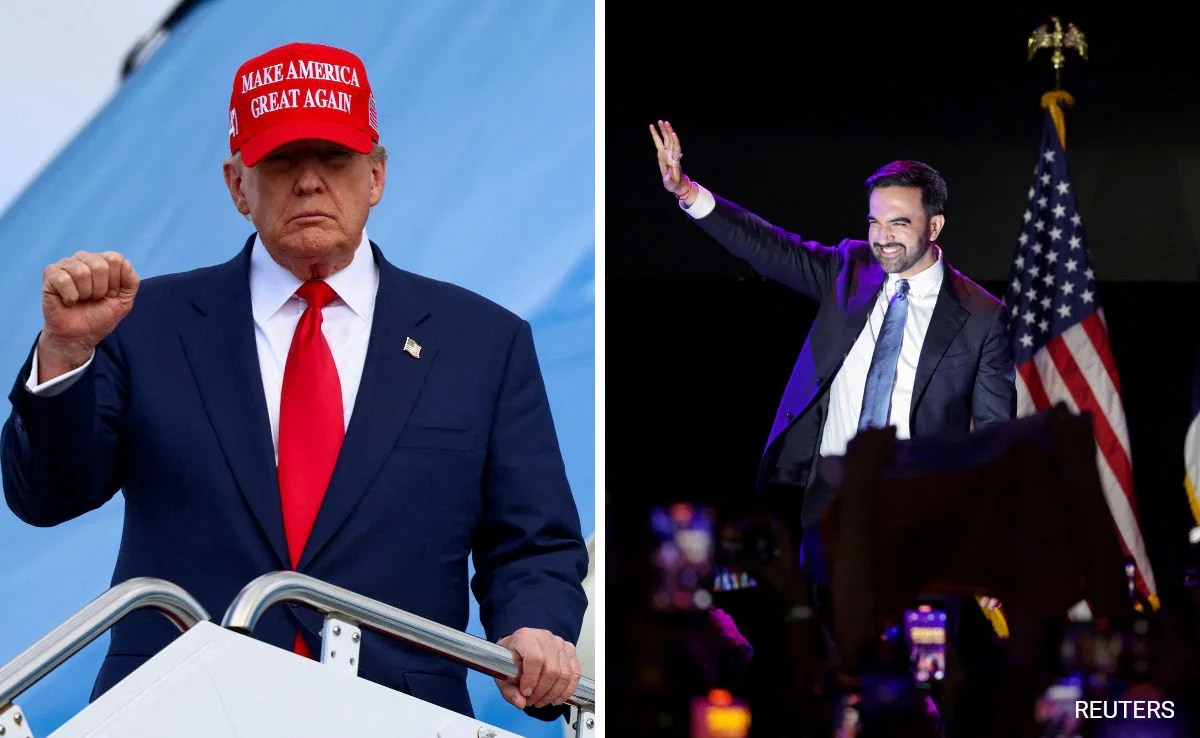
Despite not being on the ballot, Donald Trump's influence permeated Tuesday's elections.
Washington:
The 2025 off-year elections across Virginia, New Jersey, New York City and California offered an early gauge of public sentiment regarding President Donald Trump's second term and Democratic efforts to rebuild political momentum.
Here are key insights from election night:
A POTENTIAL DEMOCRATIC ROADMAP
New Jersey Governor-elect Mikie Sherrill and Virginia Governor-elect Abigail Spanberger may have established a strategic framework for Democratic revival ahead of next year's congressional elections.
These leaders share significant commonalities. Both initially won congressional seats in 2018 during Trump's first midterm elections. In their gubernatorial campaigns, they positioned themselves as pragmatic moderates with national security credentials, emphasizing affordability issues while portraying themselves as checks against Trump's agenda.
For Democrats seeking positive signals, Sherrill, formerly a Navy helicopter pilot, and Spanberger, an ex-CIA officer, delivered encouraging results. While their victories weren't unexpected in these traditionally Democratic-leaning states, their substantial winning margins strengthen the argument that their approach might prove effective in the upcoming midterms when Democrats aim to reclaim congressional control.
With ballot counting still underway, Sherrill appeared to surpass her opponent Jack Ciattarelli by a wider margin in New Jersey than Democratic presidential nominee Kamala Harris achieved against Trump there last year. Similar indications suggested Spanberger was outperforming Harris in Virginia.
Sherrill, Spanberger, and New York mayoral winner Zohran Mamdani all prioritized affordability as a central campaign theme.
Spanberger campaigned on her "Affordable Virginia" initiative targeting healthcare, housing, and energy costs, while promising to ensure tech data centers contribute "their fair share" of electricity expenses. Sherrill's "Affordability Agenda" addressed similar concerns, including a pledge to declare a statewide energy emergency and implement electricity rate freezes.
Democratic strategist Joel Payne noted that while correlating off-year election outcomes with subsequent midterm results is challenging, Democrats can extract valuable lessons from Tuesday's results.
"If Trump continues undermining people's economic security, Democrats have a clear campaign message," Payne observed.
MAGA'S ELECTORAL LIMITATIONS
Spanberger's decisive victory in Virginia may demonstrate the boundaries of Trump's MAGA movement's electoral appeal.
Her Republican opponent, Lieutenant Governor Winsome Earle-Sears, strongly endorsed Trump's agenda, including federal job reductions, government shutdown support, and import tariff increases. Throughout her campaign, Spanberger consistently linked Earle-Sears to Trump's policies.
Spanberger benefited from running in a state heavily reliant on federal employment during a period when nationwide voters identified cost of living as their primary concern, according to recent Reuters/Ipsos polling.
"Virginia chose pragmatism over partisanship," Spanberger told supporters after securing victory. Symbolically underscoring this message, she wore a red suit jacket—traditionally associated with Republicans—rather than Democratic blue.
THE TRUMP EFFECT
Though not directly on the ballot, Trump's influence was unmistakable throughout Tuesday's elections.
These contests occurred as the president's approval ratings reached their lowest point in his second term, according to Reuters/Ipsos polling, with voters primarily concerned about affordability issues.
In Virginia's gubernatorial race, the SSRS Voter Poll conducted for major U.S. networks and the Associated Press revealed that 98% of the 36% of voters who cited opposing Trump as a voting factor supported Spanberger. A similar pattern emerged in New Jersey, where 39% of voters reported that opposing Trump influenced their decision, leading to overwhelming support for Democrat Mikie Sherrill.
In September, Sherrill characterized her Republican opponent Jack Ciattarelli by stating: "He'll do whatever Trump tells him to do," while pledging she would "fight anybody to work for you."
Throughout his political career, Trump has demonstrated limited capacity to transfer his personal popularity to fellow Republican candidates. Tuesday's results for Ciattarelli and Earle-Sears further confirmed this pattern.
Source: https://www.ndtv.com/world-news/us-elections-2025-new-york-mayor-polls-donald-trump-zohran-mamdani-takeaways-from-us-election-night-2025-9577852