
COP30 in Brazil: Addressing Emissions, Climate Finance and Forest Protection a Decade After Paris Agreement
- Date & Time:
- |
- Views: 74
- |
- From: India News Bull
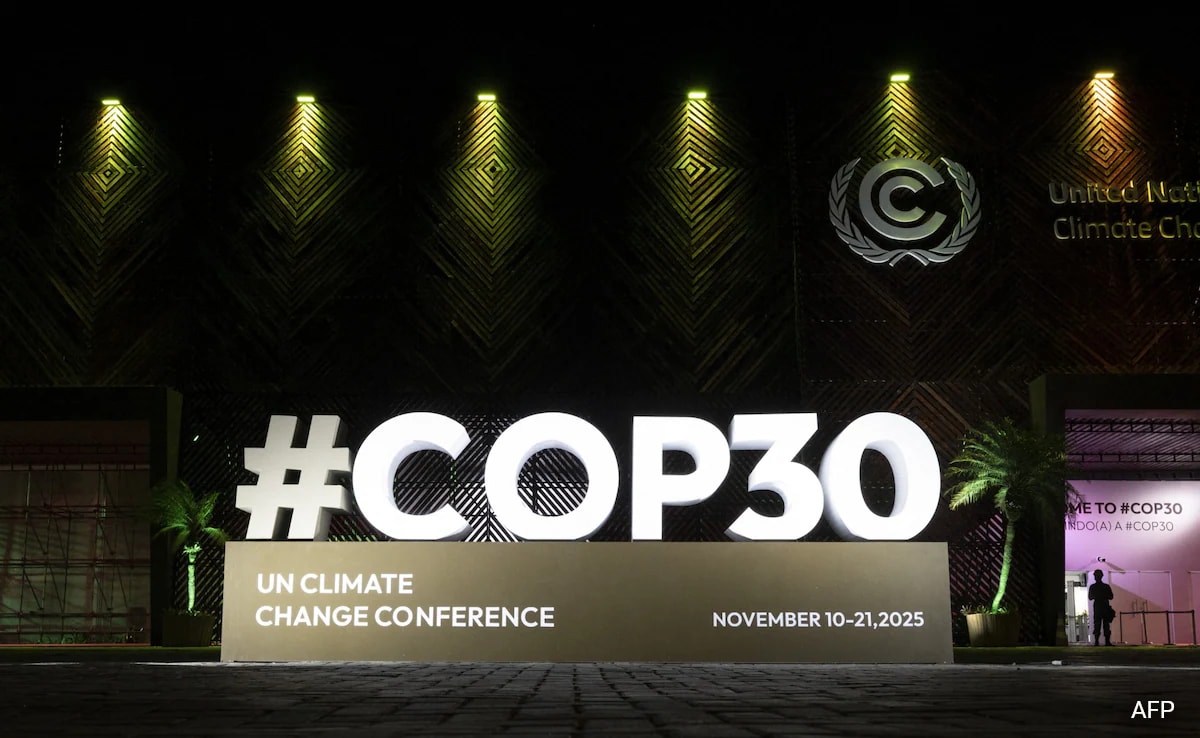
Brazil selected Belem as the COP30 host city due to its strategic location near the Amazon rainforest.
France:
The United Nations climate summit this year carries significant symbolism, marking a decade since the Paris Agreement was established and being hosted in the ecologically critical Amazon region. However, what precisely comprises the meeting's agenda?
These extensive negotiations bring together representatives from nearly every nation to address a shared environmental challenge. Unlike previous conferences, this particular "COP" lacks a singular theme or objective.
Nevertheless, major polluting countries will face substantial pressure at COP30 in Brazil, as nations vulnerable to climate impacts express growing frustration regarding insufficient ambition and inadequate financial support for those most affected by global warming.
Here are the key issues to watch as world leaders convene in Belem on Thursday and Friday, before formal negotiations commence the following week:
Emissions
Global emissions reduction efforts remain insufficient to achieve the Paris Agreement goals, a difficult reality that no amount of ceremony at COP30 can disguise.
The climate accord requires participating nations to submit enhanced greenhouse gas reduction targets every five years, progressively increasing collective efforts to mitigate global warming over time.
The latest commitments for 2035 were expected by February, allowing the UN adequate time before COP30 to evaluate these pledges.
Most countries missed this deadline, though approximately 65 had submitted revised plans by early November. Few submissions have met expectations, with China's target particularly disappointing climate advocates.
The European Union remains divided by internal disagreements between member states regarding its target, while India, another significant emitter, has yet to finalize its commitment.
A critical assessment appears imminent in Belem. Brazil, which characterized these latest pledges as "the vision of our shared future," faces mounting pressure to coordinate an effective response.
Money
Financial commitments—specifically regarding the amount wealthy nations provide to developing countries for climate adaptation and low-carbon transition—will likely generate significant tension in Belem, continuing a pattern from previous climate summits.
After two weeks of contentious negotiations last year, COP29 concluded with developed nations reluctantly agreeing to provide $300 billion annually in climate finance to developing countries by 2035, substantially below what experts consider necessary.
They also established a less defined goal of mobilizing $1.3 trillion annually by 2035 from combined public and private sources. At COP30, developing nations will demand concrete details regarding this commitment.
Adaptation represents a central focus of the summit, particularly addressing the funding gap for vulnerable nations requiring support to protect their populations from climate impacts, such as constructing coastal defenses against rising sea levels.
Forests
Brazil's decision to host COP30 in Belem reflects its proximity to the Amazon, providing an ideal platform to highlight the rainforest's essential role in combating climate change.
During COP30, the hosts will introduce an innovative global fund designed to reward countries with substantial tropical forest cover for preserving rather than clearing their forests.
The Tropical Forests Forever Facility (TFFF) aims to secure up to $25 billion from sponsor countries and an additional $100 billion from private sector sources for investment in financial markets. Brazil has already contributed $1 billion to this initiative.
Clement Helary from Greenpeace told AFP that the TFFF "could be a step forward in protecting tropical forests" if accompanied by more definitive measures at COP30 toward eliminating deforestation by 2030.
Tropical primary forest destruction reached record levels in 2024, according to Global Forest Watch, a deforestation monitoring organization. The equivalent of 18 football fields per minute was lost, primarily due to extensive fires.
Source: https://www.ndtv.com/world-news/emissions-climate-finance-forests-cop30-agenda-in-focus-9570435