
South Korea's Growing Funeral Industry Responds to Aging Population and Lonely Deaths
- Date & Time:
- |
- Views: 74
- |
- From: India News Bull
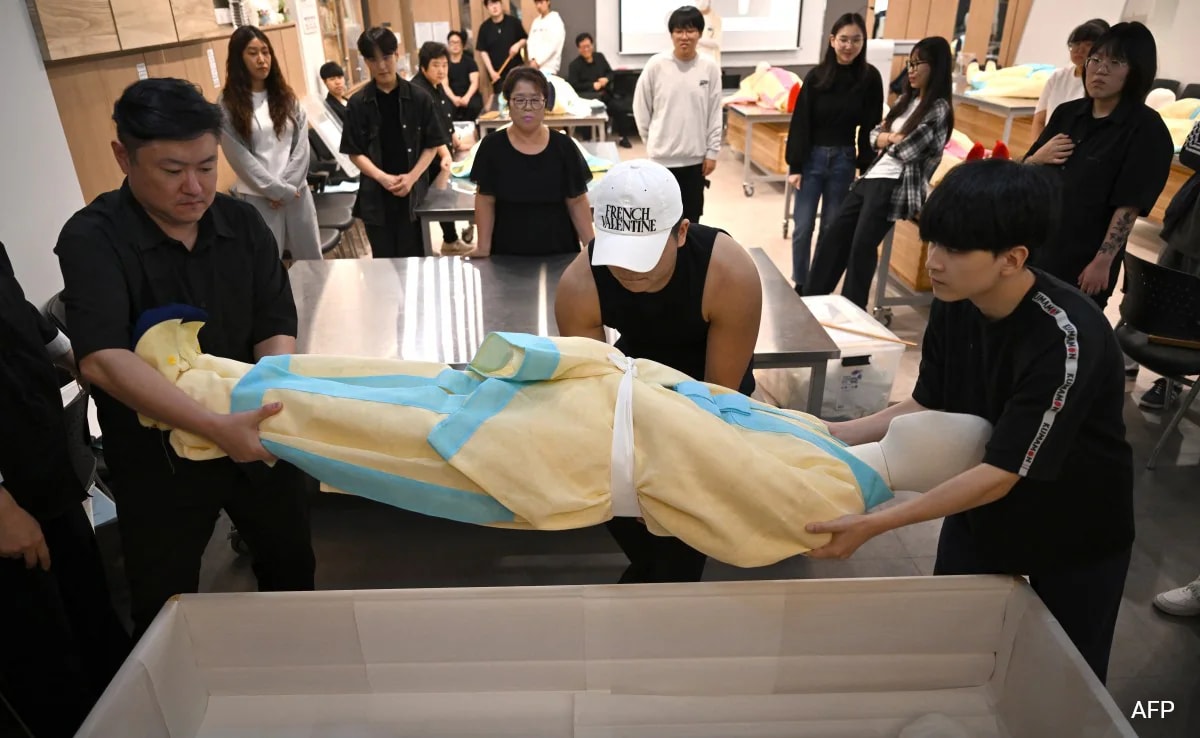
In South Korea, the funeral industry is experiencing significant growth as the population rapidly ages and more people live alone.
At the Busan Institute of Science and Technology, classrooms are lined with coffins where students train to become funeral directors. These young professionals carefully practice traditional Korean burial rituals, including draping mannequins with ceremonial cloth before placing them in coffins.
South Korea faces major demographic shifts, with one of the world's lowest birth rates and nearly half its population now over 50 years old. This transformation has created emerging career opportunities in death-related services.
Jang Jin-yeong, 27, a student in funeral administration, explained his career choice: "With our society ageing, I thought the demand for this kind of work would only grow." Fellow student Im Sae-jin, 23, was inspired to enter the field after witnessing the dignified care given to his grandmother at her funeral. "I felt deeply grateful," he shared.
The rise in single-person households, now representing approximately 42 percent of all homes in Asia's fourth-largest economy, has created another specialized profession: cleaners who handle homes after occupants die alone.
Cho Eun-seok, 47, a former classical musician, now specializes in cleaning residences where people have passed away unattended, sometimes discovered months later. These homes often tell poignant stories through personal belongings—countless capped soju bottles or unopened gift boxes collecting dust.
South Korea maintains the highest suicide rate among developed nations, and many "lonely deaths" involve individuals who took their own lives while living in isolation. Cho has recently been contacted by car leasing companies to clean vehicles where clients died by suicide.
He's currently developing technology to detect unattended deaths earlier, noting how quickly decomposition affects surrounding environments, particularly during summer months when "nothing can be saved."
The work extends beyond mere cleaning. Kim Seok-jung once discovered unpublished songs while clearing a deceased lyricist's home and transformed them into a musical tribute for the family. Cho recalls regularly cleaning for a teenage girl who lived alone in a tiny gosiwon room after escaping domestic violence. Despite her depression and inability to maintain her space, she carefully protected a small box that, after her suicide, was revealed to contain a pet hamster—alongside the guitar representing her musical aspirations.
"The moment I saw the hamster, all I could think was that I had to save it and keep it alive," Cho recalled.
Kim Doo-nyeon, a funeral industry veteran, notes increasing interest from young people in their twenties. He observes a fundamental difference between family and solitary deaths: "When people live together, they share things... even if one person dies, those items remain. But when someone dies alone, everything must be cleared away."
Despite his career choice, student Im acknowledges natural apprehension: "I am scared. No matter how much you prepare, facing a dead person is frightening."
Source: https://www.ndtv.com/world-news/death-becomes-a-growing-business-in-ageing-lonely-south-korea-9565032