
Trump's Modern Interpretation of Reagan's "Peace Through Strength": Bold Actions and Strategic Uncertainty
- Date & Time:
- |
- Views: 51
- |
- From: India News Bull
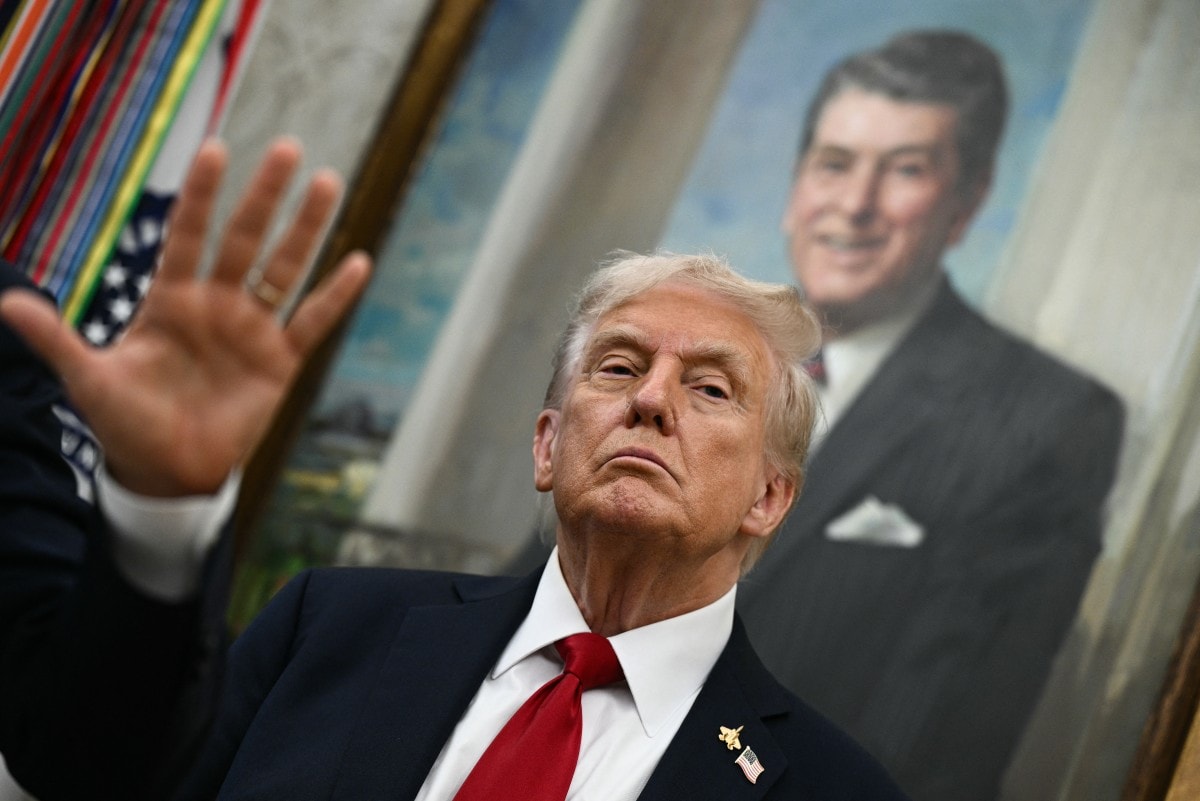
Trump showcased his distinctive approach to Reaganesque diplomacy during his recent Asia tour.
Not long ago, President Donald Trump expressed his ambition to build a legacy as a "peacemaker." During his inaugural address, he declared that his administration would gauge "success not only by the battles we win, but also by the wars that we end - and perhaps most importantly, the wars we never get into."
However, nine months into his second White House term, Trump is forging an unconventional path toward implementing his "peace through strength" foreign policy agenda. This phrase, borrowed from former Republican President Ronald Reagan, originally reflected Reagan's belief that a robust military and economy formed the foundation for Soviet deterrence.
Trump's interpretation of the Reagan doctrine incorporates more explicit threats, military strikes, and considerable swagger.
While history's verdict on Trump's approach remains to be seen, Reagan himself faced skeptics during his presidency. Andrew Busch, a University of Tennessee scholar, noted, "There are a lot of people who would have given Reagan a not-passing grade around 1983 or so," referencing the year Reagan ordered the U.S. invasion of Grenada. "By 1989, when he left office, they would say, 'Wow, that guy was like the biggest peacemaker in the 20th century in some ways.'"
Trump's distinctive diplomatic style was prominently displayed during his recent Asia trip.
En route to the Association of Southeast Asian Nations summit in Kuala Lumpur, Malaysia, Trump announced via social media his decision to cancel trade talks with Canada and impose an additional 10% tariff on Canadian imports. His anger stemmed from a television advertisement funded by Ontario province that featured spliced audio of Reagan criticizing tariffs, which aired during the World Series.
While meeting with leaders in Malaysia and South Korea, the U.S. Navy conducted additional lethal strikes against suspected drug boats in the Pacific.
His administration also redeployed the USS Ford and thousands of sailors from the Mediterranean toward Caribbean waters near Venezuela, continuing America's largest military buildup in Latin America in over five decades.
Trump's bold actions continued when, moments before a crucial meeting with Chinese President Xi Jinping on Thursday, he used social media to suggest he might abandon the decades-old U.S. prohibition on nuclear weapons testing.
Later, returning to Washington, Trump remained ambiguous about whether he genuinely intended to resume explosive nuclear weapons testing—something only North Korea has done this century—or merely called for testing delivery systems, which is far more common.
When asked by reporters aboard Air Force One on Friday about potential underground nuclear detonation tests, Trump enigmatically replied, "You'll find out very soon," as he headed to Florida for the weekend.
Defense Secretary Pete Hegseth has not clarified what testing the administration plans to undertake but reiterates Trump's Reagan-inspired motto: "America will ensure that we have the strongest, most capable nuclear arsenal, so that we maintain peace through strength. That's what this is. In every meeting, that's what we talk about: Peace through strength."
Although the casual discussion of nuclear testing unsettled some, reactions remained relatively measured. Trump has frequently made pronouncements only to significantly shift positions later.
For instance, regarding Ukraine, he rapidly evolved from asserting Ukraine must surrender territory to Russia, to claiming Kyiv could recapture all lost land, to declaring "fighting should stop at the lines they are at now."
Administration officials hesitate to question Trump's tactics but acknowledge apparent contradictions, particularly regarding seemingly impulsive reversals in his public statements.
Rather than viewing these abrupt course changes as flaws, administration officials privately argue they increase U.S. influence and make adversaries—and even allies—more cautious about challenging Trump.
However, policy consistency has traditionally been considered essential in national security and international relations, providing a concrete foundation for international understanding that guides other countries' decision-making processes.
"This is a product of a lack of process," observed Ian Kelly, a retired career diplomat who served as U.S. ambassador to Georgia during Trump's first term. "It's a classic top-to-bottom operation and there doesn't seem to be any consultation with other stakeholders, especially with Congress, but also long-standing allies."
Trump has firmly maintained his "peacemaker" title despite his administration implementing an activist foreign policy early in his second term.
He highlights as a major achievement his June order to strike three critical Iranian nuclear facilities, which he claims "obliterated" Iran's program. The bombing inflicted significant damage without harming American troops.
Though Trump insists the program was destroyed, the head of the U.N. nuclear watchdog reported this week that renewed activity has been detected at Iran's nuclear sites.
Before these strikes, some of Trump's staunchest supporters—including Steve Bannon, Rep. Marjorie Taylor Greene, Tucker Carlson, and Charlie Kirk—expressed concern as Trump contemplated military action, citing his historical wariness of wars initiated by previous administrations.
Trump's Caribbean operations appear to be dealing significant blows to Venezuelan drug smugglers and unsettling President Nicolás Maduro's government. Currently, this seems to come with "very little political cost" for Trump, according to Justin Logan, director of defense and foreign policy studies at the libertarian Cato Institute.
However, Logan cautions that Trump should carefully consider his approach to Venezuela and avoid the pitfalls of the "endless wars" in Iraq and Afghanistan that profoundly impacted American consciousness—this time in America's own neighborhood.
"This administration seems to favor these short, sharp strokes and then say they have resolved the problem altogether," Logan observed. "I'm afraid what will happen is that we will discover that none of these problems have actually been put to bed."
Source: https://www.ndtv.com/world-news/how-donald-trump-put-his-own-stamp-on-ronald-reagans-peace-through-strength-mantle-9558582