
Pakistan Faces Severe Water Crisis as India Suspends Indus Waters Treaty: Ecological Threat Report 2025
- Date & Time:
- |
- Views: 49
- |
- From: India News Bull
The Sydney-based Institute for Economics and Peace has published a report highlighting Pakistan's vulnerability to water scarcity following India's suspension of the Indus Waters Treaty (IWT) earlier this year.
According to the Ecological Threat Report 2025, Pakistan faces an "acute risk" of water shortage as India now possesses the ability to control the westward flow of the Indus River and its tributaries into Pakistani territory.
India suspended the longstanding treaty in response to the Pahalgam attack that occurred in April this year, creating significant concerns for Pakistan's water security.
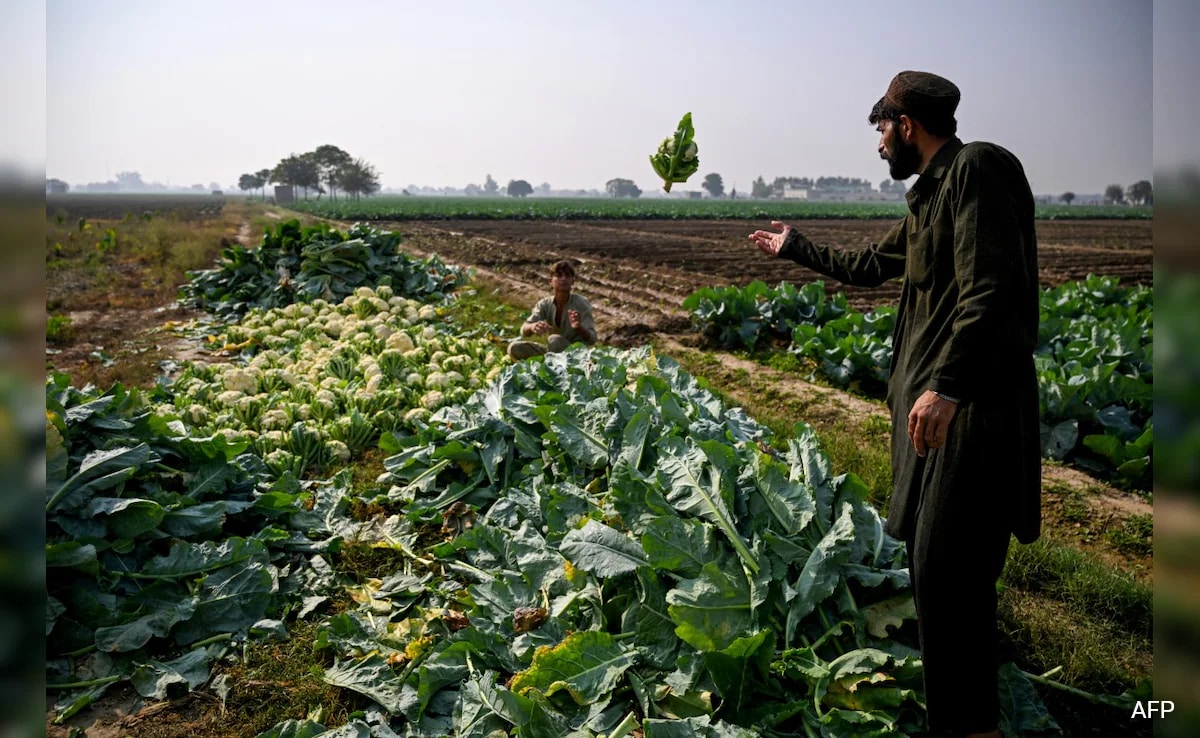
This development represents a critical challenge for Pakistan, whose agricultural sector depends on the Indus River system for approximately 80% of its irrigation needs.
The report warns, "Even small disruptions at critical moments could harm Pakistani agriculture since Pakistan lacks sufficient storage capacity to buffer variations. Pakistan's dam infrastructure can store only about 30 days of Indus flow; any prolonged interruption would be catastrophic if not properly managed."
Emphasizing the existential nature of this issue for Pakistan, the report states, "Interruption of Indus flows threatens its food security directly, and thus its national survival. Indeed, about 80 percent of Pakistan's irrigated agriculture depends on the Indus basin rivers."
The report further notes, "For Pakistan, the danger is acute. If India were truly to cut off or significantly reduce Indus flows, Pakistan's densely populated plains would face severe water shortages, especially during winter and dry seasons."
While acknowledging that India's current infrastructure limits its capacity to completely halt river flows, the report cautions that even minor interruptions could have devastating short-term effects on Pakistan's agricultural productivity.
In May, India conducted "reservoir flushing" operations at the Salal and Baglihar dams on the Chenab River without providing notification to Pakistan. This process, used to remove silt by draining reservoirs, had previously been restricted under the treaty due to potential downstream impacts.
The consequences were immediate. Sections of the Chenab River in Pakistan's Punjab reportedly dried up for several days after India closed the dam gates, only to be followed by sediment-laden surges when the gates were reopened.
The Indus Waters Treaty, signed in 1960 with World Bank mediation, had long been considered a rare successful example of India-Pakistan cooperation. The agreement divided the basin's six rivers, allocating the eastern rivers (Ravi, Beas, Sutlej) to India and the western rivers (Indus, Jhelum, Chenab) to Pakistan, and had survived three wars between the neighboring countries.
However, the treaty's stability began deteriorating in the 2000s as political tensions increased. Under Prime Minister Narendra Modi, India sought to fully utilize its allocated share of the eastern rivers.
Following the Pahalgam terror attack in April 2025, India suspended the IWT, prompting Islamabad to warn that "any diversion of Pakistan's water is to be treated as an act of war."
In May 2025, Operation Sindoor heightened fears of a broader conflict. A month later, Home Minister Amit Shah announced that the treaty would remain permanently suspended.
Source: https://www.ndtv.com/world-news/indias-indus-waters-treaty-suspension-puts-pakistan-at-acute-risk-of-scarcity-report-9555783