
Xi Jinping Invites Canadian PM Carney to China Amid Global Trade Tensions and Holds First Meeting with Japan's New Premier
- Date & Time:
- |
- Views: 63
- |
- From: India News Bull
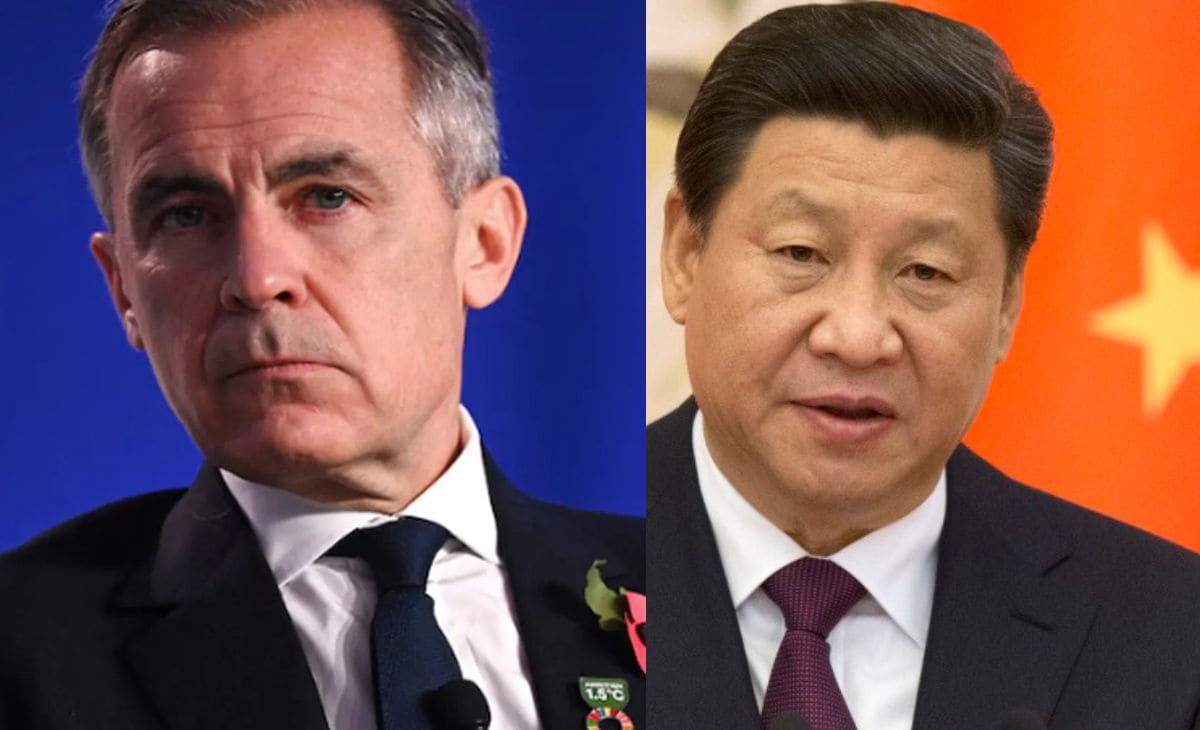
Canada and China have both been significantly affected by Trump's global trade policies.
Chinese President Xi Jinping extended an invitation to Canadian Prime Minister Mark Carney to visit China during their first formal talks since 2017, before also holding inaugural discussions with Japan's newly appointed premier.
Canadian-Chinese relations currently rank among the most strained of any Western nation, yet both countries are experiencing similar pressures from Donald Trump's tariff strategy, even after Xi and Trump agreed to reduce tensions during their meeting on Thursday.
"With joint efforts from both sides, China-Canada relations have recently demonstrated a recovery toward positive development," Xi stated during their meeting at the APEC summit in South Korea, extending the invitation for Carney to visit China.
"China wishes to collaborate with Canada to restore China-Canada relations to the proper course," Xi further remarked.
"We have not maintained sufficient engagement in recent years," acknowledged Carney, accepting Xi's invitation.
The Canadian leader emphasized "constructive and pragmatic dialogue" as the approach to addressing their "current issues".
He also identified dialogue as a means "to help construct a more sustainable, inclusive international system."
Relations deteriorated significantly in 2018 following the arrest of a senior Chinese telecommunications executive on a US warrant in Vancouver and China's subsequent detention of two Canadians on espionage charges.
In July, Carney announced an additional 25 percent tariff on steel imports containing steel melted and poured in China.
Beijing responded the following month by imposing a substantial temporary customs duty of 75.8 percent on Canadian canola imports.
Canada ranks among the world's leading producers of canola, an oilseed crop used in cooking oil, animal feed, and biodiesel fuel production.
However, both Canada and China have been heavily impacted by Trump's extensive trade measures.
Trump announced Thursday that he would reduce fentanyl-related tariffs on China by half to 10 percent, while Xi agreed to maintain rare earth exports and increase imports of US soybeans.
Nevertheless, Trump stated that the average US tariff on Chinese imports remains at 47 percent.
On Saturday, the US president announced an additional 10 percent tariff increase on Canadian goods and terminated all trade negotiations.
This followed what Trump described as a "fake" anti-tariff advertising campaign featuring former president Ronald Reagan.
"The former world of steady expansion of rules-based liberalized trade and investment, a foundation for much of our nations' prosperity—particularly Canada's—that world has disappeared," Carney told the APEC assembly.
He also highlighted Canada's potential as an "energy superpower" and major supplier of liquified natural gas (LNG) to Asian markets.
Later, Xi met with Japan's first female premier, Sanae Takaichi, for the first time since her appointment this month.
Chinese state media quoted Xi saying China was prepared to work with Japan to develop constructive, stable bilateral relations suitable for the new era.
Takaichi, who regularly visits the controversial Yasukuni shrine honoring Japan's war dead, is viewed as taking a firm stance on China, although she has moderated her statements recently.
However, in her inaugural policy address last Friday, she still declared that the military activities of China—along with North Korea and Russia—"have become a grave concern".
She announced Japan would allocate two percent of its gross domestic product to defense in the current fiscal year—two years ahead of schedule—prompting criticism from China.
She also strongly supports Taiwan and advocates for security cooperation with the self-governed island.
Japanese media reported that Takaichi was expected to express serious concerns to Xi regarding China's behavior, including issues surrounding the disputed Senkaku Islands, known in China as the Diaoyu Islands.
Reports indicated she would also press for the prompt release of Japanese citizens detained in China and request assurances for the safety of Japanese expatriates in China.
Her public remarks at the beginning of the meeting focused solely on reducing "concerns" and increasing "mutual understanding and cooperation".
Japanese industry is also eager to ensure continued supplies of rare earth elements from China—which have become a point of contention in Xi's trade dispute with Trump.
"This initial meeting could be rather cool as Xi Jinping has not sent a congratulatory message to Takaichi, cautious of her reputation as a China hawk," Yee Kuang Heng, a professor at the University of Tokyo's Graduate School of Public Policy, told AFP.
"Nevertheless, stability remains a shared priority for both sides," Heng added.
Source: https://www.ndtv.com/world-news/xi-jinping-invites-canada-pm-to-china-in-first-meet-in-8-years-9552166