
Russia Deploys INF-Banned 9M729 Missiles in Ukraine: Implications for Global Security and Arms Control
- Date & Time:
- |
- Views: 63
- |
- From: India News Bull
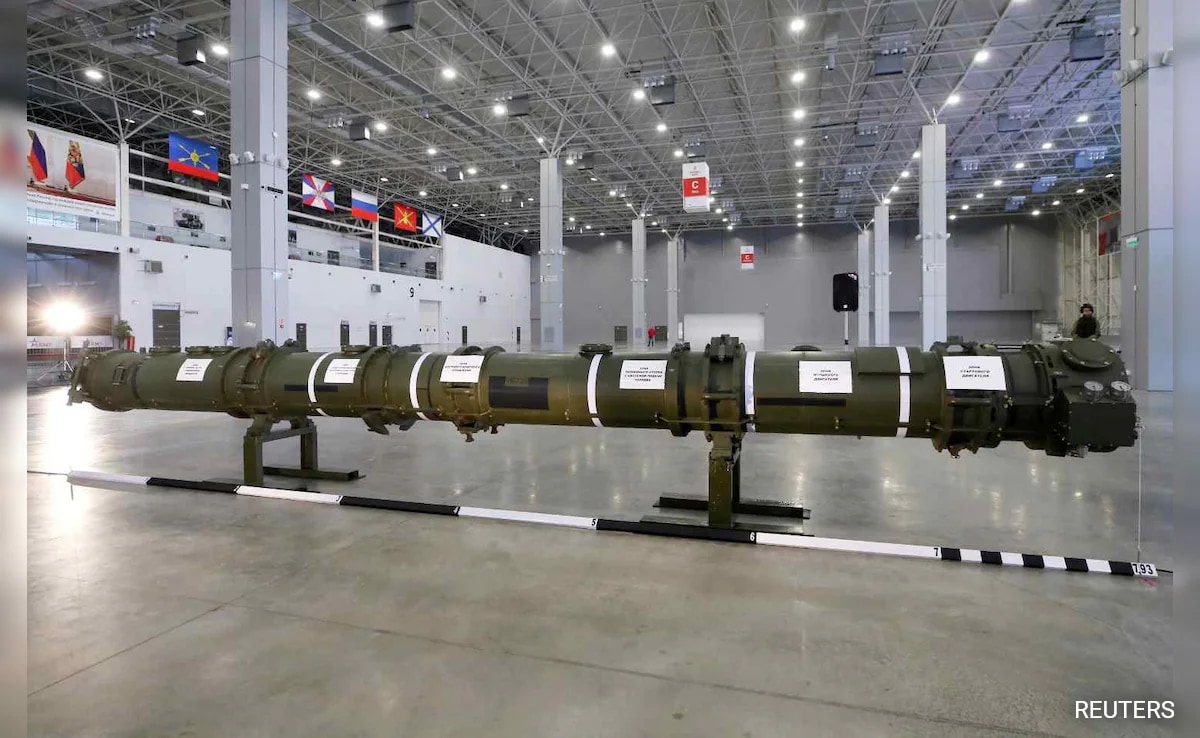
A component of the SSC-8/9M729 cruise missile system (File)
Russia has recently deployed the 9M729 cruise missile against Ukraine, the same weapon whose development led Donald Trump to withdraw from a nuclear arms control agreement with Moscow during his first presidential term, according to Ukraine's Foreign Minister.
Andrii Sybiha's statement marks the first official confirmation that Russia has used the ground-launched 9M729 missile in actual combat operations in Ukraine or elsewhere.
A senior Ukrainian official revealed to Reuters that Russia has launched the 9M729 missile against Ukraine 23 times since August. Additionally, Ukrainian forces documented two earlier deployments of this missile system in 2022.
Russia's defense ministry did not provide an immediate response when asked for comment on these allegations.
One missile reportedly traveled approximately 1,200 kilometers to its target in Ukraine. The 9M729 was the central issue that prompted the United States to withdraw from the Intermediate-Range Nuclear Forces (INF) Treaty in 2019. Washington maintained that the missile violated treaty limitations, capable of flying well beyond the 500-kilometer restriction, although Moscow consistently denied these claims.
According to the Missile Threat website published by the Center for Strategic and International Studies in Washington, the missile can be equipped with either conventional or nuclear warheads and has a maximum range of 2,500 kilometers.
A military source confirmed that a 9M729 missile launched by Russia on October 5 traveled over 1,200 kilometers before striking its target in Ukraine.
"Russia's use of the INF-banned 9M729 against Ukraine in the past months demonstrates President Putin's disrespect to the United States and President Trump's diplomatic efforts to end Russia's war against Ukraine," Sybiha stated in written remarks.
Sybiha informed Reuters that Kyiv supports Trump's peace proposals and believes Russia should face maximum pressure to pursue peace negotiations. He emphasized that enhancing Ukraine's long-range strike capabilities would help convince Moscow to end hostilities.
Ukraine has requested that Washington provide Tomahawk missiles, which were not prohibited under the INF Treaty as they were exclusively sea-launched at that time. Russia considers such a move a dangerous escalation of the conflict.
Western military analysts suggest that the deployment of the 9M729 expands Russia's arsenal of long-range weapons for striking Ukraine and fits into a pattern of Moscow sending threatening signals toward Europe as Trump seeks a peace settlement.
"I think Putin is trying to ramp up pressure as part of the Ukraine negotiations," said William Alberque, a senior adjunct fellow at the Pacific Forum think tank, adding that the 9M729 was specifically designed to target locations in Europe.
Recently, Russia tested its nuclear-powered Burevestnik cruise missile and announced a test of the nuclear-powered torpedo named Poseidon.
The White House has not responded to specific questions regarding Russia's use of the 9M729. Trump ordered the U.S. military to resume nuclear weapons testing on Thursday, citing "other countries' testing programs."
Following the U.S. withdrawal from the INF treaty, which prohibited ground-launched missiles with ranges between 500-5,500 kilometers, Russia declared a moratorium on deploying intermediate-range missiles. However, Western nations maintained that Russia had already positioned some 9M729 missiles.
On August 4, shortly before employing these missiles in Ukraine, Russia announced it would no longer restrict where it deploys INF-range missiles capable of carrying nuclear warheads.
"If it's shown that Russia's using INF-range missiles, which could easily be nuclear, in Ukraine, then that is an issue for European security, not just Ukraine," stated John Foreman, a former British defence attaché to Moscow and Kyiv.
Ukraine's foreign ministry did not provide specific details or dates of the 9M729 strikes.
A senior official revealed that these strikes began on August 21 - less than a week after a summit between Trump and Putin in Alaska.
Reuters examined images of debris following a Russian attack that struck a residential building, killing four people in the Ukrainian village of Lapaiivka on October 5 - more than 600 kilometers from Russian territory.
The images showed two missile fragments, including a tube containing cabling, clearly marked as 9M729.
Jeffrey Lewis, Distinguished Scholar of Global Security at Middlebury College, reviewed these images with analysts and confirmed that the tube, engine, and engine paneling were consistent with the expected appearance of the 9M729, with the markings making identification even more probable.
While Russia possesses various missiles capable of striking across Ukraine, including the sea-launched Kalibr and air-launched Kh-101, Lewis noted that the 9M729 offers tactical advantages.
"This gives them slightly different attack axes, which is difficult for air defences, and it increases the pool of missiles that are available to the Russians," Lewis explained.
The INF Treaty specifically prohibited ground-launched missiles because their launchers are mobile and relatively difficult to detect.
Douglas Barrie, Senior Fellow for Military Aerospace at the International Institute for Strategic Studies, suggested that Russia could utilize the 9M729 to conduct ground-launched strikes from more secure locations deeper inside Russian territory.
Barrie also noted that Russia would benefit from testing the system in an actual battlefield environment in Ukraine, though the documented 23 uses would suggest a primarily military application rather than just testing.
Source: https://www.ndtv.com/world-news/russia-using-missile-in-ukraine-over-which-us-ended-arms-pact-in-2019-9550263