
Climate Change Influencing Young Americans' Decision to Delay or Forego Parenthood
- Date & Time:
- |
- Views: 57
- |
- From: India News Bull
The US emits 123 times more carbon emissions than Ghana (Representational)
Amanda Porretto, at 27, finds herself at the average age of new mothers in the United States according to CDC data, yet remains uncertain about having children. As an only child, she faces familial pressure—her father desires grandchildren and her late mother always insisted she would eventually want motherhood.
"Some people perceive not having children negatively," explains Porretto, who works in advertising. "I simply question bringing more people into a world with so many existing problems that need resolution."
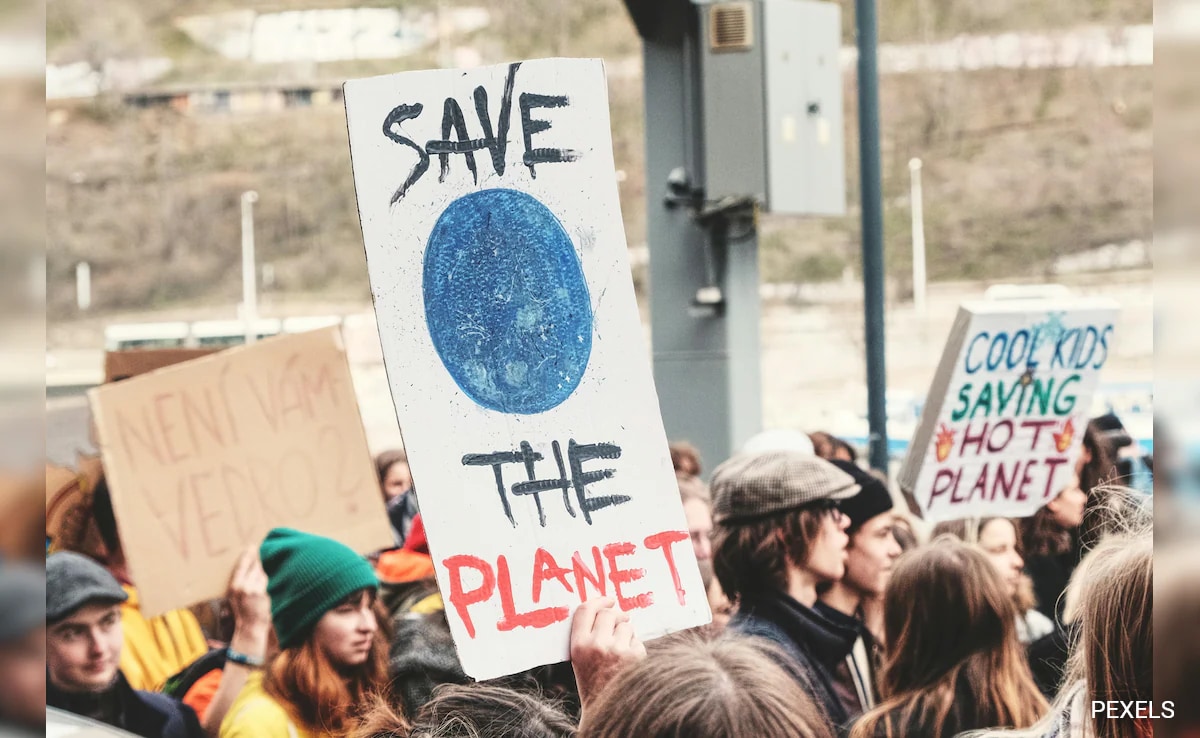
Recent studies indicate that younger Americans increasingly cite climate change as a significant factor in their reluctance to have children. They express anxiety about introducing children into a world experiencing more frequent and severe extreme weather events resulting from climate change, which stems from greenhouse gas emissions when fossil fuels are burned. Additionally, they worry about their potential offspring's environmental impact.
A 2024 Lancet study of individuals aged 16 to 25 revealed that most respondents were "very" or "extremely" concerned about climate change, with 52% expressing hesitancy about parenthood due to environmental concerns. According to a Pew Research Center report from last year, childless adults under 50 were four times more likely than their over-50 counterparts to identify climate as a factor in their decision. Furthermore, a recent study in the Proceedings of the National Academy of Sciences found that over half of participants answered "yes" or "maybe" when asked if climate change made them question having children.
The connection between parenthood and climate change involves not only concern for children's future well-being but also for the planet's health.
"Compared to all other carbon-generating decisions, having a child represents by far the largest impact, by orders of magnitude," explains Nandita Bajaj, executive director of Population Balance, a nonprofit focused on humanity's environmental footprint.
Travis Rieder, a bioethics professor at Johns Hopkins University, describes procreation as creating a "carbon legacy."
"Beyond the carbon-intensive activities like purchasing larger homes, vehicles, and baby products, you're creating someone who will generate their own carbon footprint throughout their lifetime," Rieder notes.
This impact potentially extends through generations if that child has descendants, though Rieder clarifies he's not advocating for childlessness as the logical extreme of minimizing environmental impact.
Quantifying a child's environmental impact proves challenging, partly because there's no consensus on what percentage of their impact falls under parental responsibility, and partly because impact levels depend significantly on lifestyle factors.
"Wealth strongly predicts how carbon-expensive someone will be," Rieder explains.
For context, the United States emits 123 times more carbon than Ghana, according to the Emissions Database for Global Atmospheric Research. When adjusted for population, the average American produces more than 12 times the emissions of the average Ghanaian.
Despite procreation potentially having the largest climate impact, discussions about reducing personal contributions to global warming rarely include having fewer children.
Researchers studying climate change and family planning identify two reasons for this omission.
"When someone announces they're expecting, social norms dictate offering congratulations and support," explains Trevor Hedberg, who teaches moral philosophy at the University of Arizona.
Additionally, Rieder notes that discussions about procreation's impact often evoke conversations about overpopulation. The environmental movement of the 1970s expressed concerns about exceeding the planet's resource capacity, which unfortunately led to racist and eugenic ideologies that provoked significant backlash.
Ash Sanders, 43, knew from a young age she didn't want children. Then she became pregnant unexpectedly.
"I was reluctant to add another person to an already environmentally stressed world," she explains.
Sanders, a freelance writer covering religion and environment, wanted an abortion but felt pressured by her Mormon upbringing and the child's father to continue the pregnancy. She recalls being labeled a bad person for not wanting a child.
She ultimately chose open adoption and maintains regular contact with her child. Today, she experiences mixed feelings about her decision.
"I feel guilt for bringing her into this world. She's happy and wonderful—I'm a big fan—but I still feel guilt consistently," she admits.
Juan Jaramillo has considered environmental factors in his parenthood decisions since his teenage years in the 1970s. Later studying marine biology, he observed that "while climate change wasn't yet prominent, many of today's environmental problems already existed."
Combined with his personal preference against parenthood, he opted for a vasectomy—a decision he hasn't regretted. His choice aligned with his environmental concerns.
This alignment doesn't exist for everyone, including Rieder, who has extensively studied environmental impacts yet deeply desired fatherhood.
"Having children provides profound meaning and importance to people's lives, despite being carbon-intensive," he reflects. "How does one balance these considerations?"
For Rieder, that balance meant having just one child.
Source: https://www.ndtv.com/world-news/young-americans-hesitate-to-have-children-over-climate-change-fears-study-9542272