
Two Suspects Admit Involvement In Historic $102 Million Louvre Jewelry Heist: Security Gaps Exposed
- Date & Time:
- |
- Views: 76
- |
- From: India News Bull
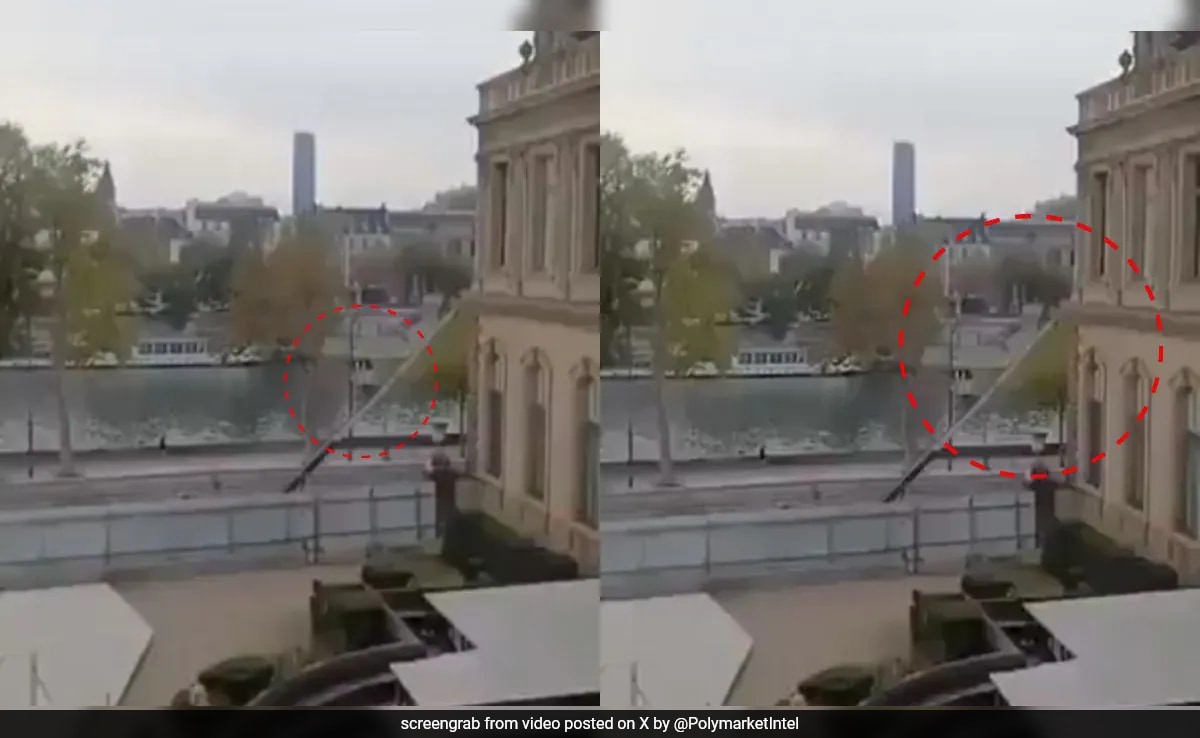
Video surveillance footage revealed that at least four criminals were involved in the daring Louvre heist operation.
Two individuals implicated in the Louvre jewelry theft were issued preliminary charges on Wednesday for criminal conspiracy and organized gang theft, according to the Paris prosecutor's office. Prosecutor Laure Beccuau confirmed that the suspects have acknowledged their participation in the crime.
During a news conference, Beccuau stated that these individuals are believed to be the men who forcibly entered the world's most visited museum on October 19, with at least two additional accomplices still evading capture. The stolen jewels remain unrecovered.
The prosecutor's office announced in a statement that both suspects received preliminary charges and were ordered to remain in custody as the investigation continues.
Beccuau revealed that the suspects have "partially" admitted their involvement in the robbery. She declined to share specific details about their statements to investigators, expressing concern that accomplices might be monitoring media coverage.
The thieves took less than eight minutes to steal jewels valued at 88 million euros ($102 million) on October 19, an incident that shocked the global community. The robbers forced a window open, used power tools to cut into display cases, and escaped with eight pieces from the French crown jewel collection.
According to Beccuau, the two men arrested Saturday night "are suspected of being the ones who broke into the Apollo Gallery to steal the jewels."
One suspect is a 34-year-old Algerian national who has resided in France since 2010. He was apprehended at Charles de Gaulle airport while attempting to board a flight to Algeria without a return ticket. The man lived in Aubervilliers, a northern Paris suburb, and had previous encounters with police primarily for traffic violations. Investigators found his DNA on one of the scooters used by the robbers to flee the scene.
The second suspect, aged 39, was arrested at his Aubervilliers residence. Beccuau stated, "There is no evidence to suggest that he was about to leave the country." This individual had a record of previous theft offenses, and his DNA was detected on one of the display cases and on items abandoned by the thieves.
Surveillance footage confirmed the involvement of at least four criminals in the heist, according to Beccuau.
The four suspected robbers arrived in a truck equipped with a freight lift, which two of them used to access the museum window. All four departed on two motor scooters along the Seine River toward eastern Paris, where they had additional vehicles stationed.
Beccuau emphasized that there is no indication the robbers had any accomplices among the museum staff.
The prosecutor confirmed that the stolen jewels have not been recovered and warned, "These jewels are now, of course, unsellable... Anyone who buys them would be guilty of concealment of stolen goods. There's still time to give them back."
Earlier Wednesday, French police acknowledged significant security vulnerabilities at the Louvre, transforming the brazen daylight theft into a national debate about how France safeguards its cultural treasures.
Paris Police Chief Patrice Faure informed Senate lawmakers that aging systems and delayed upgrades created security weaknesses at the museum.
"A technological step has not been taken," he noted, explaining that portions of the video network remain analog, producing lower-quality images that cannot be shared efficiently in real time.
A long-promised security overhaul—a $93 million project requiring approximately 60 kilometers (37 miles) of new cabling—"will not be finished before 2029-2030," according to Faure.
Faure also disclosed that the Louvre's authorization to operate its security cameras had quietly expired in July without renewal—a bureaucratic oversight that many view as indicative of broader negligence.
The police chief stated that officers "arrived extremely fast" after the theft but acknowledged that response delays occurred earlier in the sequence—from initial detection, to museum security, to emergency line contact, to police command.
Faure and his team revealed that the first police alert came not from the Louvre's alarm systems but from a cyclist outside who called the emergency number after observing helmeted individuals with a basket lift.
Faure urged lawmakers to authorize currently restricted tools: AI-based anomaly detection and object tracking capabilities (not facial recognition) to flag suspicious movements and monitor scooters or equipment across city cameras in real time.
Former bank robber David Desclos told the AP that the theft followed a textbook approach, and vulnerabilities were glaringly evident in the gallery's layout.
Culture Minister Rachida Dati, facing mounting pressure, has declined the Louvre director's resignation offer and maintained that the alarm systems functioned properly, while acknowledging that "security gaps did exist."
The museum was already experiencing operational strain. In June, the Louvre closed due to a spontaneous staff strike—including security personnel—protesting unmanageable crowds, chronic understaffing, and "untenable" conditions. Unions contend that mass tourism and construction bottlenecks create surveillance blind spots, a vulnerability highlighted by the thieves who positioned a basket lift at the Seine-facing facade.
Faure indicated that police will now monitor surveillance permit deadlines across institutions to prevent recurrences of the July lapse. However, he emphasized that the comprehensive solution is disruptive and time-consuming: completely rebuilding core systems while keeping the palace operational, and updating legislation to enable police to respond to suspicious activity in real time.
Experts fear the stolen items may have already been dismantled and the stones recut to erase evidence of their origin.
Source: https://www.ndtv.com/world-news/two-suspects-admit-involvement-in-102-million-louvre-jewel-heist-in-france-9542125