
Cloud Seeding Success Stories and Failures: Global Experiences in Weather Modification
- Date & Time:
- |
- Views: 46
- |
- From: India News Bull
Delhi is experiencing severe smog with air quality reaching hazardous levels throughout the National Capital Region (NCR). In response to the worsening conditions, the government implemented its first-ever cloud seeding operation on Tuesday. This experimental procedure, conducted with assistance from IIT Kanpur, was designed to generate artificial rainfall to help clear dust and pollutants from the atmosphere. While numerous countries have employed cloud seeding as a pollution control measure, this marked Delhi's first attempt. Unfortunately, the operation did not yield the anticipated results.
Several nations have previously attempted cloud seeding to combat air pollution, including the United States, China, the United Arab Emirates, Australia, and European countries such as France and Spain.
The UAE stands as one of the most active practitioners of cloud seeding, conducting hundreds of flights annually to enhance rainfall and address severe water shortages.
China operates the world's largest cloud seeding program, utilizing the technology to increase precipitation in arid areas. The country began experimenting with this technique in the 1950s and has since implemented it nationwide. During the 2008 Beijing Olympics, China employed cloud seeding to improve air quality.
The United States has utilized cloud seeding for decades, primarily to enhance snowfall, increase rainfall, and manage drought conditions. States including Colorado, Utah, Idaho, Nevada, California, and Wyoming employ this technique to boost mountain snowfall.
More than 50 countries worldwide have experimented with cloud seeding, including Saudi Arabia, Israel, Indonesia, and Australia.
Cloud seeding has demonstrated varying degrees of success across different regions. Some countries have achieved positive outcomes, while others have observed minimal or no improvement.
The UAE is frequently cited as one of the most successful implementations, reportedly increasing rainfall by 10 to 30 percent in certain areas. China has also claimed precipitation increases of up to 15 percent.
Israel, one of the pioneering countries in cloud seeding during the 1960s, discontinued its program in 2021 after research indicated no significant increase in rainfall. Similarly, South Africa and mainland Australia have reported limited success with their programs.
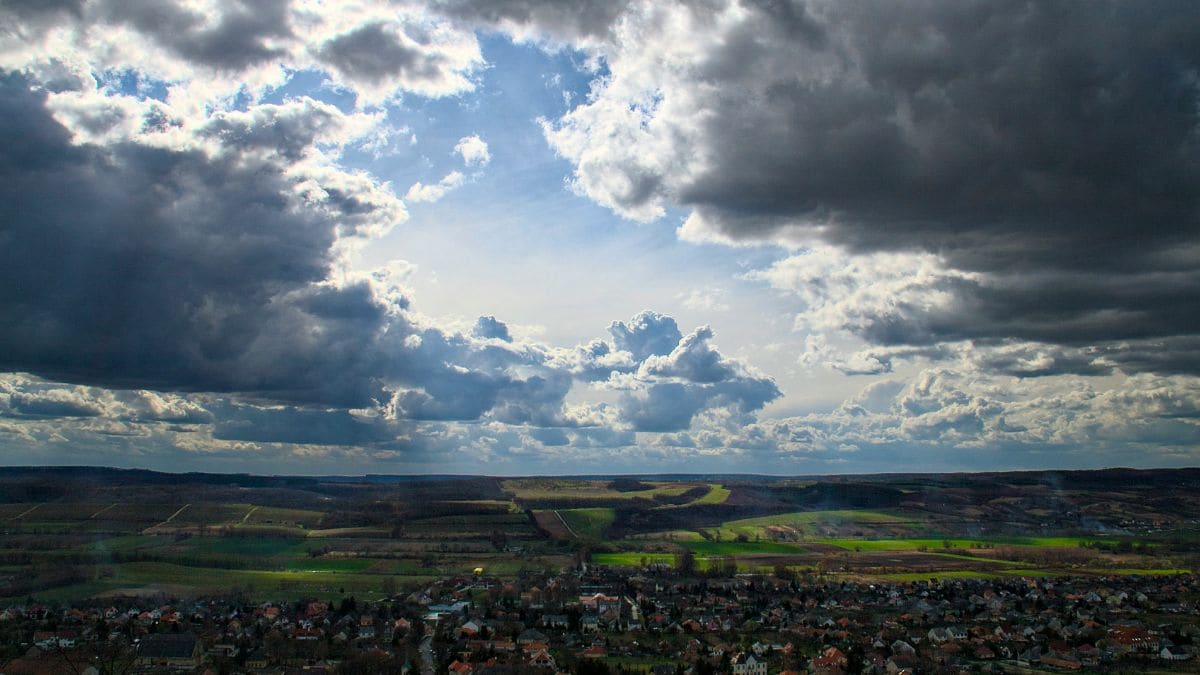
Cloud seeding is a technique designed to enhance precipitation from clouds. The process involves aircraft, drones, or ground-based equipment releasing tiny particles—typically silver iodide, potassium iodide, or salt—into clouds. These particles serve as condensation nuclei around which water droplets or ice crystals form. Once these droplets accumulate sufficient mass, they fall as rain or snow.
Source: https://www.ndtv.com/world-news/cloud-seeding-in-delhi-soon-where-it-worked-where-it-failed-9535796