
NASA's X-59 Quiet Supersonic Jet Completes Historic First Test Flight Over California Desert
- Date & Time:
- |
- Views: 61
- |
- From: India News Bull
California:
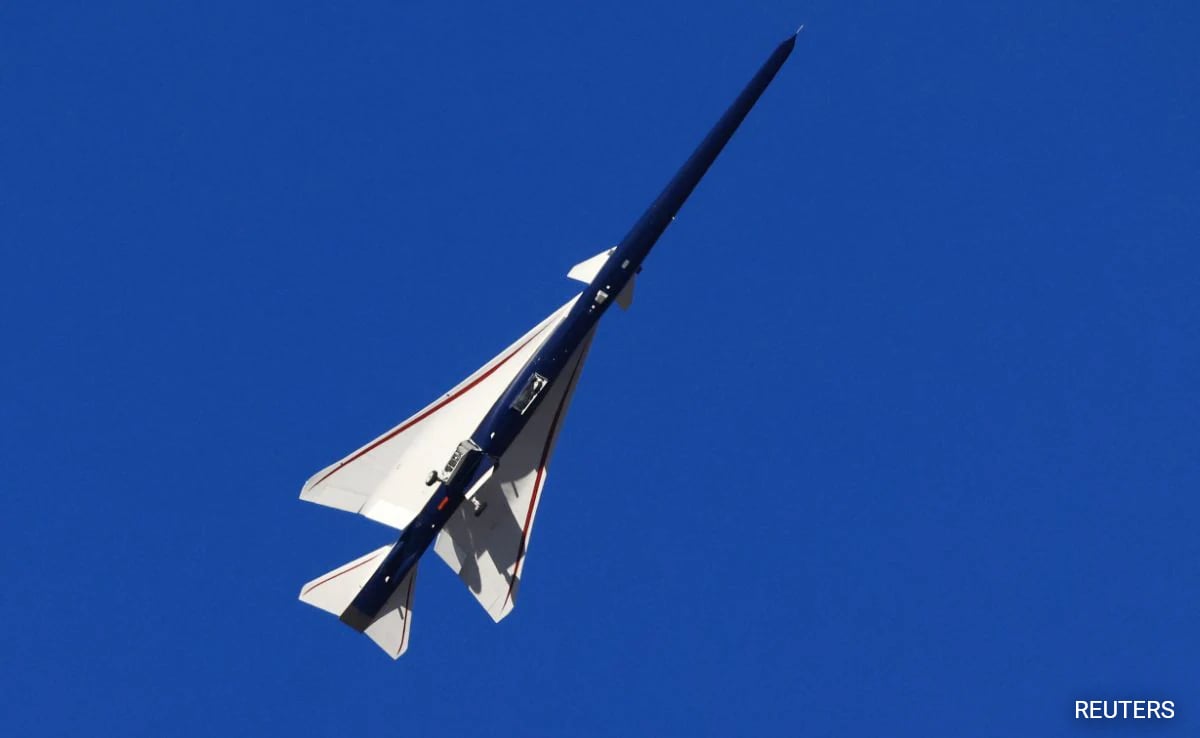
NASA's X-59 quiet supersonic jet successfully completed its inaugural test flight over Southern California's desert on Tuesday. This experimental aircraft, designed to break the sound barrier with minimal noise, represents a significant step toward potentially revolutionizing commercial air travel.
The sleek X-59, constructed by aerospace giant Lockheed Martin for NASA, departed shortly after sunrise from Plant 42 at Lockheed's Skunk Works facility in Palmdale, approximately 60 miles north of Los Angeles.
Following a steep ascent over sod fields east of the runway, observers spotted the aircraft banking northward toward Edwards Air Force Base, where it safely touched down about an hour later near NASA's Armstrong Flight Research Center, accompanied by a NASA chase plane.
The X-59's distinctive design specifically aims to drastically reduce the explosive-like sonic boom typically generated when aircraft exceed the speed of sound, transforming it into a subtle "sonic thump" comparable to a car door closing.
According to Lockheed, perfecting this low-noise technology addresses one of the primary barriers to supersonic commercial flight, which has long faced restrictions over populated areas due to noise concerns.
This technological advancement comes with a substantial price tag. NASA has invested more than $518 million since 2018 in Lockheed Martin's development and demonstration of the X-59, based on agency contracting records.
Measuring nearly 100 feet from nose to tail, the single-engine jet flew at subsonic speeds during its maiden flight, reaching 230 mph and a maximum altitude of 12,000 feet, as reported by Lockheed Martin.
Approximately 200 aerospace employees and their families witnessed the historic takeoff from a safe distance along a nearby highway.
"X-59 successfully completed its first flight this morning," Lockheed Martin spokesperson Candis Roussel confirmed to Reuters, describing the event as a "significant aviation milestone."
NASA's lead X-59 test pilot, Nils Larson, operated the aircraft from its single-crew cockpit during the flight, according to Roussel.
The X-59, a unique experimental aircraft, is engineered to achieve a cruising speed of 925 mph (Mach 1.4) at 55,000 feet—more than twice as high and nearly twice as fast as conventional airliners, the company stated.
Research data gathered from the X-59 will inform the development of new sound thresholds for supersonic flight over land, potentially opening doors for future commercial applications.
The aviation industry has previously explored supersonic commercial travel with the Concorde, which began scheduled transatlantic service with British Airways and Air France in 1976. However, the iconic aircraft was retired in 2003, facing challenges including high operational costs, limited seating capacity, and declining passenger numbers following a fatal accident in July 2000 and the September 11 attacks in 2001.
In materials published online last month, NASA described the X-59's first flight as a "lower-altitude loop at about 240 mph to check system integration, kicking off a phase of flight testing focused on verifying the aircraft's airworthiness and safety."
Future test flights will see the X-59 traveling at progressively higher altitudes and faster speeds, eventually surpassing the sound barrier—approximately 761 mph at sea level.
The California Manufacturers & Technology Association recently recognized the X-59 as 2025's "Coolest Thing Made in California" in its annual statewide technology competition.
U.S. Transportation Secretary and acting NASA administrator Sean Duffy emphasized the significance of the project, stating, "This work sustains America's place as the leader in aviation and has the potential to change the way the public flies."
Source: https://www.ndtv.com/world-news/nasa-lockheed-martin-x-59-nasas-quiet-supersonic-jet-flies-over-us-desert-in-first-test-flight-9535783