
Hurricane Melissa: Jamaica's Most Powerful Storm in 174 Years Causes Catastrophic Damage
- Date & Time:
- |
- Views: 60
- |
- From: India News Bull
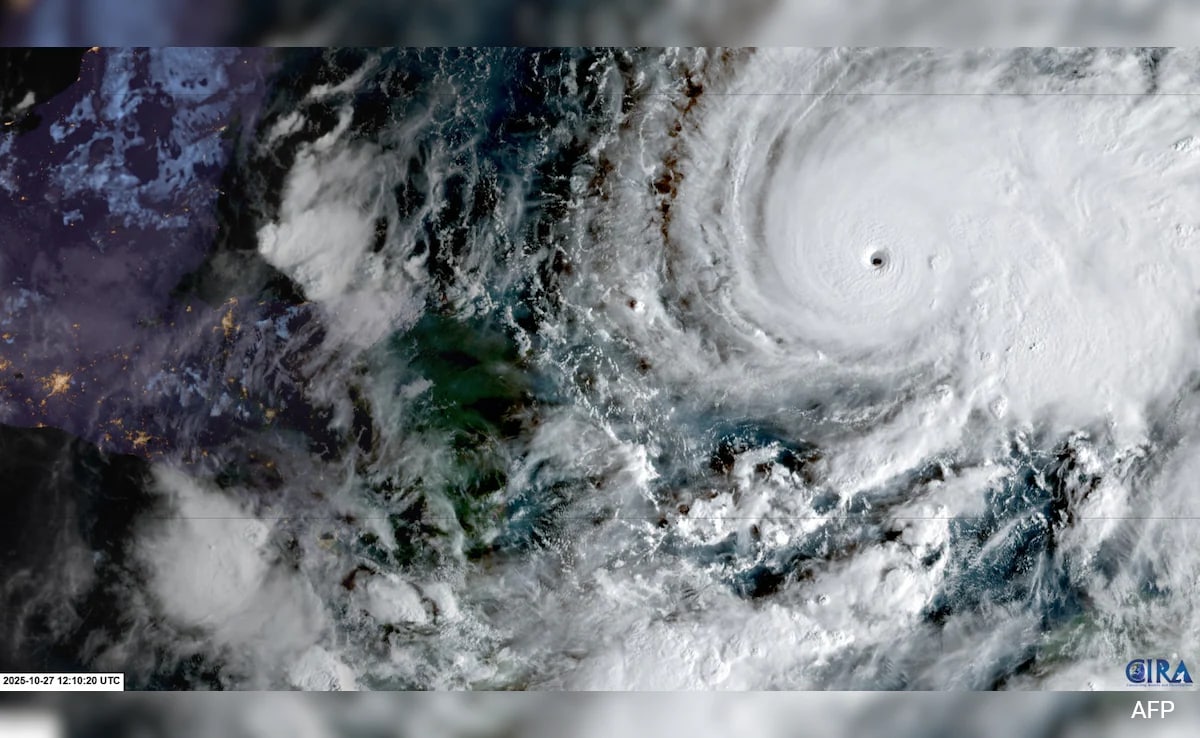
Melissa ranks as the fifth most intense Atlantic basin hurricane ever recorded by pressure measurements.
Hurricane Melissa escalated to Category 5 status Tuesday before striking Jamaica, where residents and officials prepared for devastating winds, flash flooding, and landslides from one of the Atlantic's most powerful hurricanes in recorded history.
Kingston's streets remained largely deserted as Melissa approached carrying winds of 185 mph (295 kph), with only occasional stray dogs traversing puddles and a few individuals hurrying beneath swaying tree branches.
Desmond McKenzie, deputy chairman of Jamaica's Disaster Risk Management Council, implored residents to find shelter and remain indoors during the storm's passage across the island.
"Jamaica, this is not the time to be brave," McKenzie warned.
The Jamaican government stated it had exhausted all preparatory measures while cautioning about devastating damage from the most powerful hurricane to strike the island in the 174 years since record-keeping began.
"There is no infrastructure in the region that can withstand a Category 5," Prime Minister Andrew Holness stated. "The question now is the speed of recovery. That's the challenge."
Michael Brennan, director of the U.S. National Hurricane Center in Miami, warned of extensive wind damage within Melissa's core, with Jamaica's highest elevations potentially experiencing gusts reaching 200 mph (322 kph).
"It's going to be a very dangerous scenario," he cautioned, warning of "total building failures."
Hurricane specialist and storm surge expert Michael Lowry noted that Melissa ranks as the fifth most intense Atlantic basin hurricane ever recorded by pressure measurements and the strongest to make landfall since Hurricane Dorian in 2019.
He described it as "a worst-case scenario unfolding for Jamaica."
Reports of landslides, fallen trees, and widespread power outages emerged as Melissa made landfall, with Jamaican officials warning that damage assessment and cleanup efforts could proceed slowly. The hurricane is expected to cut diagonally across Jamaica before heading toward Cuba.
Melissa made landfall near New Hope in southwestern Jamaica, moving north-northeast at 9 mph (15 kph), according to the National Hurricane Center. The storm was positioned approximately 25 miles (40 kilometers) southeast of Negril, Jamaica, and about 145 miles (235 kilometers) southwest of Guantánamo, Cuba.
Officials warned of a life-threatening storm surge up to 13 feet (4 meters) along southern Jamaica, expressing particular concern for coastal hospitals. Health Minister Christopher Tufton reported that some patients were moved from ground floors to second floors, adding, "and (we) hope that will suffice for any surge that will take place."
One caller to a local radio station urgently requested assistance for a woman in western Jamaica who had gone into labor as the storm approached landfall. The program host appealed to listeners to direct the caller to the nearest safe hospital. An obstetrician who called in provided detailed emergency delivery instructions.
Colin Bogle, a Mercy Corps adviser based near Kingston, reported most families were sheltering in place despite government evacuation orders for flood-prone communities.
"Many have never experienced anything like this before, and the uncertainty is frightening," he explained. "There is profound fear of losing homes and livelihoods, of injury, and of displacement."
McKenzie assured that the government was prepared for post-storm rescue operations: "We have boats, helicopters, you name it."
The storm had already claimed seven lives across the Caribbean, including three in Jamaica, three in Haiti, and one in the Dominican Republic, where another individual remains missing.
Necephor Mghendi, the International Red Cross' regional delegation head for the English- and Dutch-speaking Caribbean, estimated that 1.5 million people in Melissa's path would be directly affected, though "the entire population may feel the impact one way or the other."
More than 240,000 customers lost power before landfall, with approximately one-fourth of the telecommunications system offline, according to Transport and Energy Minister Darryl Vaz. He indicated crews would clean and test the island's two main international airports Wednesday, hoping to receive emergency relief flights as early as Thursday.
UN agencies and numerous nonprofits had positioned food, medicine, and essential supplies in preparation for post-storm distribution.
Matthew Samuda, Jamaica's water and environment minister, announced that over 50 generators were available for deployment after the storm but urged residents to conserve clean water.
"Every drop will count," he emphasized.
Melissa was projected to make landfall in eastern Cuba late Tuesday or early Wednesday. Forecasts predicted up to 20 inches (51 centimeters) of rainfall in some areas, along with significant coastal storm surge.
Authorities in eastern Holguín province prepared to evacuate over 200,000 people Tuesday, following similar evacuations from the town of Banes earlier.
Social media and state television footage showed blue and white buses transporting evacuees to shelters early Tuesday. Families holding babies and belongings, alongside elderly individuals supported by canes, were seen disembarking.
"This phenomenon is very dangerous," Deputy Prime Minister Eduardo Martínez stated from Banes, where he appeared to be in a shelter. "It is unprecedented."
Melissa had also drenched southern regions of Haiti and the Dominican Republic, with tropical storm warnings remaining in effect for Haiti. Forecasts showed the hurricane turning northeast and striking the southeast Bahamas by Wednesday evening.
Source: https://www.ndtv.com/world-news/hurricane-melissa-jamaicas-strongest-storm-in-174-years-makes-landfall-9533589