
Hurricane Melissa: How Climate Change Is Fueling More Powerful and Slower-Moving Atlantic Storms
- Date & Time:
- |
- Views: 56
- |
- From: India News Bull
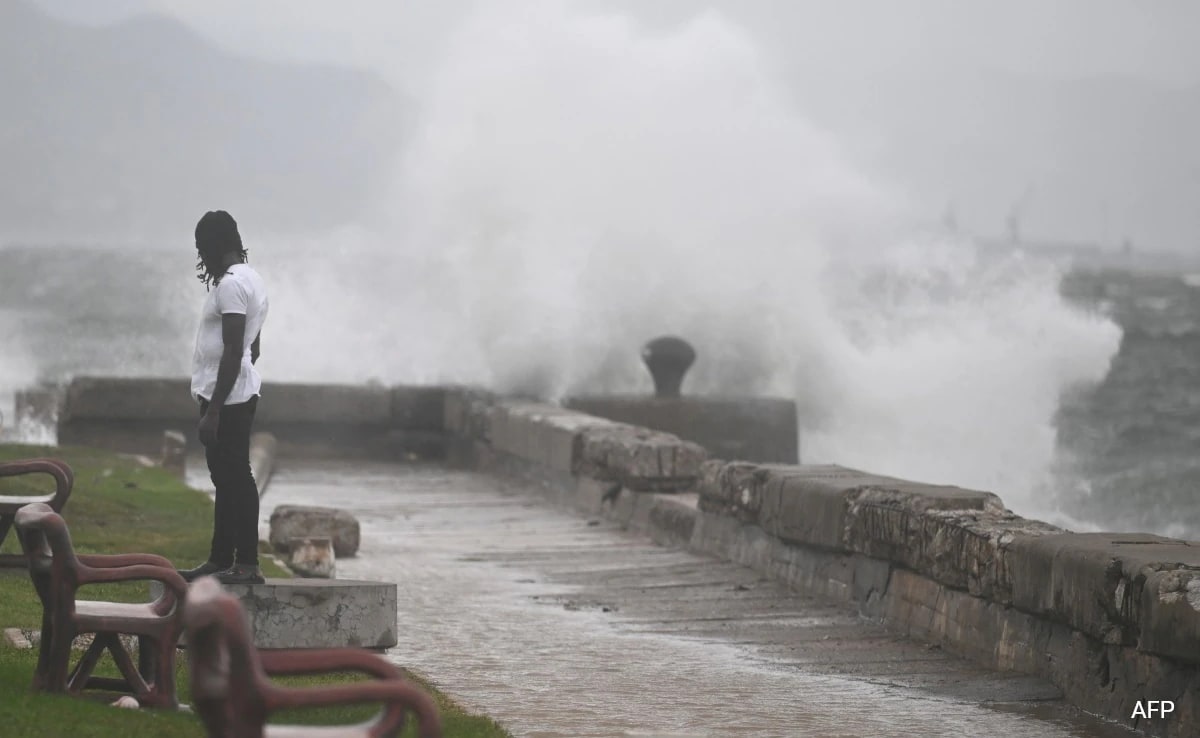
Hurricane Melissa is forecast to deliver 20-25 inches of rainfall across portions of Jamaica.
In the United States, Hurricane Melissa has transformed into a Category 5 cyclone, powered by unusually warm Caribbean waters while moving at a pace slower than walking speed—a dangerous combination that could magnify its impacts through persistent rainfall, storm surge, and powerful winds.
Scientists indicate that both rapid intensification and stalling storms are becoming more frequent in our warming climate. Here's what you should understand about this phenomenon.
Climate change has supercharged Melissa, which escalated from a tropical storm with 70 mph (110 kph) winds on Saturday morning to a 140 mph Category 4 within just 24 hours. It has since strengthened further to Category 5, the highest level on the Saffir-Simpson scale, where even well-constructed buildings face devastating damage.
Melissa marks the fourth of five Atlantic hurricanes this season to intensify in such a dramatic manner.
"While the Atlantic hasn't experienced many hurricanes this season, an unusual proportion of them underwent phases of intensifying quite rapidly," MIT meteorologist and climate scientist Kerry Emanuel told AFP.
Although attributing individual events to human-caused climate change remains challenging, scientists express greater confidence when examining trends. "Collectively, this may very well be a signature of climate change," Emanuel noted.
Warmer sea surface temperatures provide additional energy to storms, supplying extra fuel. However, the relationship is complex: it's actually the temperature difference between water and atmosphere that determines a hurricane's potential strength, a concept pioneered by Emanuel.
"Atmospheric warming tends to reduce intensity, while sea surface temperature warming tends to increase intensity," explained atmospheric scientist Daniel Gilford of Climate Central to AFP. "Generally speaking, we find that sea surface temperature proves more influential."
Melissa traveled over waters made 1.4°C (2.5°F) warmer due to climate change, according to Climate Central's rapid analysis—temperatures that were at least 500 times more likely due to human-caused warming.
Warmer oceans also produce wetter storms. "We expect approximately 25-50 percent additional rainfall in a storm like Melissa because of human-caused climate change," Gilford stated.
Further complicating matters is the storm's slow movement—currently three miles per hour. Melissa is projected to deliver 20-25 inches of rainfall to parts of Jamaica.
"It creates a repetitive or continuous threat and existence in a dangerous situation," hurricane climatology expert Jill Trepanier from Louisiana State University told AFP.
"This could mean prolonged storm surge, high-level rainfall over an extended period that watersheds cannot manage, extreme wind speeds over extended periods that most infrastructure cannot withstand, or a combination of all three."
Trepanier authored a research paper last year on stalling storms, finding that such events in the Caribbean typically occur in October near coastlines.
Normally, stalling storms tend to weaken as they pull cold water from ocean depths and encounter atmospheric wind patterns that tear them apart.
What makes Melissa unusual is that it stalled and intensified simultaneously—indicating that the water was so warm, and the warmth so deep, that it avoided the typical self-destructing effect.
"It's somewhat of a terrifying situation," Trepanier remarked.
Former NOAA climatologist James Kossin, who has published several papers on the subject, confirmed that data clearly shows stalling storms are increasing.
A potential driver is "Arctic amplification"—global warming reduces temperature differences between the planet's low and high latitudes, weakening the winds that normally guide storms "like a cork in a stream." However, additional research is needed to confirm a causal connection, he noted.
Trepanier added that understanding human and ecological dimensions is equally important as understanding the physics, because humans respond differently to risk.
With Jamaica's mountainous landscape, torrential rainfall could trigger landslides, while severe damage to hotel infrastructure could impact the tourism-dependent economy for years, she cautioned.
Source: https://www.ndtv.com/world-news/hurricane-melissa-jamaica-explained-why-hurricanes-like-melissa-are-becoming-more-common-9527491