
Trump's Japan Visit: How Prime Minister Takaichi Plans to Strengthen US-Japan Relations with Ford Trucks Deal
- Date & Time:
- |
- Views: 64
- |
- From: India News Bull
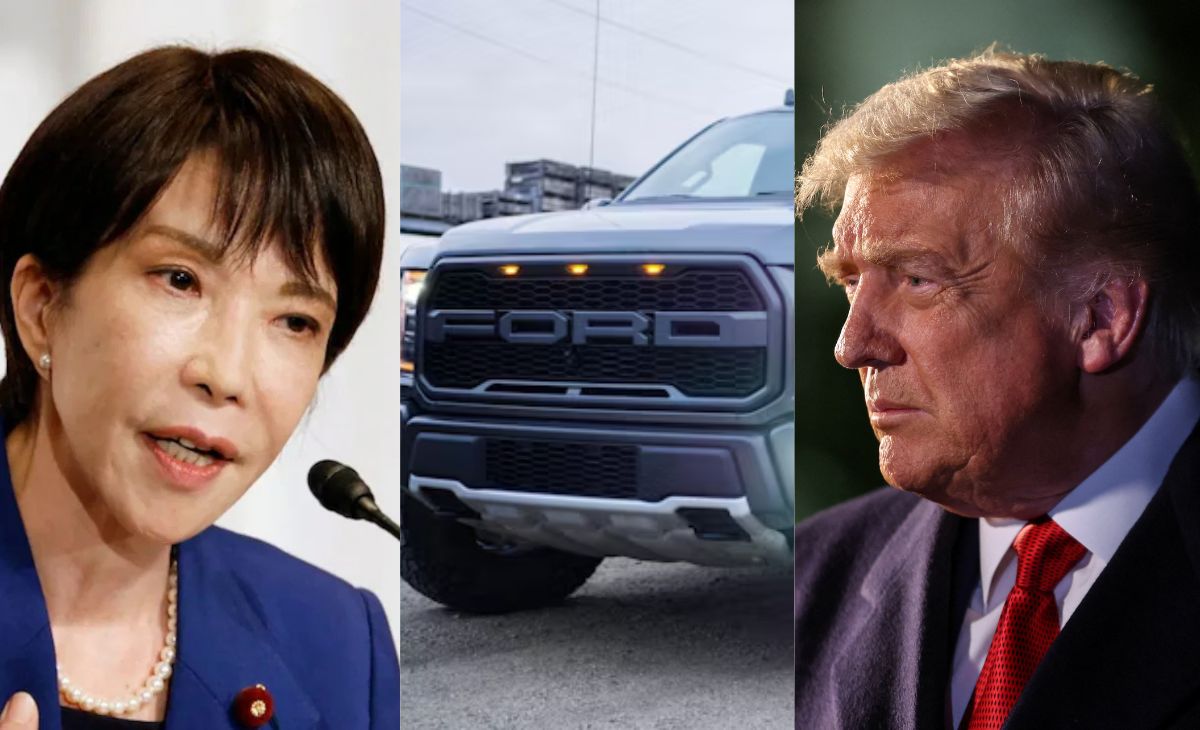
President Donald Trump began his Japan visit on Monday with a greeting from Emperor Naruhito, ahead of his crucial meeting with newly appointed Prime Minister Sanae Takaichi, who hopes to establish a cordial relationship with the US leader to mitigate trade tensions.
A potential cornerstone of Japan's diplomatic strategy involves a proposal to purchase a fleet of Ford F-150 trucks – a symbolic gesture that might face practical challenges given Japan's narrow urban roadways.
This represents an early diplomatic challenge for Takaichi, Japan's first female prime minister, who assumed office just last week with a fragile coalition supporting her leadership.
Trump expressed immediate enthusiasm for the Ford truck idea during his flight to Asia on Air Force One, remarking, "She has good taste. That's a hot truck."
At the Imperial Palace, Emperor Naruhito welcomed Trump for a 30-minute conversation. The president adjusted his jacket while posing for photographs beside the Emperor before they sat across from each other at a round table adorned with flowers. "A great man!" Trump exclaimed twice while indicating the Emperor. Their previous meeting occurred in 2019, shortly after Naruhito ascended to the Chrysanthemum Throne, with Trump being the first foreign dignitary invited to the palace.
Takaichi and Trump spoke via telephone while the president was en route on Saturday. The prime minister emphasized her connection to the late Prime Minister Shinzo Abe, a figure Trump held in high regard during his first administration, and commended him for facilitating the Gaza ceasefire that secured the release of Hamas-held hostages.
"I thought (Trump) is a very cheerful and fun person," she stated. "He well recognizes me and said he remembers me as a politician whom (former) Prime Minister Abe really cared about. And I told the president that I extremely look forward to welcoming him in Tokyo."
Trump spent Sunday in Malaysia participating in a regional summit before departing for Japan on Monday morning. While aboard Air Force One on Monday, he indicated his intention to discuss the "great friendship" between the United States and Japan during his Tokyo visit.
Beneath the diplomatic courtesies lies a search for strategies to navigate an increasingly complex trade relationship that Trump disrupted earlier this year with tariff impositions.
Trump seeks increased purchases of American goods by allies, along with financial commitments for factory and energy infrastructure development in the United States.
The Japan meetings precede Trump's scheduled discussion with Chinese leader Xi Jinping on Thursday in South Korea.
Both the United States and Japan have sought to constrain China's manufacturing ambitions, as Chinese advances in electric vehicles, artificial intelligence, and advanced computer chips could undermine American and Japanese economic interests.
"In light of the planned meeting between Trump and Xi Jinping shortly afterward, Trump may also be considering how he might strengthen his hand by demonstrating the robustness of the US-Japan relationship," observed Kristi Govella, Japan chair at the Center for Strategic and International Studies, a Washington think tank.
Japan's previous administration committed in September to invest $550 billion in the United States, prompting Trump to reduce a threatened 25% tariff on Japanese goods to 15%. However, Japan prefers these investments to favor Japanese vendors and contractors.
Ryosei Akazawa, Japan's economy and trade minister, has indicated his ministry is compiling a list of projects in computer chips and energy sectors to meet the investment target.
"As far as I know, I'm hearing that there are a number of Japanese companies that are showing interest," he informed reporters Friday, without providing specific details.
Japanese officials are exploring opportunities to increase purchases of American soybeans, liquefied natural gas, and automobiles. The US-China trade conflict has excluded American soybeans from the Chinese market, leading China to seek increased Brazilian supply. China reported no US soybean imports in September, a first occurrence since November 2018.
For Trump, seeing Ford trucks on Tokyo's skyscraper-lined streets would represent a victory. His administration has consistently criticized Japan for excluding American vehicles from a market dominated by Toyota, Honda, Nissan, Isuzu, Mitsubishi, and Subaru. In a September CNBC interview, Commerce Secretary Howard Lutnick claimed Japan avoided US-branded vehicles because "Chevys" were popular among Japanese gangsters.
According to Japan's Nikkei newspaper, Takaichi may arrange for Ford F-150 trucks to be displayed where Trump can see them. The government is considering importing these trucks for the transport ministry to use in road and infrastructure inspections, though concerns exist about the F-150 causing congestion on Japan's narrow streets. A Ford spokesperson did not respond to a comment request.
Japanese media reports suggest Toyota Motor Corp. Chairman Akio Toyoda might announce plans to import Toyota's American-made vehicles to Japan during a Wednesday dinner with Trump and business leaders.
These gestures, combined with Takaichi's connection to Abe, should facilitate her interactions with Trump, who appears favorably disposed toward her.
"I think she's going to be great," Trump stated aboard Air Force One. "She's a great friend of Mr. Abe, who was a great man."
In 2016, Abe presented Trump with a high-end golf club celebrating his first election victory, and the leaders bonded over their shared enthusiasm for golf. Trump frequently expresses sorrow regarding Abe's 2022 assassination.
However, emphasizing her Abe connections carries risks for Takaichi, noted Rintaro Nishimura, a Japan specialist at advisory firm The Asia Group.
"Because it's Takaichi's first diplomatic engagement I think she wants to start with sort of a bang," Nishimura said. "Succeeding the Abe-line rhetoric is definitely going to be part of this engagement, although some also suggest that leaning too heavily on the Abe line might not exactly be good for her for creating her own kind of portfolio, her status as Japan's leader."
Following his Tuesday meeting with Takaichi, Trump will deliver a speech aboard the USS George Washington aircraft carrier anchored in Japan, then host a dinner with business leaders. Trump plans to depart for South Korea on Wednesday.
While aboard Air Force One on Monday, he informed reporters of his willingness to meet with North Korean leader Kim Jong Un, should the opportunity arise.
"If he wants to meet, I'll be in South Korea," Trump said.
Source: https://www.ndtv.com/world-news/for-japans-leader-key-to-connecting-with-trump-could-be-these-ford-trucks-9525369