
From Hollywood to Reality: The Louvre Jewelry Heist and the Underground Market for Stolen Treasures
- Date & Time:
- |
- Views: 50
- |
- From: India News Bull
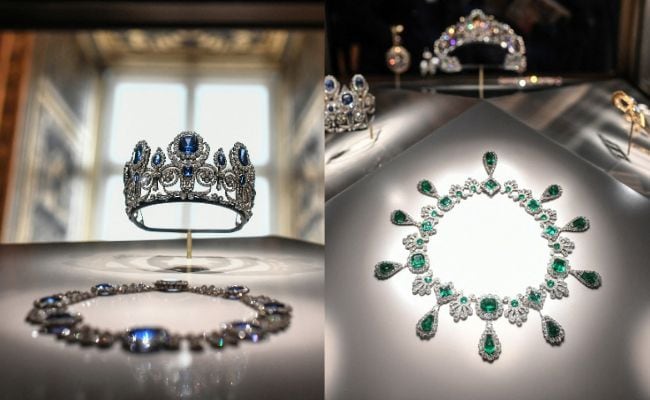
The spectacular heist at the Louvre museum in Paris on October 19, 2025, unfolded like a cinematic thriller: a coordinated team of thieves managed to steal a collection of magnificent royal jewels from one of the world's most renowned cultural institutions.
While authorities are intensely pursuing the culprits, the thieves face a significant challenge: how to profit from their daring theft?
In my art crime courses, I regularly emphasize that the recovery rate for stolen artworks remains dismally low—below 10%. This statistic becomes particularly alarming considering that annually between 50,000 and 100,000 artworks are stolen worldwide, with the actual figure potentially higher due to unreported cases. Europe experiences the majority of these thefts.
Despite the frequency of art theft, monetizing stolen artworks presents considerable difficulties. However, the nature of the items taken from the Louvre—eight pieces of invaluable jewelry—might provide these thieves with unique advantages.
At 9:30 a.m. local time on October 19, 2025, four thieves allegedly utilized a vehicle-mounted lift to access the Louvre's Apollo Gallery.
The legitimate art market remains closed to stolen paintings because thieves cannot transfer "good title"—the legal ownership rights belonging to the rightful owner. No reputable auction house or dealer would knowingly handle stolen art, and responsible collectors avoid purchasing stolen property.
Nevertheless, stolen paintings still retain value in certain contexts. In 2002, thieves broke into Amsterdam's Van Gogh Museum through the roof, escaping with "View of the Sea at Scheveningen" and "Congregation Leaving the Reformed Church in Nuenen." Italian authorities recovered these relatively undamaged works from a Mafia safehouse in Naples in 2016. Whether the Mafia purchased these works remains unclear, but criminal organizations commonly retain valuable assets as collateral.
In some cases, stolen artworks inadvertently reach collectors. During the 1960s in New York City, a Guggenheim Museum employee stole a Marc Chagall painting from storage. The theft remained undiscovered until a later inventory, by which time the museum had simply removed the missing work from its records.
Meanwhile, collectors Jules and Rachel Lubell purchased the piece for $17,000 from a gallery. When they sought an auction house appraisal, a former Guggenheim employee at Sotheby's recognized it as the missing painting. The Guggenheim demanded its return, leading to contentious litigation. Ultimately, the parties settled, with the painting returning to the museum after an undisclosed payment to the collectors.
Some individuals knowingly purchase stolen art. Following World War II, looted works circulated in the market, with buyers fully aware of the widespread plunder across Europe. Eventually, international laws developed allowing original owners to recover looted property, even decades later. In the United States, laws permit even descendants of original owners to reclaim stolen works if they can provide sufficient evidence supporting their claims.
The Louvre theft, however, involved bejeweled treasures rather than paintings: a sapphire diadem; a necklace and single earring from a set connected to 19th-century French queens Marie-Amélie and Hortense; an elaborate matching set of earrings and necklace belonging to Empress Marie-Louise, Napoleon Bonaparte's second wife; a diamond brooch; and Empress Eugénie's diadem and corsage-bow brooch.
These centuries-old, meticulously crafted pieces possess unique historical and cultural significance. Yet even if broken down and sold as components, they would retain substantial value. Thieves can sell precious gemstones and metals to unscrupulous dealers and jewelers who could reshape and resell them. Even at a fraction of their worth—stolen art always commands lower prices than legitimately acquired pieces—these gems are worth millions.
While selling stolen goods through legitimate channels presents difficulties, an underground market exists for looted artworks. These items may be sold in backrooms, private meetings, or on the dark web where participants remain anonymous. Research has also revealed that stolen—and sometimes counterfeit—art and antiquities frequently appear on mainstream e-commerce platforms like Facebook and eBay. After completing a sale, vendors may delete their online presence and vanish.
Although films like "The Thomas Crown Affair" depict dramatic heists executed by impossibly glamorous criminals, most art crimes are considerably more mundane.
Art theft typically represents a crime of opportunity, occurring not in heavily secured exhibition halls of cultural institutions but in storage facilities or during transit.
Most major museums and cultural institutions display only a fraction of their collections. Less than 10% of the Louvre's collection is exhibited at any time—approximately 35,000 of the museum's 600,000 objects. The remainder may remain unseen for years or even decades.
Works in storage can be accidentally misplaced—like Andy Warhol's rare silkscreen "Princess Beatrix," likely discarded unintentionally along with 45 other works during a Dutch town hall renovation—or simply stolen by employees. According to FBI statistics, approximately 90% of museum thefts are inside jobs.
Indeed, days before the Louvre incident, a Picasso work valued at $650,000, "Still Life with Guitar," disappeared during transit from Madrid to Granada. The painting was part of a shipment containing other works by the Spanish master, but upon opening the packages, the piece was missing. This incident received significantly less public attention.
In my view, the thieves' greatest mistake wasn't abandoning the crown they dropped or the vest they discarded, essentially leaving evidence for investigators.
Rather, it was the audacious nature of the heist itself—one that captured global attention, virtually ensuring that French detectives, independent investigators, and international law enforcement will vigilantly monitor any new pieces of gold, gems, and royal jewelry entering the market in the coming years.
Source: https://www.ndtv.com/world-news/louvre-museum-heist-paris-museums-priceless-jewellery-stolen-whats-next-for-thieves-9517533