
Trump's Threat After Charlie Kirk Killing Raises Fears Of Silencing Enemies
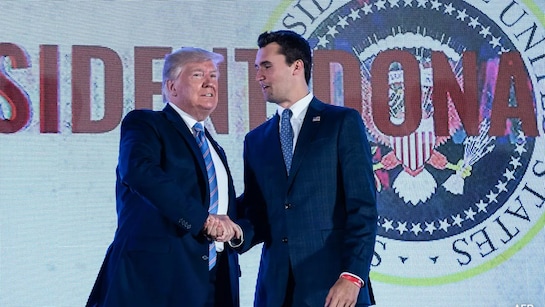
Trump is escalating threats to crack down on what he describes as the "radical left" following Charlie Kirk's assassination, stirring fears that his administration is trying to harness outrage over the killing to suppress political opposition
- Date & Time:
- |
- Views: 75
- |
- From: India News Bull
Washington:
Following Charlie Kirk's assassination, President Donald Trump has intensified threats against what he terms the "radical left," generating concerns that his administration may be leveraging public outrage over the killing to suppress political opponents.
Despite no established connection to the shooting, the Republican president and his administration officials have discussed potential measures including classifying certain groups as domestic terrorists, launching racketeering investigations, and removing tax-exempt status from progressive nonprofits. The White House has specifically mentioned Indivisible, a progressive activist network, and George Soros's Open Society Foundations as possible targets for scrutiny.
While administration officials maintain their goal is preventing violence, critics view these threats as an extension of Trump's vengeance campaign against political enemies and an infringement on free speech rights. Any actions against liberal organizations could significantly alter the political landscape ahead of next year's critical midterm elections that will determine Congressional and statehouse control nationwide.
"The radical left has done tremendous damage to the country," Trump stated to reporters Tuesday before departing for a UK state visit. "But we're fixing it."
Though Trump has previously made similar threats without action, the assassination of Kirk—a conservative activist with close ties to Trump and his advisers—has reignited these efforts with renewed intensity.
Leaders of dozens of nonprofit organizations, including the Ford Foundation, Omidyar Network, and MacArthur Foundation, released a joint statement declaring: "We reject attempts to exploit political violence to mischaracterize our good work or restrict our fundamental freedoms."
"Attempts to silence speech, criminalize opposing viewpoints, and misrepresent and limit charitable giving undermine our democracy and harm all Americans," their statement continued.
Investigators have determined the suspect in Kirk's killing likely acted alone and have charged him with murder. Nevertheless, administration officials continue making broad assertions about the need for wider investigations and consequences related to Kirk's death.
Attorney General Pam Bondi blamed "left-wing radicals" for the shooting, stating "they will be held accountable." Stephen Miller, a senior policy adviser, claimed there was an "organized campaign that led to this assassination."
Miller made these remarks during a conversation with Vice President JD Vance, who guest-hosted Kirk's talk show from the White House on Monday. Miller expressed feeling "focused, righteous anger," vowing to "channel all of the anger" toward using "every resource we have" to "uproot and dismantle these terrorist networks."
Vance rejected criticism that the administration would "go after constitutionally protected speech," insisting instead, "We're going to go after the NGO network that foments, facilitates and engages in violence."
When asked for examples, the White House referenced demonstrations where law enforcement officers were injured and the distribution of protective gear during immigration protests in Los Angeles. They also mentioned reports that Indivisible offered reimbursements to protesters at Tesla dealerships opposing Elon Musk's leadership of the Department of Government Efficiency, after which some cars were vandalized.
Indivisible's leadership has stated that "political violence is a cancer on democracy" and noted their organization has "been threatened by right-wingers all year."
Previous Trump executive actions have unsettled nonprofit organizations by attempting to restrict their work or freeze federal funding, though more aggressive proposals to revoke tax-exempt status never materialized. The current climate has grown more tense, with nonprofits hiring legal counsel and enhancing security measures.
"It's a heightened atmosphere in the wake of political violence, and organizations who fear they might be unjustly targeted in its wake are making sure that they are ready," said Lisa Gilbert, co-president of Public Citizen.
Retribution against political enemies was central to Trump's comeback campaign, and he has mobilized federal resources to reshape traditionally independent institutions including law firms and universities. He also ordered an investigation into ActBlue, a liberal fundraising platform.
Some nonprofits anticipate the administration will target prominent funders like Soros, who has long been a conservative target, potentially chilling the broader donor community. Trump recently suggested Soros should face racketeering investigations without specifying allegations. The Open Society Foundations condemned violence and Kirk's assassination, stating "it is disgraceful to use this tragedy for political ends to dangerously divide Americans and attack the First Amendment."
Senator Chris Murphy, Democrat from Connecticut, wrote that "the murder of Charlie Kirk could have united Americans to confront political violence" but "Trump and his anti-democratic radicals look to be readying a campaign to destroy dissent."
White House spokeswoman Abigail Jackson countered that "it is disingenuous and false for Democrats to say administration actions are about political speech," asserting their aim is to "target those committing criminal acts and hold them accountable."
Trump's approach to political violence appears selectively partisan. He described January 6, 2021 Capitol rioters as "hostages" and "patriots," pardoning 1,500 of them his first day back in office. He also mocked former House Speaker Nancy Pelosi following an attack on her husband.
In his video condemnation of Kirk's killing, Trump highlighted multiple examples of "radical left political violence" while omitting attacks on Democrats. When asked about Minnesota state Rep. Melissa Hortman's killing, Trump responded, "I'm not familiar" with the case.
"Trump shrugs at right-wing political violence," stated Ezra Levin, Indivisible's co-executive director.
Some conservative commentators have encouraged potential crackdowns. Conspiracy theorist Laura Loomer called to "shut the left down" and expressed desire for Trump "to be the 'dictator' the left thinks he is."
Katie Miller, Stephen Miller's wife and former administration spokeswoman, asked Bondi whether there would be "more law enforcement going after these groups" and "putting cuffs on people."
"We will absolutely target you, go after you, if you are targeting anyone with hate speech," Bondi replied. "And that's across the aisle."
Her statement provoked backlash across the political spectrum since hate speech is generally protected under the First Amendment. Bondi later clarified on social media that they would focus on "hate speech that crosses the line into threats of violence."
Trump is receiving increased support from Congressional Republicans. Senator Ted Cruz proposed legislation enabling the Justice Department to use racketeering laws against violent protesters and supporting groups. Representative Chip Roy advocated creating a special House committee to investigate nonprofit organizations, saying "we must follow the money to identify the perpetrators of the coordinated anti-American assaults being carried out against us."