
How Trump's H-1B Visa Reforms Impact MBA Graduate Employment Opportunities and Salaries
- Date & Time:
- |
- Views: 57
- |
- From: India News Bull
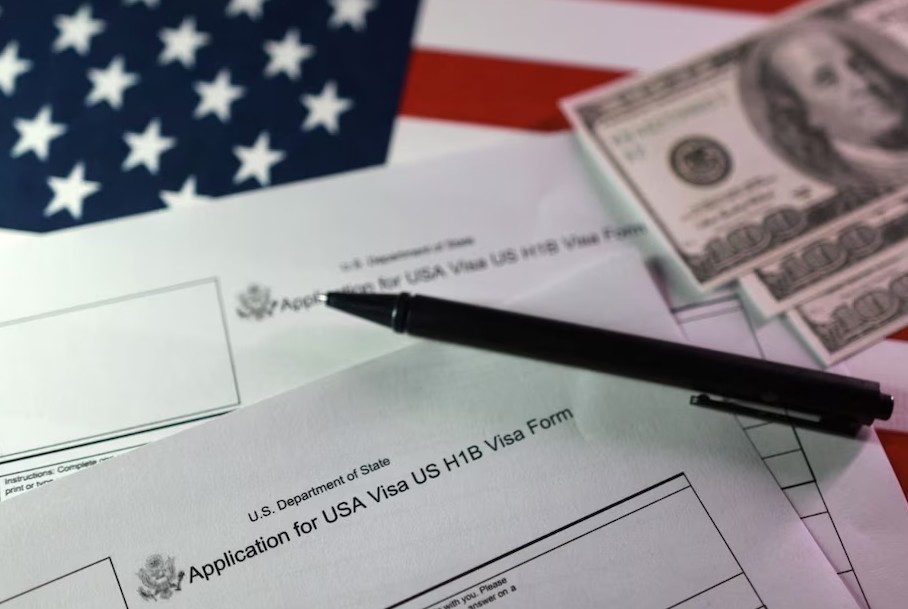
Higher-wage prioritization could secure H-1B status for many MBA graduates.
The academic quarter had barely commenced at Northwestern University's Kellogg School of Management when Luca, a first-year MBA student, found himself becoming an unexpected expert in immigration law. As a Mexican citizen, like many international students in American MBA programs, his post-graduation employment aspirations in the US suddenly faced uncertainty.
Luca (pseudonym used to protect his identity amidst Chicago's ongoing immigrant enforcement campaign) hopes to work for a real estate investment company in Chicago after graduation. However, on September 19, President Donald Trump signed a proclamation to restrict the H-1B program, which enables nonimmigrant foreigners to work in the United States for an initial three-year period with possible extensions.
The H-1B visa program has long faced criticism from both anti-immigration organizations and liberal economic groups, who argue it serves as a mechanism for replacing American workers with lower-paid foreign employees. Despite an annual cap of 85,000 new private-sector H-1B jobs, the program remains so popular that the government conducts a lottery for approvals. According to Department of Homeland Security estimates, approximately 83% of petitions for new employment over the past five years were for positions initially identified as paying below the median wage, with 28% categorized as entry-level positions.
While the proclamation's $100,000 fee on foreign nationals seeking H-1B visas has garnered significant attention, two often-overlooked provisions calling for increased program wages could prove more consequential. The impact will depend on how the Trump administration implements and enforces these directives and how companies respond. Daniel Costa, director of immigration law and policy research at the Economic Policy Institute, questions whether employers will "look for someone who is more skilled and more educated, and offer them a higher wage level" or simply "hire the same person they were planning to and just offer them a higher wage level than they think they deserve."
One directive calls for prioritizing higher-paying jobs in the new petition lottery. H-1B salaries must meet one of four prevailing wage levels calculated regionally based on experience and qualifications. Currently, the lowest two levels fall below the median wage (Level 3). The Homeland Security Department has proposed regulations giving potential H-1B jobs in higher wage categories better lottery odds by weighting them accordingly, though not reserving all spots exclusively for these petitions.
This prioritization of higher-paid positions could benefit many MBA graduates, as business schools market themselves on the substantial salaries their degrees command. However, as one moves beyond elite schools and premium consulting positions, those salaries diminish. Based on a review of starting salary reports from twelve MBA programs compared with prevailing wage levels for key geographical destinations, many schools' graduates appear to receive compensation below the Department of Labor's Level 3 wages.
Sales and marketing positions typically offer lower compensation, even for graduates of prestigious institutions. For example, the $148,000 median starting salary for Kellogg's sales and marketing hires (representing 25% of 2024 graduates) fell considerably below government-reported median salaries for sales and marketing managers in Chicago, New York, and San Francisco—the primary destinations for the school's graduates. At the University at Buffalo's management school, which places over half its graduates in western New York positions, the median starting sales and marketing salary of $81,000 ranks at the very low end for such positions in Buffalo and Rochester, according to government figures.
Among school employment reports reviewed by Businessweek that differentiate between domestic and international student salaries, international students frequently reported lower starting compensation. At both Southern Methodist University and Rice University, despite all MBA graduates finding employment within the US, international students accepted lower median salaries—substantially lower at SMU.
Melissa Ruggiero, assistant dean and director of Buffalo's career resource center, notes that only a small number of graduates reported sales or marketing salaries, including some concurrent bachelor's degree earners without prior work experience. "One person can be a huge outlier, in either direction," she explains.
SMU Cox Senior Assistant Dean Shelly Heinrich attributed the salary shift in 2024 to reduced hiring by consulting and tech firms, which pushed international graduates "to more marketing/sales or ops/logistics functions which often have lower base salary ceilings (or more variable compensation)." Northwestern and Rice representatives did not respond to comment requests.
Data obtained by Bloomberg from the Department of Homeland Security through a Freedom of Information Act lawsuit reveals that while MBAs are more likely than other master's graduates to fill positions in the top two wage levels, most still take jobs classified in lower wage categories. Between 2021 and 2024, nearly half of all petitions for business administration master's degree holders were for positions initially identified in the second wage level, with 21% classified as entry-level. Only 9% secured positions in the highest wage level.
The Department of Homeland Security projects its new rules will significantly reduce visas for lowest-wage-level jobs. Top-level visas would nearly double but still constitute less than 10% of the total. Visas for the combined top two tiers would increase to slightly over a quarter of all new beneficiaries. However, the second tier, still below median wage, would expand marginally and continue to comprise more than half of all new beneficiaries.
A more direct approach of prioritizing applications from highest wage levels first "would effectively kick out all the Level 1 and Level 2 wages," according to Costa. The Trump administration implemented precisely this change in 2020, but a court overturned it on procedural grounds, and the Biden administration chose not to pursue it further.
Today, DHS contends that excluding lower-wage jobs from H-1B eligibility wasn't "optimal." Costa suspects the department maintained them in consideration because it determined that approach "will be more likely to pass legal muster, since there is no question that the rule will be challenged."
The proclamation additionally directs the Department of Labor to increase all prevailing wage levels required for H-1B positions.
Regarding the $100,000 fee, its announcement late on a Friday afternoon created significant confusion among immigration lawyers and their clients, particularly those overseas. Immigration lawyer Dani Rizzo, partner at Buffalo law firm Phillips Lytle, initially interpreted the language to mean that "if someone in H-1B status was outside of the United States when this proclamation was published, they're not getting back into the US after the Sept. 21 effective date unless their employer pays $100,000."
However, the border bureaucracy quickly moderated this interpretation. The following day, DHS clarified in a memo that the fee would apply only to first-time petitions for individuals who had never held H-1B status before and were outside the US—representing less than half of initial petition beneficiaries in 2024.
This would likely exclude students and graduates already within the country. After a month of uncertainty, especially regarding individuals needing to leave and re-enter the country, the US Citizenship and Immigration Service officially confirmed on October 20 that the entry fee would not apply to people in the country seeking status changes, including students.
"It's very good news for international students," Rizzo confirms. "It's clear that they can have cap H-1B petitions filed on their behalf as a change of status in the US, and thereafter apply for a visa outside the US, all without triggering the $100,000 fee."
At Northwestern, Luca has met with representatives from his target Chicago employers. "Right now their advice was for your internship, just go on as if nothing happened," he reports. However, post-graduation employment would depend on the final regulations. He has alternative options, including a specialized visa available to Mexican and Canadian citizens. Though his premier business education won't leave him in debt, "the ROI on the MBA does look really bad if I'm not in the US."
Luca maintains an optimistic outlook: "I'm just trying to stay positive. I've seen people who are catastrophically worried, and I don't think that's the best course of action."
Source: https://www.ndtv.com/world-news/trumps-h-1b-visa-reforms-will-have-mixed-effects-on-mbas-9513874