
The Bloody Trail of the $60 Million Regent Diamond: From Indian Mines to Louvre Museum
- Date & Time:
- |
- Views: 51
- |
- From: India News Bull
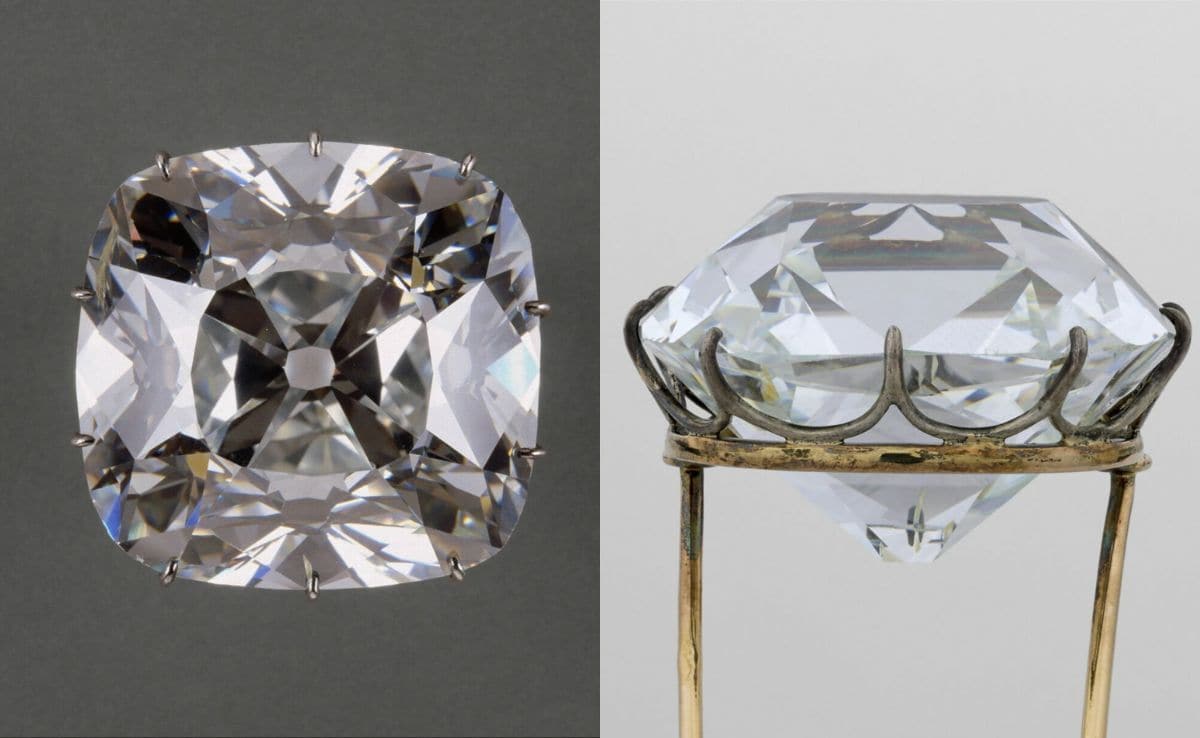
In a recent heist at Paris' Louvre, thieves made off with priceless Napoleonic jewels within minutes, yet curiously left behind a $60 million diamond that stands as Europe's largest and has Indian origins dating back centuries.
The Regent Diamond, a cushion cut gem with subtle blue-green tinting, weighs an impressive 140.6 carats, surpassing the famous Koh-i-noor diamond's 105.6 carats. This remarkable stone became part of the Louvre's collection in 1887 after belonging to French royalty.
Discovered in 1698 in India's Golconda mines, the diamond originally weighed a staggering 426 carats. According to legend, its finder made an incision in his leg to smuggle the precious stone. When seeking help from a sea captain to flee the country in exchange for half the profits, the discoverer was instead murdered.
Thomas Pitt, then Governor of Madras, recognized the diamond's value. After being cut in England between 1704 and 1706, it was acquired at the request of France's Regent Philippe d'Orleans in 1717. The diamond quickly became renowned as the West's most beautiful diamond and tripled its purchase value by 1719. Several smaller stones from the original were sold to Peter the Great, Russia's Tsar.
The Regent Diamond graced the crowns of multiple French monarchs. Louis XV first wore it at a reception in 1721 and briefly on his coronation crown in 1722, before establishing a habit of wearing it on his hat until the end of his reign in 1774. The diamond subsequently adorned Louis XVI's crown in 1775 before being moved to his hat.
During the turbulence of the French Revolution, the diamond was stolen in 1792 but recovered the following year hidden in a frame. It changed hands several times before Napoleon Bonaparte definitively reclaimed it in 1801. The diamond embellished the First Consul's sword and later became an ornament on Emperor Napoleon I's sword in 1812.
As France's political landscape evolved, the Regent Diamond appeared on the crowns of Louis XVIII, Charles X, and Napoleon III, eventually adorning the Greek diadem of Empress Eugenie, Napoleon III's wife.
Paris Prosecutor Laure Beccuau noted the mystery of why the thieves left behind the Regent Diamond during the recent heist at the Galerie d'Apollon. One theory suggests the diamond might be considered cursed. Evidence for this includes the murder of the miner who first smuggled it out, and the misfortunes that befell many of its royal possessors—Louis XVI and Marie Antoinette faced execution during the French Revolution, while Napoleon Bonaparte died in exile on Saint Helena in 1821.
The thieves also passed over another notable gem—the 21.32-carat pink Hortensia diamond. Originally purchased by Louis XIV, this diamond was also stolen during the 1792 French Revolution. After its recovery, Napoleon I wore it before it passed to Dutch queen Hortense de Beauharnais. Following another theft in 1830, it eventually returned to display at the Galerie D'Apollon.
Beyond these precious gems, the Louvre houses numerous priceless treasures including Leonardo's Mona Lisa, the Venus de Milo, the Winged Victory of Samothrace, the Code of Hammurabi, Delacroix's Liberty Leading the People, and Géricault's The Raft of the Medusa.
Source: https://www.ndtv.com/world-news/regent-diamond-spared-in-paris-louvre-heist-its-indian-connection-and-a-curse-9505133