
Louvre Security Failure: Director Admits Inadequate Surveillance After $102 Million Jewelry Heist
- Date & Time:
- |
- Views: 57
- |
- From: India News Bull
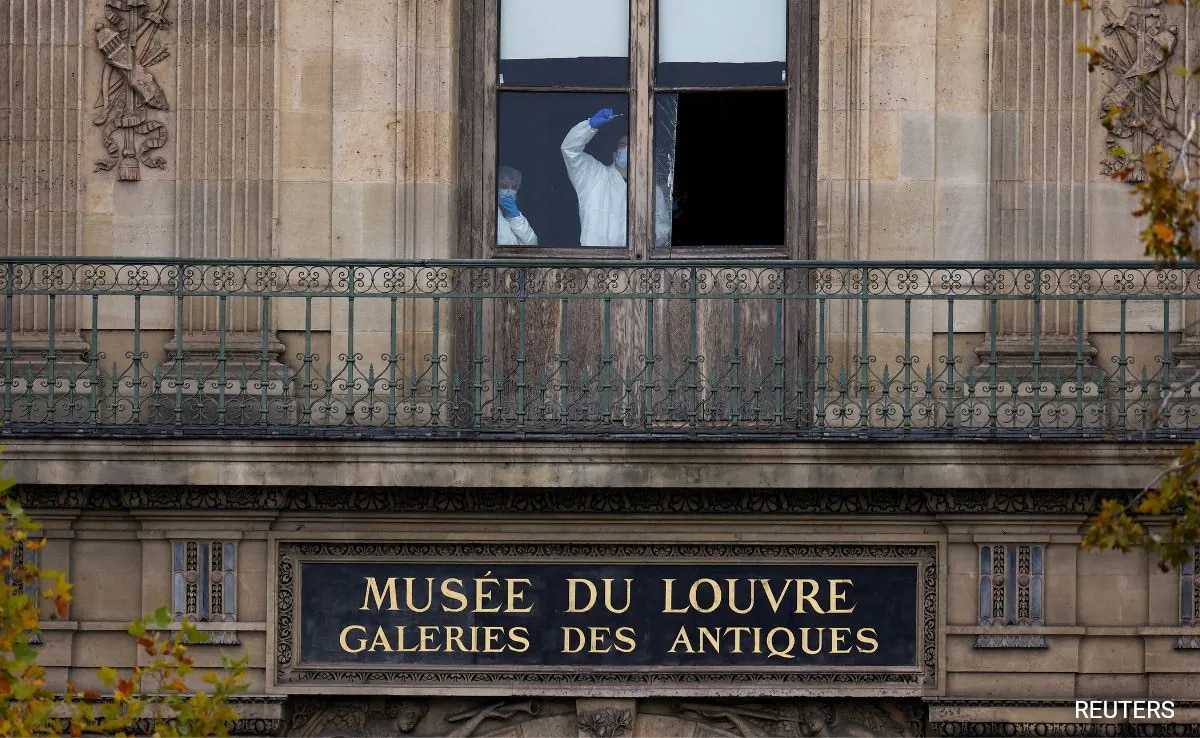
The Louvre theft represents the most recent in a series of robberies targeting French cultural institutions.
France's premier museum faced a significant security breach when thieves executed a brazen daytime heist, prompting Louvre Director Laurence des Cars to acknowledge serious surveillance deficiencies.
Speaking publicly on Wednesday for the first time since the incident, des Cars admitted to inadequate camera coverage of the museum's exterior walls, particularly at the thieves' point of entry.
"Despite our efforts, despite our hard work on a daily basis, we failed," she confessed during a Senate hearing where officials questioned her about the seven-minute theft of jewels valued at approximately 88 million euros ($102 million).
While des Cars confirmed all alarm systems functioned properly during Sunday's burglary, she revealed critical surveillance blind spots: "The only camera installed is directed westward and therefore did not cover the balcony involved in the break-in."
She described the exterior wall surveillance system as "highly insufficient," consisting of merely aging cameras with limited coverage.
Nevertheless, des Cars defended the museum's 80-million-euro security plan, challenging a recent report that claimed "persistent delays" in implementation.
Following the incident, French President Emmanuel Macron ordered an acceleration of security enhancements at the Louvre as the museum reopened to visitors, though the Apollo Gallery—where the theft occurred—remained closed.
The thieves employed a sophisticated approach, using a stolen furniture hoist truck with an extendable ladder to climb to an entry point. They then employed cutting equipment to breach a window into the targeted gallery.
According to des Cars, the perpetrators managed to create small openings in "high-end jewelry showcases" containing imperial jewels without completely shattering the glass: "It was split and the thieves managed to pass their hands through."
Among the stolen items was a crown adorned with more than 1,300 diamonds and over 50 emeralds that once belonged to Empress Eugenie, wife of Napoleon III. The thieves damaged this piece while extracting it and subsequently dropped it during their escape. Des Cars indicated the crown appears salvageable despite the damage.
However, eight other jewelry pieces successfully vanished with the thieves, including an emerald-and-diamond necklace that Napoleon I gifted to Empress Marie-Louise and a diamond-studded diadem containing nearly 2,000 diamonds that belonged to Empress Eugenie.
Interior Minister Laurent Nunez expressed optimism about the ongoing investigation, stating it was "progressing" with "more than 100 investigators" assigned to the case: "I have full confidence... we will find the perpetrators."
This high-profile Louvre incident is part of a troubling pattern of museum thefts across France. Within 24 hours of the Louvre break-in, a museum in eastern France reported gold and silver coins stolen from a smashed display case.
Last month, criminals targeted Paris's Natural History Museum, stealing gold nuggets valued at over $1.5 million. Authorities have detained and charged a Chinese woman in connection with that theft.
Additionally, in September, thieves made off with two dishes and a vase from a museum in Limoges, with estimated losses reaching $7.6 million.
While these incidents raise serious concerns about security at French cultural institutions, the Louvre has historically experienced fewer successful thefts. The most notable exception occurred in 1911 when an Italian stole the Mona Lisa, though authorities eventually recovered the painting, which now resides behind protective security glass.
Source: https://www.ndtv.com/world-news/louvre-robbery-french-museum-robbery-we-failed-louvre-director-admits-inadequate-camera-surveillance-after-heist-9500155