
From Criminal to Savior: The Remarkable Journey of Japan's Rare Woman Yakuza Member
- Date & Time:
- |
- Views: 57
- |
- From: India News Bull
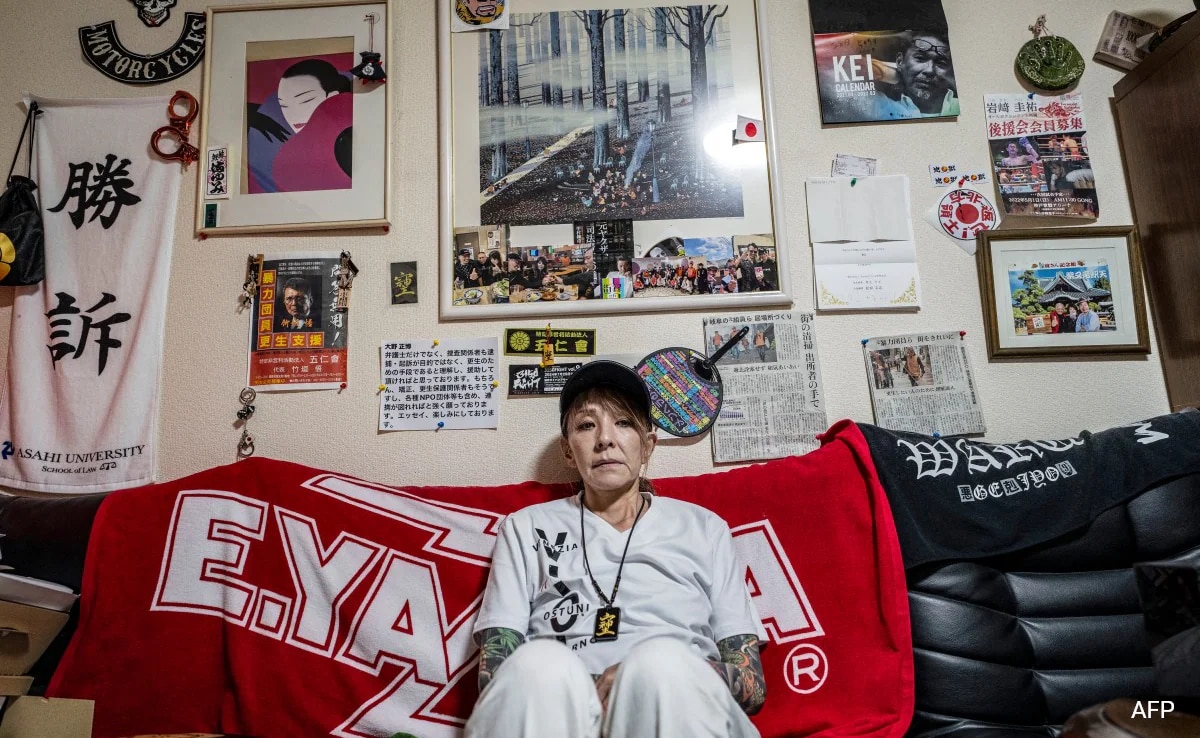
58-year-old Mako Nishimura spent three decades navigating the yakuza's male-dominated hierarchy before finding redemption.
Japan:
The missing fingertip on Mako Nishimura's hand stands as a permanent reminder of her unique past as one of Japan's rare women yakuza members. After successfully extricating herself from the criminal underworld, she now devotes her life to helping former gangsters reintegrate into mainstream society.
Japan's yakuza crime syndicates have historically dominated the country's underground economy, controlling drug trafficking, illegal gambling operations, and prostitution networks.
In recent years, this criminal empire has begun to deteriorate as membership numbers decline and authorities implement stricter anti-organized crime legislation.
An aggressive law enforcement campaign has dramatically reduced yakuza membership nationwide, with their ranks falling below 20,000 members last year—the lowest recorded figure since data collection began in 1958.
Adorned with elaborate dragon and tiger tattoos, 58-year-old Nishimura maneuvered through the yakuza's intensely patriarchal structure—characterized by violence and authoritarian leadership—intermittently over three decades.
Competing gangsters "dismissed me simply because I was female, which infuriated me," she revealed to AFP during an interview at her small apartment in Japan's central Gifu region.
"I was determined to be recognized as a legitimate yakuza," she explained. "So I taught myself to communicate, present myself, and fight like a man."
Nishimura claims authorities officially acknowledged her as the first woman yakuza following her imprisonment for drug possession at age 22.
While no official police records confirm this distinction, experts confirm that female members are exceptionally uncommon.
Yuichi Sakurai, a retired anti-organized crime detective, stated that throughout his 40-year career, he never encountered a female yakuza, though "it's possible a small number are included" in the annual statistics compiled by police, which don't provide gender-specific breakdowns.
Nishimura, slim with bleached blonde hair, finally abandoned the criminal syndicate approximately five years ago.
She currently sustains herself working at demolition sites—one of the few employment opportunities that accepts her extensive tattoos.
She also provides support to other former mafia members, taking considerable pride in directing the Gifu chapter of Gojinkai, a non-profit organization dedicated to assisting ex-criminals.
Yuji Moriyama belongs to the group of middle-aged former gangsters—one displaying a prominent knife scar across his abdomen—that Nishimura leads on monthly community cleanup initiatives.
"She functions like an elder sister. She reprimands us when necessary," 55-year-old Moriyama explained, recounting an incident when he skipped a trash collection event and she forced him to kneel and apologize.
"She absolutely terrified me," he recalled with laughter.
For Nishimura, "the realization that I'm contributing positively to others' lives gives me self-worth," she reflected.
"I'm gradually returning to normal humanity."
'King of villains'
Nishimura was raised in a disciplined household, with a civil servant father who placed intense academic pressure on her.
As a teenager, she fled home and descended into criminality, becoming affiliated with a major yakuza clan by age 20.
Physical altercations, extortion, and narcotics distribution soon became commonplace in her life. She even severed her own fingertip as part of the yakuza's traditional self-punishment ritual for mistakes.
However, in her late twenties, Nishimura fled the syndicate and was "excommunicated," abandoning her criminal lifestyle to marry and raise her son.
"I experienced maternal instinct for the first time. He was so adorable that I felt willing to sacrifice everything for him," she shared.
The determined new mother educated herself to enter the healthcare and medical sectors, only to be terminated due to her visible tattoos.
Uncertain where else to turn, she relapsed into selling stimulants.
Around her late forties, she rejoined her former yakuza organization but discovered it had become impoverished and lacking in "dignity."
The yakuza had flourished in Japan's post-war chaos, sometimes viewed as a necessary evil for maintaining street order.
While still operating in a semi-legal gray area, stricter anti-mafia legislation has significantly reduced the number of people willing to conduct business with these criminals.
"The yakuza once held status as the king of villains," she remarked, but witnessing her former boss struggling financially disillusioned her so profoundly that she permanently exited the criminal world shortly after turning 50.
Currently, Nishimura has found guidance from a new mentor—Gojinkai chairman and prominent ex-gangster Satoru Takegaki—with income from her recently published autobiography helping her financial stability.
"I believe the yakuza will continue to diminish," she stated.
"I hope they will eventually cease to exist."
Source: https://www.ndtv.com/world-news/mako-nishimura-japans-woman-yakuza-claws-her-way-out-of-underworld-helps-gangsters-9495150