
The Durand Line: Disputed Afghanistan-Pakistan Border and Its Historical Context
- Date & Time:
- |
- Views: 67
- |
- From: India News Bull
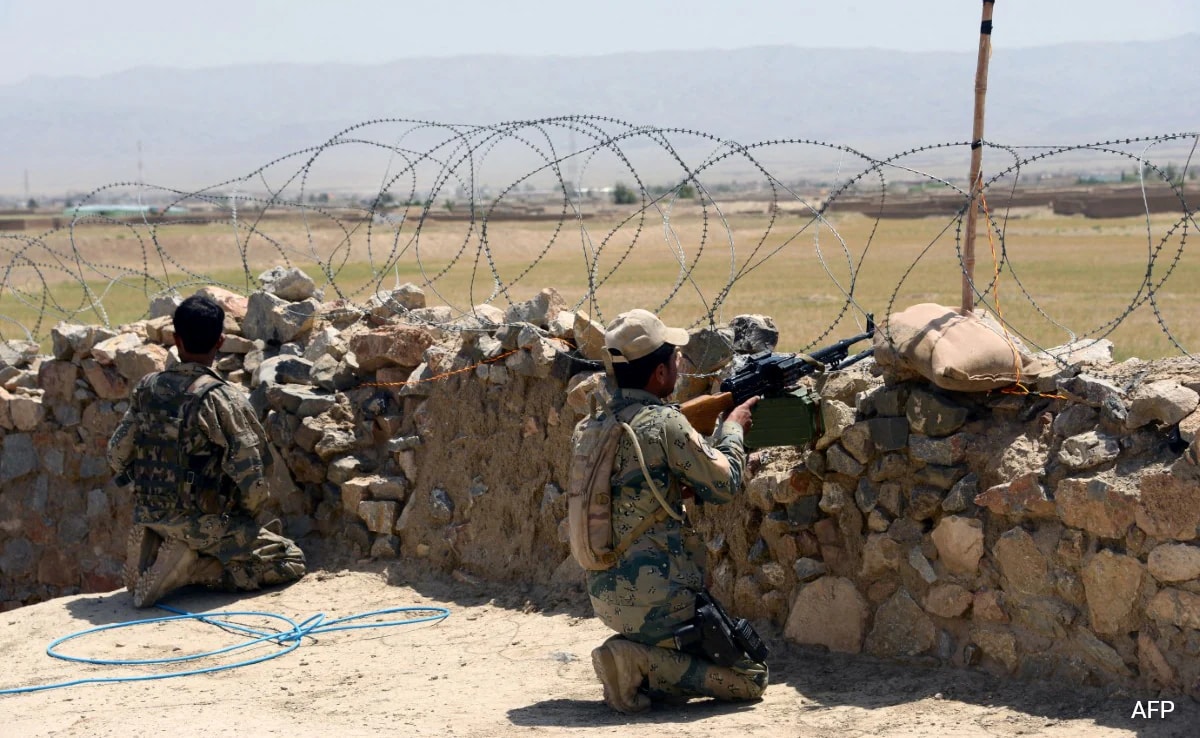
The Anglo-Afghan Treaty of 1919 made slight modifications to the original demarcation.
In the wake of Afghanistan-Pakistan peace negotiations in Doha, Taliban Defence Minister Mohammad Yaqoob Mujahid has challenged Pakistan's interpretation of the Durand Line, the international boundary between the two countries. During his media address, Mujahid emphasized that the Durand Line is merely "imaginary" and was not part of the discussions in the truce agreement between Kabul and Islamabad.
"Qatar's use of the term 'border' does not reflect our agreement, and we have not given our consent to this terminology. No such reference exists in any agreement between our nations. The Durand Line represents Afghanistan's position and will never be acknowledged as a 'border'. This issue transcends governmental authority as it concerns national identity, which only the nation can determine," Mujahid stated, according to Tolo News.
Following Afghanistan's objection, Qatar revised its official statement regarding the ceasefire agreement, removing the word "border" from the text.
Qatar's Foreign Ministry amended the phrase "on the border between the two brotherly countries" to simply read "between the two brotherly countries" in the updated statement.
The Durand Line originated in the Hindu Kush in 1893, running through tribal territories between Afghanistan and British India. Today, it constitutes a 2,600-kilometer boundary between Afghanistan and Pakistan. This demarcation emerged from the 19th-century Great Game between Russian and British empires, with Afghanistan serving as Britain's buffer against perceived Russian expansion eastward.
The boundary was formally established by British civil servant Sir Henry Mortimer Durand and Afghan Emir Abdur Rahman Khan, aiming to delineate spheres of influence and improve diplomatic relations between British India and the Afghan Kingdom.
Abdur Rahman ascended to the throne in 1880, two years after the Second Afghan War concluded, during which the British seized control of several Afghan territories. His agreement with Durand defined the boundaries of his realm and British India's "spheres of influence" along the Afghan "frontier" with India.
The seven-clause agreement established a 2,670-km line stretching from the Chinese border to Afghanistan's boundary with Iran. This demarcation divided Pashtun areas, creating conditions for future tensions due to tribal affiliations spanning both sides of the border.
The agreement also assigned Balochistan to British India and defined the Wakhan Corridor—a narrow strip extending to the Chinese border that separates present-day Tajikistan from northern Kashmir—as a buffer zone between Russian and British territories.
The Anglo-Afghan Treaty of 1919 introduced minor modifications to the line. Although the treaty was intended to last 100 years, it was not renewed in 1999. Following independence in 1947, Pakistan inherited the Durand Line, but Afghanistan has consistently rejected it, asserting that all territories west of the Indus River historically belonged to Afghanistan.
Pakistan, however, maintains its interpretation of the border and has completed comprehensive fencing to prevent unrestricted cross-border movement.
The dispute over the Durand Line was not the primary cause of recent hostilities between the neighboring countries. Pakistan faces increased militancy since the Taliban regained control of Afghanistan in 2021.
Islamabad claims that hostile groups, including Tehreek-e-Taliban Pakistan (TTP), operate from "sanctuaries" in Afghanistan—allegations consistently denied by the Taliban government.
Cross-border violence escalated on October 11, shortly after explosions in Kabul during Taliban Foreign Minister Amir Khan Muttaqi's unprecedented visit to India, Pakistan's longstanding rival. Kabul attributed the attack to Islamabad.
Subsequently, the Taliban launched a lethal offensive along sections of its southern border with Pakistan, prompting Islamabad to promise a forceful response.
Source: https://www.ndtv.com/world-news/all-about-durand-line-afghan-pak-border-that-kabul-refuses-to-recognise-9486811