
Historic Museum Heists: From the Louvre to the Green Vault - A Timeline of Major Art Thefts
- Date & Time:
- |
- Views: 45
- |
- From: India News Bull
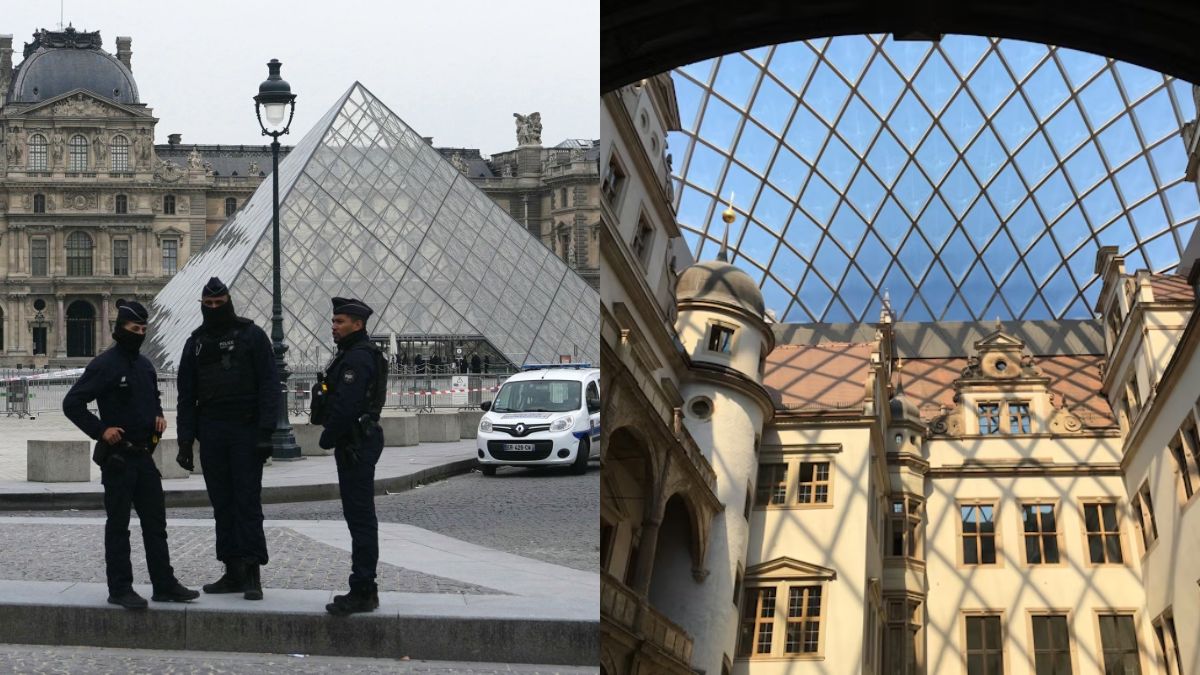
This morning, valuable jewels dating back to the Napoleonic era were stolen from Paris's prestigious Louvre Museum. Culture Minister Rachida Dati initially announced the theft, confirming that no one was injured and that she was on-site with museum personnel and law enforcement.
The Louvre administration stated that the museum would "remain closed today for exceptional reasons."
Thefts and security incidents are not new to the Louvre. The museum's most celebrated artwork, Leonardo da Vinci's Mona Lisa, was stolen by a former employee in 1911 before being recovered two years later.
Below are some of history's most significant museum heists:
Isabella Stewart Gardner Museum, Boston (1990): Two individuals impersonating police officers entered this Boston museum and made off with 13 masterpieces, including works by Vermeer, Rembrandt, and Degas. The stolen artworks are valued above $500 million, and none have been recovered to date, making this the largest art theft in recorded history.
Van Gogh Museum, Amsterdam (2002): Thieves scaled the museum walls in Amsterdam and broke through a window to steal two early Van Gogh paintings: "View of the Sea at Scheveningen" and "Congregation Leaving the Reformed Church in Nuenen." The paintings were eventually recovered in Italy in 2016.
National Gallery, Norway (1994): Edvard Munch's iconic "The Scream" was stolen from Norway's National Gallery, with the thieves demanding a $1 million ransom. The painting was recovered three months later. A different version of the painting was stolen again in 2004 and recovered in 2006.
Green Vault, Dresden (2019): At Dresden's Grunes Gewolbe (Green Vault) museum in Germany, thieves broke in and took 21 pieces of 18th-century jewelry containing diamonds and other precious stones, collectively valued at over 98 million euros.
Montreal Museum Of Fine Arts Heist (1972): Thieves entered through a skylight and stole 18 paintings, including a Rembrandt, from the Montreal Museum of Fine Arts. They escaped using a truck, and only one painting has been recovered since then.
Dulwich Picture Gallery, London (1966-1983): Rembrandt's "Portrait of Jacob de Gheyn III" was stolen four times over a 17-year period from London's Dulwich Picture Gallery. The painting was taken using various methods but was recovered each time.
Whitworth Art Gallery, Manchester (2003): Three watercolors by Van Gogh, Picasso, and Gauguin were stolen from the Whitworth Art Gallery in Manchester, UK. They were found two days later in a public restroom with a note from the thief criticizing the museum's inadequate security.
Musee d'Art Moderne, Paris (2010): Vjeran Tomic, nicknamed "Spider-Man," climbed into Paris's Musee d'Art Moderne and stole five artworks, including paintings by Matisse and Modigliani. These works remain missing.
Mohamed Khalil Museum, Cairo (1977 And 2010): Van Gogh's "Poppy Flowers" was stolen twice from Cairo's Mohamed Khalil Museum. After the first theft in 1977, it was recovered 10 years later. Following a second theft in 2010, it remains missing, with a $175,000 reward offered for its return.
Ashmolean Museum, Oxford (2000): A thief lowered himself through a skylight into Oxford's Ashmolean Museum. Using a smoke canister to block security cameras, he stole Cezanne's "View of Auvers-sur-Oise" in under 10 minutes.
Source: https://www.ndtv.com/world-news/biggest-museum-heists-in-history-from-the-louvre-to-grunes-gewolbe-9483169