
Military to Presidency: The Global History of Soldiers Who Became National Leaders
- Date & Time:
- |
- Views: 64
- |
- From: India News Bull
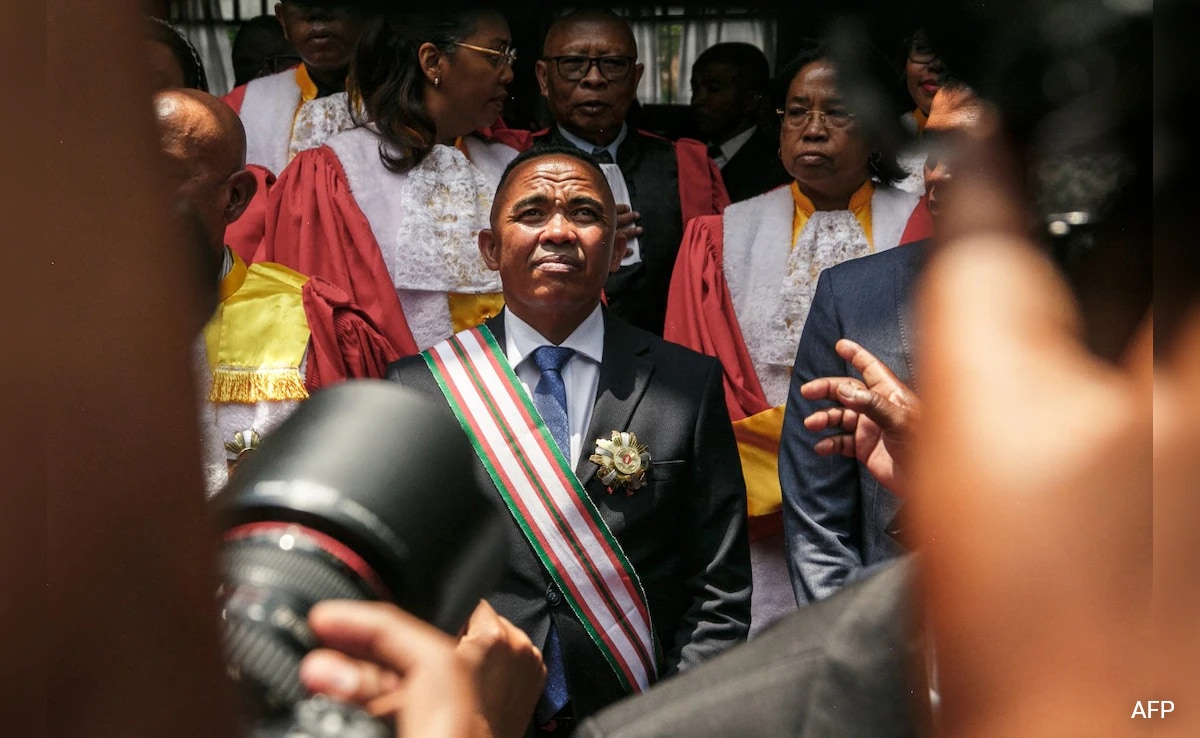
Madagascar's newly sworn in President Michael Randrianirina rose to power following widespread Gen Z protests over utility shortages that culminated in a military coup, forcing President Andry Rajoelina to flee the country.
Colonel Randrianirina's ascension from military officer to national leader represents a recurring pattern in global politics where military figures transition to presidential positions.
This phenomenon has numerous historical precedents across different continents and eras. Here are five notable military leaders who made similar journeys from military command to presidential authority:
In Myanmar, Min Aung Hlaing methodically climbed the military hierarchy, becoming joint chief of staff in 2010 and commander-in-chief a year later. Facing mandatory retirement in July 2021, he orchestrated a February coup that year, declaring a state of emergency and transferring all governmental authority to himself. His military administration continues to rule Myanmar, with promised elections anticipated by year's end.
Uganda's Idi Amin began humbly as a cook in the British colonial army before rapidly ascending through military ranks after independence in 1962. In January 1971, while President Milton Obote attended a Commonwealth summit in Singapore, Amin seized control through a military coup. Though initially welcomed for promises of democratic restoration, Amin's rule quickly devolved into a notoriously brutal dictatorship marked by extensive human rights violations. His reign ended in April 1979 when Tanzanian military forces and Ugandan rebels successfully overthrew his regime.
Turkey's Kenan Evren, a military academy graduate who rose to become a general and chief of the general staff, led a military takeover in September 1980 following months of political violence that threatened civil war. He dissolved Parliament and governed through the National Security Council before officially becoming Turkey's seventh president in November 1982 after implementing a new constitution. His presidency lasted until November 1989. In 2012, he faced trial for his coup leadership and received a life sentence for crimes against the state.
Ghana's Jerry Rawlings, an Air Force pilot, executed two successful coups—first in June 1979 and again in December 1981. After briefly ruling Ghana following his initial coup, he returned to power by overthrowing the civilian government and leading the Provisional National Defense Council military dictatorship. Following constitutional reforms in 1992, Rawlings transitioned to democratically elected president, serving two four-year terms from January 1993 to January 2001. His legacy remains complex, balancing economic reform achievements against accusations of human rights violations.
In Chile, career military officer Augusto Pinochet was appointed army commander-in-chief by President Salvador Allende in August 1973. Just one month later, Pinochet led the military coup that overthrew Allende's democratically elected socialist government. After military forces surrounded and bombed the presidential palace, resulting in Allende's suicide, Pinochet established himself as the singular head of a military junta. His subsequent 17-year dictatorship subjected Chileans to systematic human rights abuses while implementing radical free-market economic policies until 1990.
These historical cases illustrate how military leaders have repeatedly leveraged their positions to seize governmental control, often with profound and lasting consequences for their nations.
Source: https://www.ndtv.com/world-news/from-barracks-to-palace-a-look-at-soldiers-who-became-presidents-worldwide-9478200