
Trump Announces Planned Meeting with Putin in Budapest to Negotiate End to Ukraine War
- Date & Time:
- |
- Views: 74
- |
- From: India News Bull
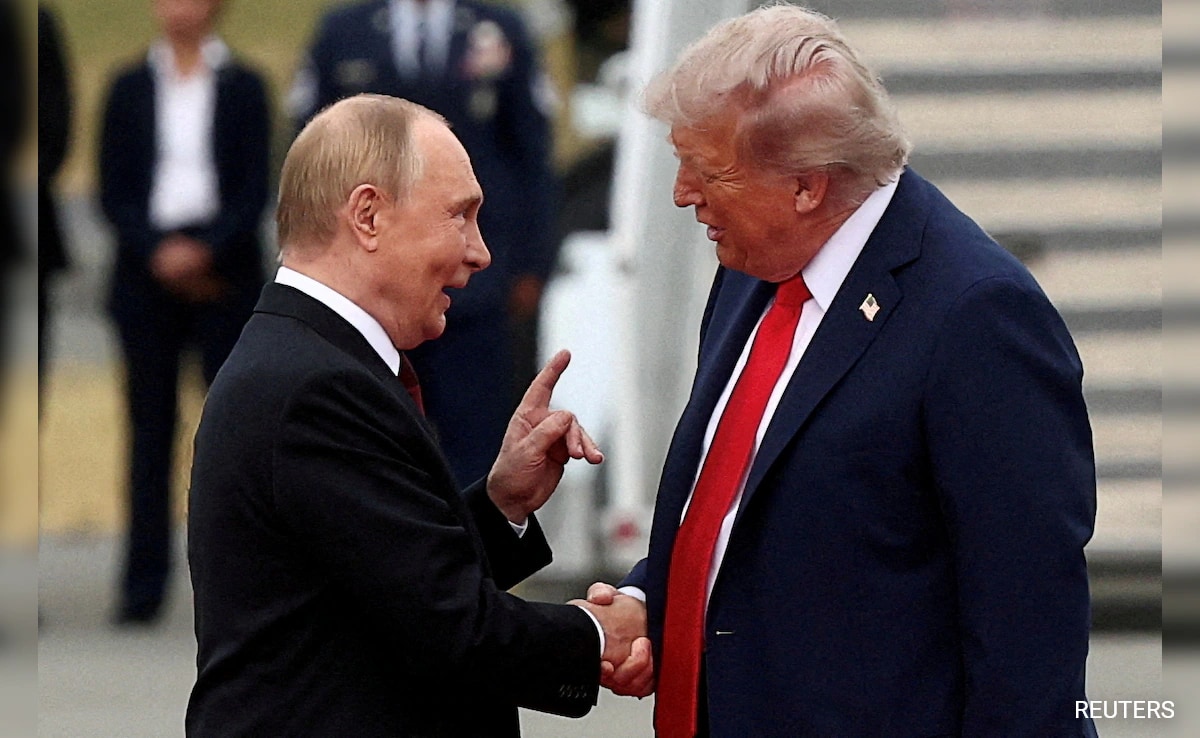
President Donald Trump announced Thursday he will meet with Russian President Vladimir Putin in Budapest, Hungary, to discuss ending the Ukraine war, following a phone conversation between the two leaders.
"I believe great progress was made with today's telephone conversation," Trump stated on social media after speaking with Putin. This planned meeting follows their previous encounter in Alaska in August, which yielded no diplomatic breakthrough.
Prior to the Trump-Putin meeting, Secretary of State Marco Rubio will lead U.S. officials in talks with Russian representatives next week, though the location remains unspecified.
The call precedes Trump's scheduled Friday meeting with Ukrainian President Volodymyr Zelensky at the White House. Zelensky has been advocating for the sale of Tomahawk missiles to Ukraine, arguing that the capability to strike deeper into Russian territory would compel Putin to take negotiations more seriously.
During his trip to Israel on Sunday, Trump mentioned discussing Tomahawks with Putin as leverage to end the war in Ukraine. "Do they want to have Tomahawks going in that direction? I don't think so," Trump remarked. "I think I might speak to Russia about that."
With the Israel-Hamas ceasefire holding, Trump has pivoted his focus to resolving the Ukraine conflict, considering providing Kyiv with long-range weaponry to bring Moscow to the negotiating table.
Ending the wars in Ukraine and Gaza was a cornerstone of Trump's 2024 reelection campaign, during which he criticized President Joe Biden's handling of these conflicts. However, like Biden, Trump has struggled to convince Putin to engage in direct talks with Zelensky as the war approaches its fourth year.
Following the Gaza ceasefire, Trump appears increasingly confident about making progress on ending Russia's invasion. "Interestingly, we made progress today, because of what's happened in the Middle East," Trump said regarding the Russia-Ukraine war on Wednesday evening at a White House dinner.
Earlier this week in Jerusalem, Trump told the Knesset that the Gaza truce could lay groundwork for normalizing relations between Israel and Middle Eastern neighbors. However, he emphasized his priority: "First, we have to get Russia done," Trump said, addressing his special envoy Steve Witkoff, who has served as his administration's chief intermediary with Putin.
Friday's meeting with Zelensky will mark their fourth face-to-face encounter this year. Trump has indicated he's considering selling Tomahawk cruise missiles to Ukraine despite Putin's warning that such a move would cross a red line and damage U.S.-Russia relations.
"He'd like to have Tomahawks," Trump said of Zelensky on Tuesday. "We have a lot of Tomahawks."
Mark Montgomery, an analyst at the Foundation for Defence of Democracies, noted that while selling Tomahawks would be impactful, implementation could take years. He suggested Ukraine might benefit more immediately from Extended Range Attack Munition (ERAM) missiles and Army Tactical Missile Systems (ATACMS).
The Tomahawk, with a range of approximately 995 miles (1,600 kilometers), would allow Ukraine to strike much deeper into Russian territory compared to the ERAM (285 miles/460 km) or ATACMS (186 miles/300 kilometers).
"To provide Tomahawks is as much a political decision as it is a military decision," Montgomery explained. "The ERAM is shorter range, but this can help them put pressure on Russia operationally, on their logistics, the command and control, and their force disbursement within several hundred kilometres of the front line."
Zelensky is expected to urge Trump to impose additional sanctions on Russia, something the president has appeared reluctant to do thus far. Instead, Trump has focused on pressuring NATO members and allies to stop purchasing Russian oil. On Wednesday, he announced that India, one of Russia's largest crude buyers since the Ukraine invasion, had agreed to halt oil purchases from Moscow.
Pending Trump's approval is Senate legislation that would impose substantial tariffs on countries purchasing Russian oil, gas, uranium, and other exports to economically pressure Moscow. Republican leaders await Trump's endorsement before advancing the bill.
The White House has recently shown increased interest in the legislation, with administration officials reviewing it in detail and requesting technical changes. The bill is sponsored by Senator Lindsey Graham (R-S.C.) and Senator Richard Blumenthal (D-Conn.).
A White House official stated that the administration is working with lawmakers to ensure bills align with the president's foreign policy objectives. Treasury Secretary Scott Bessent indicated Wednesday that the administration is waiting for greater European support before proceeding with additional sanctions.
"So all I hear from the Europeans is that Putin is coming to Warsaw," Bessent said. "There are very few things in life I'm sure about. I'm sure he's not coming to Boston. So, we will respond... if our European partners join us."
Source: https://www.ndtv.com/world-news/great-progress-after-call-trump-says-he-will-meet-putin-in-budapest-9469773