
Rediscovered World War II Diary Reveals Chinese Officer's Eyewitness Account of D-Day Invasion
- Date & Time:
- |
- Views: 59
- |
- From: India News Bull
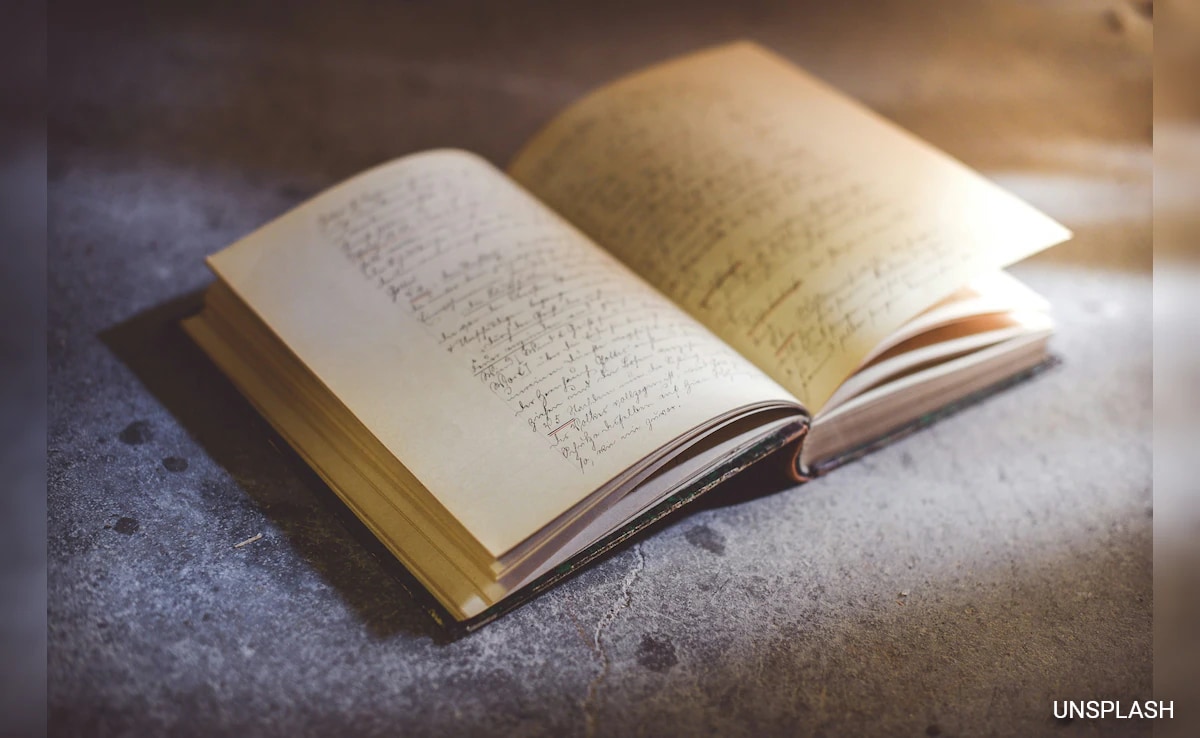
Urban explorers uncovered a remarkable diary in a Hong Kong tenement scheduled for demolition, revealing an extraordinary World War II account.
In Ouistreham, the captain of a massive Royal Navy battleship gathered his officers to hint at an immensely significant mission. "Speculations abound," wrote one officer in his diary on June 2, 1944. "Some say a second front, some say we are to escort the Soviets, or do something else around Iceland. No one is allowed ashore."
This closely guarded secret was D-Day—the June 6, 1944 Allied invasion of Nazi-occupied France, the largest combined sea, land and air assault in history. The operation breached Hitler's formidable "Atlantic Wall" defenses, accelerating the dictator's defeat eleven months later.
The diarist was Lam Ping-yu, a Chinese naval officer who had journeyed across the globe with two dozen compatriots to train and serve alongside Allied forces in Europe.
For 32-year-old Lam, witnessing the Normandy landings from aboard HMS Ramillies proved historic. His meticulously detailed journal, rescued from imminent destruction, has brought his story back to prominence, illuminating the participation of Chinese officers in this multinational military endeavor.
As Normandy veterans gradually disappear, Lam's vivid firsthand account adds another valuable voice to the vast collection of World War II testimonies, ensuring that both the sacrifices for freedom and the international cooperation that defeated Nazism remain in historical memory.
"Saw the army's landing craft, as numerous as ants, scattered and wriggling all over the sea, moving southward," Lam recorded on the evening of June 5, as the invasion fleet crossed the English Channel. "Everyone at action stations. We should be able to reach our designated location around 4-5 am tomorrow and initiate bombardment of the French coast."
Hong Kong historians Angus Hui and John Mak conducted meticulous research to authenticate Lam's 80-page diary containing 13,000 delicate Chinese characters and trace how he came to serve aboard HMS Ramillies.
Hui and Mak have curated a traveling exhibition about Lam, his diary, and his fellow Chinese officers, currently on display in the Normandy coastal town of Ouistreham.
A significant breakthrough came when they confirmed through Hong Kong land records that the abandoned ninth-floor apartment where the diary was discovered had belonged to one of Lam's brothers.
Hui also uncovered a 1944 ship's log from HMS Ramillies in British archives. A May 29 entry documented that two Chinese officers had boarded, noting: "Junior Lieut Le Ping Yu Chinese Navy joined ship," with Lam's surname misspelled.
The leather-bound black notebook has had its own remarkable journey. After being discovered and documented, it has vanished again—possibly taken abroad by Hong Kong emigrants. Fortunately, Hui photographed all pages before its disappearance, preserving Lam's historical account.
"I knew, 'Okay, this is a fascinating story that we need to know more about,'" Hui explains.
"Such a remarkable piece of history... could have remained buried forever," adds Mak.
They shared Lam's writings with his daughter, Sau Ying Lam, who resides in Pittsburgh. Prior to this discovery, she knew very little about her father's wartime experiences before his death in 2000.
"I was flabbergasted," she says. "It's a gift for me learning who he was as a young person and understanding him better now, because I didn't have that opportunity when he was still alive."
Lam belonged to a contingent of over 20 Chinese naval officers sent to the United Kingdom for training during World War II by Chiang Kai-shek. Chiang led China's Nationalist government from 1928 to 1949, fighting both Japanese invaders and Mao Zedong's communists before eventually retreating to Taiwan when Mao's forces seized control of mainland China.
During their extensive journey from China, the officers traveled through Egypt—a photograph shows them posing in white uniforms before the pyramids—before joining British forces.
In his diary, Lam described a close encounter with death on D-Day aboard HMS Ramillies, as the battleship's powerful guns bombarded German positions with massive 880-kilogram (1,938-pound) shells in advance of Allied troops landing on the five invasion beaches.
"Three torpedoes were fired at us," Lam wrote. "We managed to dodge them."
His daughter reflects on this narrow escape: "If that torpedo had hit the ship, I wouldn't be alive."
Through examining ships' logs, Hui and Mak have verified that at least 14 Chinese officers participated in Operation Neptune—the 7,000-vessel naval component of the invasion, code-named Operation Overlord—and subsequent Allied naval operations during the Battle of Normandy.
Several officers, Lam included, also took part in the Allied invasion of southern France in August 1944.
"Action stations at 4 am, traces of the moon still visible, although the horizon is unusually dark," Lam recorded on August 15. "Bombardment of the French coast started at 6, Ramillies didn't open fire until 7. The Germans put up such a feeble resistance, one can call it nonexistent."
France bestowed its highest honor, the Legion d'Honneur, upon the Chinese contingent's final survivor in 2006. Huang Tingxin, then 88, dedicated the award to all his companions who had journeyed from China to Europe, stating "it was a great honor to join the anti-Nazi war," according to China's official Xinhua News Agency.
Lam's daughter believes their story continues to inspire: "It talks about unity, talks about hard work, about doing good. World War II, I think it shows us that we can work together for the common good."
Source: https://www.ndtv.com/world-news/world-war-ii-diary-of-chinese-officer-who-dodged-death-found-in-hong-kong-9465624