
Trump's Bilateral Dealmaking Strategy Faces Critical Test as US-China Trade Tensions Escalate
- Date & Time:
- |
- Views: 65
- |
- From: India News Bull
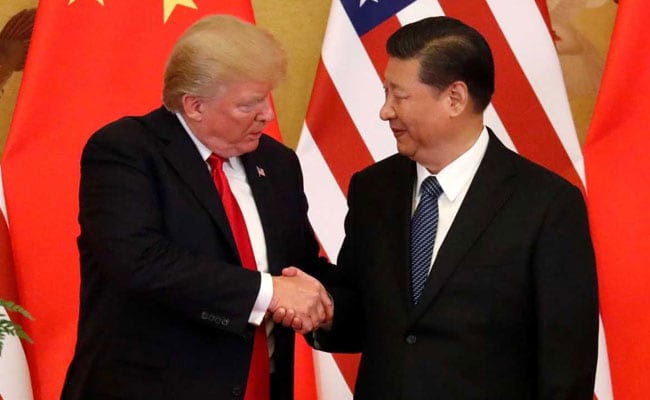
US President Donald Trump and Chinese President Xi Jinping.
President Donald Trump's one-on-one dealmaking approach with allies and adversaries, long touted as his unique strength, is showing significant vulnerabilities as the China trade truce appears on the verge of collapse.
China's Ministry of Commerce unveiled extensive new export controls on rare earths and critical materials essential for US defense and technology sectors late Wednesday. While these announcements shocked specific industries, broader markets initially remained calm.
The situation changed dramatically when Trump published a nearly 500-word statement on Truth Social Friday morning, threatening a "massive increase" in tariffs on Chinese goods. This announcement sent US markets into a steep decline. Later that day, Trump declared he would impose an additional 100% tariff on Chinese imports starting November 1 - potentially pushing rates to levels that both nations previously warned could trigger economic decoupling. He also announced plans to implement export controls on critical software.
This unexpected escalation between the world's two largest economies comes just weeks before a planned meeting between Trump and Chinese President Xi Jinping in South Korea, where they were expected to finalize a comprehensive trade agreement. The negotiation leverage centers on export controls - specifically, US restrictions on semiconductors and AI chips needed by China versus China's control over critical minerals and magnets required by the US.
"The Chinese recognized the leverage they gained with export controls earlier this year, so it's logical they would approach these talks attempting to strengthen their position," noted Jon Hillman, senior fellow for geoeconomics at the Council on Foreign Relations. "Any agreement remains vulnerable if China chooses to exercise that leverage again."
And they did exactly that.
In May, Trump negotiated a 90-day truce with China, postponing implementation of new tariffs or export controls announced during his April "Liberation Day" speech. This pause calmed global markets that had been destabilized by rapidly escalating tariffs and counter-tariffs, which briefly saw US levies on Chinese goods reach 145%.
China correspondingly agreed to lift its export ban on critical minerals and magnets. However, as months passed, Trump supporters in agricultural states began complaining that China had effectively halted US soybean imports - which the president characterized as a negotiating tactic. The White House has indicated plans for a farmer aid package, though details remain unannounced.
Despite these issues, the truce period remained relatively stable until this week, when China announced escalated export controls. Now, as was the case six months ago, both economies stand at the precipice of another trade war.
This pattern reveals the fundamental challenge with Trump's bilateral trade negotiations. While markets typically respond positively to the president's announcements of deals or delays - with China, Russia's Vladimir Putin, India, and others - they experience equal shock when either Trump or his counterparts retreat from commitments, creating renewed uncertainty.
"The US is now confronting a more assertive, well-prepared, less US-dependent and self-confident Beijing than during Trump 1.0," when the initial "phase one" deal outlined several Chinese concessions, wrote Wendy Cutler, senior vice president at the Asia Society Policy Institute, in a Saturday LinkedIn post. "The past 24 hours leave no doubt that those days are over."
US stocks experienced their worst selloff in six months on Friday. Wall Street's primary fear indicator reached levels not seen since April. Nvidia Corp., the world's largest public company caught between the two nations' export control negotiations, dropped nearly 5%. All this market turbulence resulted from a single social media post by the president.
"We've maintained caution regarding equities based on our view that substantial uncertainty and risk exist," explained Dan White, head of research at Blue Creek Capital. "Market sentiment had been projecting an optimistic scenario, but the reality includes significant risk and uncertainty, making today a wake-up call for many investors."
According to Cutler, who spent decades negotiating trade agreements for the US Trade Representative's office, the US can more effectively manage bilateral negotiations with smaller, less powerful nations, but when dealing with major powers like China, collective approaches prove more effective.
While the president suggested he might cancel his meeting with Xi in South Korea due to the escalation, experts believe China's announcement and Trump's response are negotiation tactics preceding the actual meeting. Nevertheless, many observers, including hawks and former Trump administration officials, worry that China now holds a stronger position than ever.
"Chinese media within China acknowledges that China controls key levers and is using them to significantly weaken our manufacturing sector, including semiconductors, AI, and defense components," said Nazak Nikakhtar, a former Commerce Department official during Trump's first term who now represents affected industries as a partner at Wiley Rein.
"But with handshake deals, it's classic game theory: The opposing side will evaluate your reaction if they break their commitment. If they perceive weakness, they simply won't adhere to the agreement."
(This story has not been edited by NDTV staff and is auto-generated from a syndicated feed.)
Source: https://www.ndtv.com/world-news/us-president-donald-trump-tariffs-dealmaking-diplomacy-grows-fragile-as-china-fires-back-9440419