
How Strong Social Connections Slow Biological Aging: The Science Behind Social Longevity
- Date & Time:
- |
- Views: 66
- |
- From: India News Bull
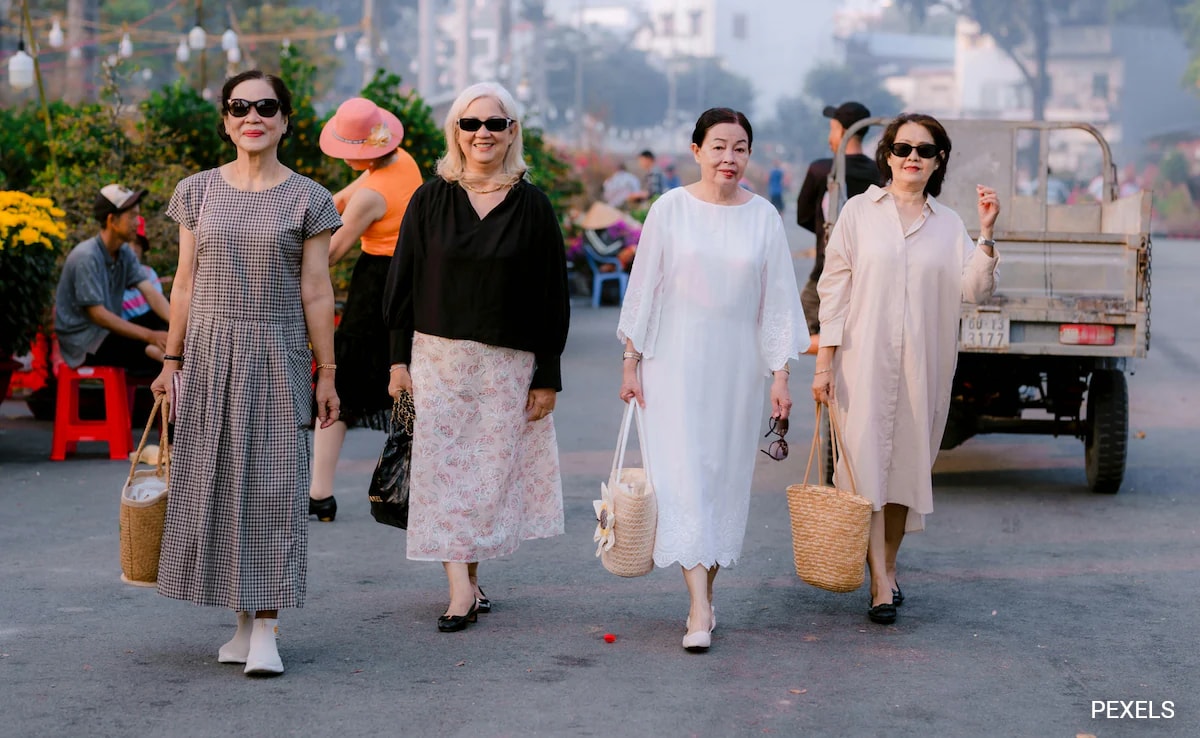
Researchers examined the strength and consistency of people's social connections (Representational)
I recently attended a lecture by Professor Luigi Ferrucci, a renowned aging expert, at my local university's medical school. One statement particularly resonated with me: "The next great step in aging science will be understanding how lifestyle factors slow down aging."
This insight represents what many consider the ultimate objective in aging research. By slowing the aging process, we could potentially delay age-related illnesses, extending our healthy years and compressing the period of disease to just the final stage of life. The result would be feeling younger and healthier throughout our lifespan.
During Professor Ferrucci's presentation, a fascinating new study was being published revealing that one of the most unexpected factors influencing aging is our social connections. The research suggests that maintaining strong relationships with others might actually slow our biological aging process.
Scientific evidence has long indicated that individuals with robust social networks tend to live longer and experience better health outcomes. However, the biological mechanisms through which social connections affect our physical aging have remained somewhat mysterious.
This recent American study involving more than 2,000 adults investigated both the strength and consistency of participants' social connections—examining family relationships, community involvement, religious group participation, emotional support systems, and community engagement levels.
The researchers developed a metric called "cumulative social advantage" (CSA), which essentially measures how socially connected and supported an individual is. This approach represented significant progress beyond previous studies that typically examined isolated factors like marriage or friendship.
The team compared CSA scores against various aging markers, including biological age (measured through DNA methylation changes or "epigenetic clocks"), systemic inflammation levels, and stress-related hormone patterns such as cortisol and adrenaline.
Their findings revealed that people with stronger social connections demonstrated slower biological aging and reduced inflammation. While the correlation between social life and short-term stress responses was less evident, the researchers suggested this might be attributable to measurement challenges rather than absence of connection.
This research contributes to mounting evidence linking social connections to aging processes. Perhaps this shouldn't be surprising, considering humans have evolved as social beings over hundreds of thousands of years.
For our ancestors, group belonging wasn't merely about companionship—it was essential for survival. Collective cooperation enhanced safety, improved food acquisition, and supported overall wellbeing. It's logical that our bodies evolved to function optimally when socially connected.
Social networks were crucial for survival on the African savanna. The study also discovered that social advantage correlates with broader societal inequalities. Individuals with higher education levels, better income, or belonging to certain ethnic groups often exhibited slower aging and lower inflammation markers, indicating that both social and economic circumstances influence aging processes.
This suggests two potential responses: First, implementing social policies that reduce poverty and improve education and opportunity, as these factors clearly impact health and aging. Second, focusing on what we can control individually—strengthening our social connections, remaining supportive, and staying engaged in our communities.
I recall attending the 40th anniversary of the US National Institute on Aging in Washington DC in 2014, where Professor Ferrucci now serves as chief scientific director. During the event, someone asked the social sciences director about the most important research area for the coming century. Without hesitation, he answered: "Social science and genetics."
Though no such integrated research program existed then, his prediction proved accurate. As this new study demonstrates, merging these two disciplines is enhancing our understanding not just of how we age, but how we might age more successfully.
James Goodwin, Visiting Professor in the Physiology of Ageing, Loughborough University
This article is republished from The Conversation under a Creative Commons license. Read the original article.
Source: https://www.ndtv.com/world-news/the-ultimate-anti-aging-secret-is-not-a-pill-but-your-social-life-9439953