
Gaza Ceasefire Takes Effect: Palestinians Return Home as Israel and Hamas Implement Trump-Brokered Deal
- Date & Time:
- |
- Views: 63
- |
- From: India News Bull
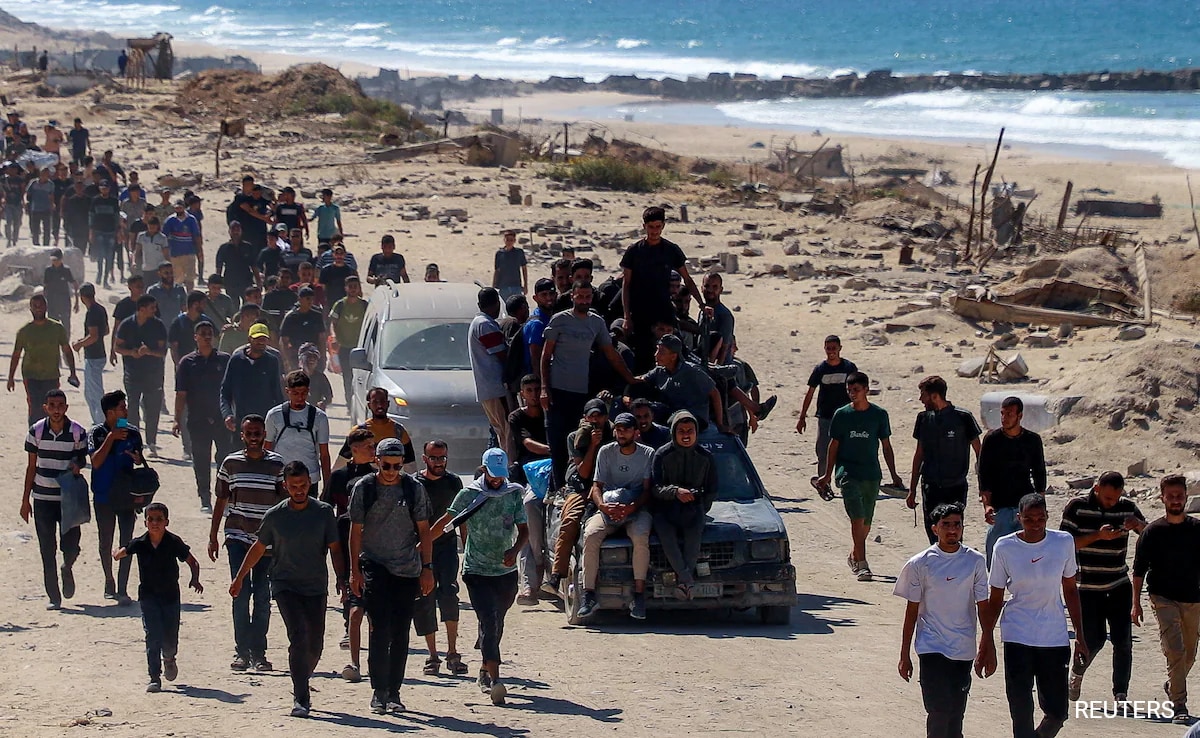
Palestinians are making their way back to Gaza City following the implementation of the ceasefire agreement between Israel and Hamas.
Tens of thousands of Palestinians began journeying northward to return to their homes on Friday after the Israeli military announced that the ceasefire with Hamas had taken effect at noon local time and troops were withdrawing to the agreed deployment positions.
The announcement came following reports from Palestinians of heavy shelling in northern Gaza earlier Friday morning.
Prime Minister Benjamin Netanyahu's office announced early Friday that Israel's Cabinet had approved President Donald Trump's plan for a ceasefire in the Gaza Strip, which includes the release of all remaining hostages and Palestinian prisoners.
The statement indicated that the Cabinet approved the "outline" of the hostage release deal, without mentioning other more controversial aspects of the plan.
While this approval represents a significant step toward ending the devastating two-year conflict, the broader ceasefire plan leaves several questions unanswered, including whether and how Hamas will disarm and who will govern Gaza moving forward.
In an interview with the Associated Press, the International Committee of the Red Cross (ICRC) stated that the expected hostage and prisoner release operation will be more challenging than previous exchanges due to its scale and accelerated timeline.
Christian Cardon, chief spokesman for the ICRC, said Friday that while the organization is expected to participate in the release of hostages from Gaza and Palestinian prisoners from Israel, they have not received specific details regarding when, how, or where the releases would occur.
"Our colleagues are preparing themselves for all possible scenarios," Cardon explained.
He noted that the terms of the deal, which require hostages to be released from Gaza within 72 hours, represent an "extremely" tight timeframe.
The ICRC was involved in prisoner and hostage releases during the two previous ceasefires throughout the war.
Palestinians who previously departed Gaza will be permitted to return for the first time, according to an Israeli security official who spoke anonymously because they were not authorized to address the media.
Palestinians from Gaza who left the besieged territory during or before the war will be able to return after undergoing security checks by Israel and Egypt. The official did not specify when Palestinians hoping to return can begin doing so.
This measure is part of humanitarian policies being implemented under the ceasefire agreement, the official stated. Israel will revert to the same humanitarian measures that were in place during the previous ceasefire in January 2025, including the entry of 600 trucks daily carrying humanitarian aid such as food, medical supplies, shelter materials, cooking gas, and fuel for essential services.
Italy's Defence Minister Guido Crosetto announced Friday that Italian police will resume patrolling the Rafah border crossing between Gaza and Egypt next week, as part of the ceasefire plan agreed between Israel and Hamas.
"In compliance with the Trump agreement, the Rafah Crossing Point will be opened in two directions alternately, outbound to Egypt and inbound to Gaza, on October 14, 2025," Crosetto stated.
The Italian minister added that Israel is working to restore the crossing's infrastructure as quickly as possible.
Crosetto also mentioned that approximately 600 trucks carrying humanitarian aid will enter Gaza from other crossings daily.
Prime Minister Benjamin Netanyahu stated that Israel is about to achieve one of its central objectives in the two-year war - the return of the hostages.
"Hamas agreed to the deal only when it felt that the sword was on its neck - and it is still on its neck," Netanyahu said Friday. "Hamas agreed to the deal after Trump's plan, which I agreed to with the President in Washington."
"I promised the families of the hostages, and I also promised you, citizens of Israel, that we will return everyone, without exception. We promised and we are fulfilling it," he declared.
Under the ceasefire plan agreed with Hamas, all 48 hostages still in captivity are expected to be released. Israel believes approximately 20 of them remain alive.
Netanyahu added that Israel would continue with its demilitarization of Hamas after the hostages' return.
As part of the ceasefire deal, Israeli troops are withdrawing to new positions in Gaza - a process already underway - and all 48 remaining hostages are expected to be released. In exchange, Israel will release around 2,000 Palestinian prisoners.
A list of those prisoners published Friday by Israel did not include high-profile prisoner Marwan Barghouti, a popular Palestinian leader who has spent more than two decades imprisoned for deadly attacks.
Large crowds who had gathered in Wadi Gaza in central Gaza began walking north after the military announced that the ceasefire had taken effect at noon local time.
Earlier, Palestinians reported heavy shelling in parts of Gaza throughout Friday morning.
"We want to go back," said Fayez AlMajdoub, who was displaced from northern Gaza. "I want to go and make sure my home is still there. That's what I want to know."
Israeli military spokesman Avichay Adraee said Palestinians can now return to northern Gaza via two roads, though he warned against approaching areas in northern Gaza including Beit Hanoun, Beit Lahiya, Al-Shujaiyya, and locations where troops remain present.
For southern Gaza, Adraee cautioned Palestinians against approaching the Rafah crossing, the Philadelphi corridor, and all areas where troops are present in Khan Younis.
He spoke as the Israeli military confirmed the ceasefire with Hamas had taken effect.
Earlier Friday morning, Gaza residents reported intensified shelling after Israel's Cabinet approved the ceasefire plan.
In central Gaza's Nuseirat refugee camp, Mahmoud Sharkawy, one of many people sheltering there after being displaced from Gaza City, said artillery shelling intensified in the early hours.
"The shelling has significantly increased today," said Sharkawy, adding that low-flying military aircraft had been operating over central Gaza.
In northern Gaza, two Gaza City residents told The Associated Press that bombing continued in the early hours, primarily artillery shelling.
The managing director of Shifa hospital, Rami Mhanna, reported that the shelling in southern and northern Gaza City had not stopped following the Israeli Cabinet's approval of the ceasefire plan.
U.S. troops will help support and monitor the ceasefire deal in Gaza as part of a team that includes partner nations, nongovernmental organizations, and private-sector entities, U.S. officials said Thursday.
The officials, who spoke anonymously to discuss details not authorized for release, said U.S. Central Command is establishing a "civil-military coordination center" in Israel that will facilitate the flow of humanitarian aid as well as logistical and security assistance into the territory.
Source: https://www.ndtv.com/world-news/i-want-to-see-my-home-gazans-return-as-israel-hamas-truce-takes-effect-9432065