
Japan's Ruling Coalition Collapses: What This Means for Sanae Takaichi's Prime Minister Bid
- Date & Time:
- |
- Views: 48
- |
- From: India News Bull
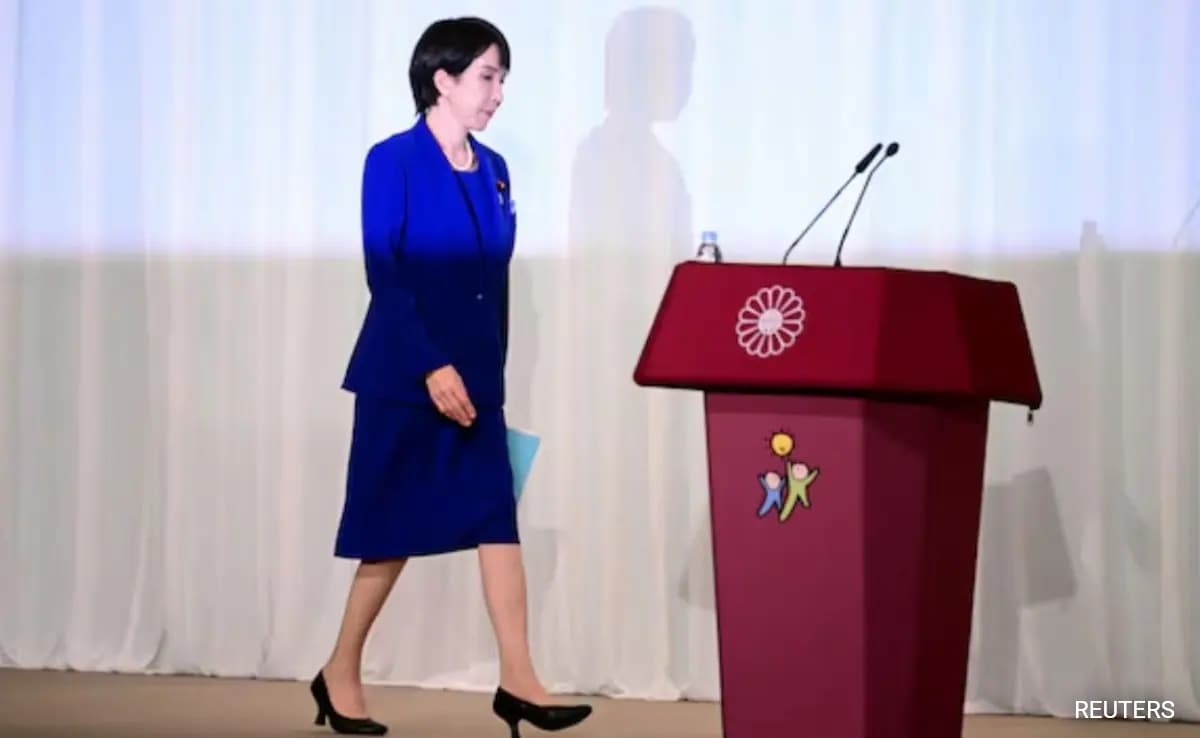
Sanae Takaichi, the newly elected leader of Japan's ruling Liberal Democratic Party, faces significant political challenges as the country's ruling coalition disintegrates.
Japan's long-standing ruling coalition fell apart on Friday when junior partner Komeito withdrew, casting doubt on whether conservative Sanae Takaichi will successfully become Japan's first female prime minister.
This political upheaval comes merely days after Takaichi's election as the Liberal Democratic Party's fifth leader in five years, with the daunting task of reconnecting with disillusioned voters.
The coalition collapse stems primarily from what Komeito party leader Tetsuo Saito described as the LDP's inadequate reform of political funding regulations following a major financial scandal.
Last year's scandal involved questionable payments totaling millions of dollars related to fundraising event ticket sales, which ultimately forced then-Prime Minister Fumio Kishida to resign, dissolved several LDP factions, and drove voters away from the party in subsequent elections.
Takaichi particularly angered Komeito by appointing Koichi Hagiuda, who was implicated in the financial scandal, to a senior party position.
Hidehiro Yamamoto, politics and sociology professor at the University of Tsukuba, explained to AFP: "For the Komeito party, which champions public integrity, it is difficult to explain this to its supporters and those working hard on the election campaign."
Yamamoto added, "To them, it feels like they are losing elections with the LDP. There is little benefit to the coalition (for Komeito)."
Beyond the funding scandal, ideological differences have strained the relationship. Komeito, established in the 1950s as the political wing of the Buddhist organization Soka Gakkai, has expressed concerns about Takaichi's staunchly conservative policies.
Many Komeito members are particularly troubled by Takaichi's regular visits to the controversial Yasukuni shrine, which honors Japanese war dead including convicted war criminals. When former Prime Minister Shinzo Abe, Takaichi's mentor, visited the shrine in 2013, it provoked strong condemnation from China and South Korea.
The LDP-Komeito coalition had governed Japan almost continuously since 1999 but now finds itself in the parliamentary minority after recent electoral setbacks, making legislative progress challenging without case-by-case opposition support.
Reports suggested Takaichi was considering expanding the coalition to include the Democratic Party for the People (DPP), whose economic policies somewhat align with hers.
However, DPP leader Yuichiro Tamaki expressed support for Komeito on Friday, praising its "extremely strong resolve to bring an end to the issue of politics and money."
Even a potential LDP-DPP alliance would fall short of the 233 seats required for a lower house majority, with the LDP holding 196 seats, the DPP 27, and Komeito 24.
For Takaichi to become prime minister, she needs parliamentary majority support, which appears challenging given the current numbers.
Nevertheless, her path to leadership remains possible since opposition parties would need to unite behind an alternative candidate—something that seems unlikely in Japan's fragmented political landscape.
The most probable scenario involves each party nominating their own leader in an initial voting round, with Takaichi potentially prevailing in a subsequent two-way runoff.
However, as University of Tokyo professor emeritus Sadafumi Kawato cautioned to AFP: "If the opposition blocs unite to choose their own candidate, it means a change of government."
Source: https://www.ndtv.com/world-news/explained-why-japans-coalition-collapsed-what-happens-next-9431435