
Modi and Starmer Champion Free Trade Cooperation Amid Rising Global Protectionism
- Date & Time:
- |
- Views: 64
- |
- From: India News Bull
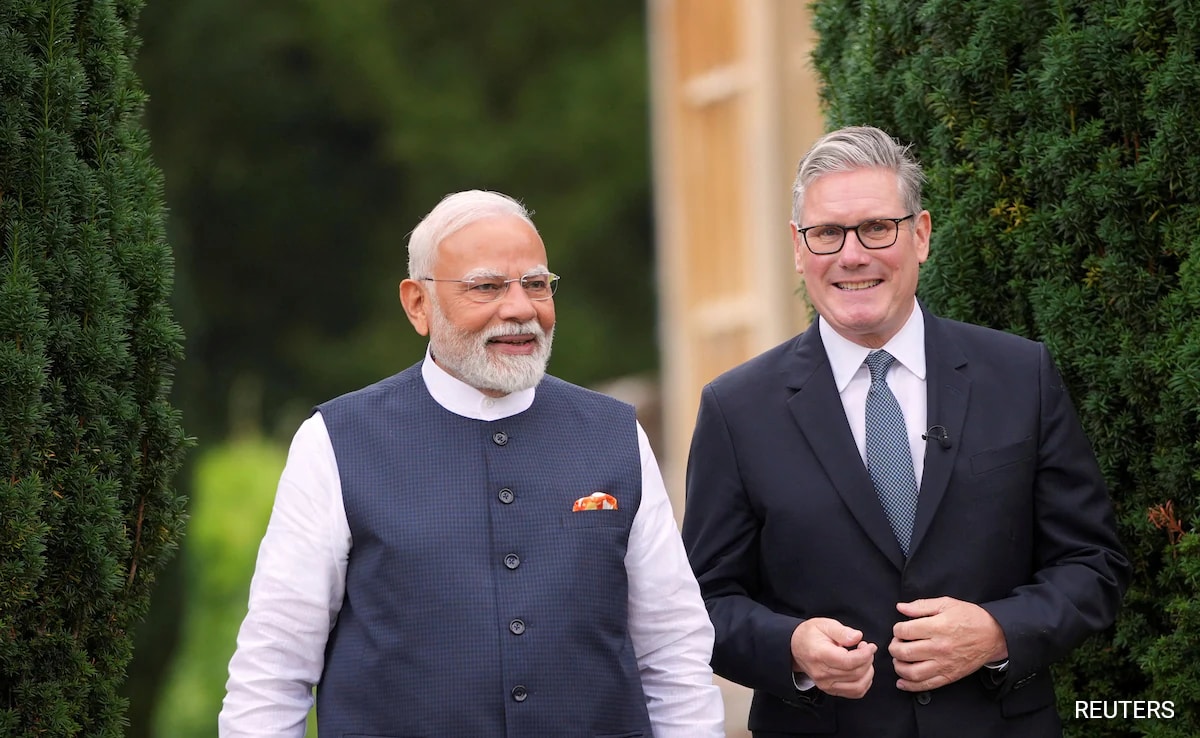
Prime Minister Narendra Modi and UK Prime Minister Keir Starmer, both facing US tariff pressures, advocated for traditional free trade principles this week, standing in contrast to President Donald Trump's protectionist approach.
In Mumbai, PM Modi welcomed Starmer with an elaborate reception, featuring 5,700 billboards and posters throughout India's financial center, celebrating their July trade agreement. The British leader brought an impressive delegation of 126 executives, business representatives, and university officials, encouraging them to secure deals during the visit.
While neither explicitly mentioned Trump's tariffs, both leaders rejected the zero-sum trade perspective championed by the US president. At a global fintech conference on Thursday, Modi declared, "India and UK have shown the world the way on global trade and using that trade as a win-win partnership."
Starmer characterized the expanded UK-India relationship as "a huge win" for both nations. Before departing Mumbai, he emphasized, "Both Prime Minister Modi and I recognize that in a world which is more uncertain now in trade and the economy, it is significant that two important and great democracies, the UK and India, have signed this agreement, provided that stability and that certainty, because that's what provides the opportunities."
Modi and Starmer are seeking stability amid global disruption, with Trump imposing tariffs on their exports and reshaping security dynamics in their regions. Modi has recently strengthened ties with Russia and China during trade tensions with Trump, who implemented 50% tariffs on Indian products and restricted skilled worker visas, significantly impacting India's service sector.
Although Starmer's engagement with Trump—including hosting the Republican for a second state visit last month—has helped Britain avoid the worst tariffs, its small, open economy faces growing threats from protectionist reactions to US policies. Recently, Britain was included in European Union plans for 50% tariffs on foreign steel, despite Starmer's efforts to improve relations with Brussels post-Brexit.
The India-UK agreement represents Britain's most significant deal since leaving the European Union in 2020 and could serve as a model for New Delhi's future agreement with Brussels. The pact is projected to increase bilateral trade by 39% over fifteen years, adding 0.2% to British economic output according to UK analysis.
During Starmer's visit to Mumbai's Raj Bhavan, Modi described India and the UK as "natural partners." Their mutual commitment to reducing trade barriers contrasts sharply with Trump's approach of rebalancing commerce in America's favor, highlighting how major economies are resisting protectionist policies.
WTO Director-General Ngozi Okonjo-Iweala remarked this week, "There is a core in the multilateral trading system that continues to work well."
Starmer highlighted £1.3 billion ($1.7 billion) of Indian investments during his visit, which the UK claims will generate 6,900 jobs. British chip designer Graphcore, owned by SoftBank Group Corp, announced plans to invest £1 billion in Indian infrastructure over the coming decade, confirming an earlier Bloomberg report.
The leaders committed to enhancing cooperation across education, technology, critical minerals, and defense sectors. Several prominent UK universities outlined expansion plans for their Indian campuses.
On Wednesday, Starmer met with Infosys co-founder Nandan Nilekani, renowned for implementing India's Unique ID system in 2009, seeking guidance on introducing a similar program in Britain.
Facing slow economic growth and low approval ratings at home, Starmer needs positive outcomes from this visit. At the fintech conference, he was introduced as a "visionary."
The British prime minister chose to overlook certain disagreements with Modi, such as the Indian leader's warm birthday call to Russian President Vladimir Putin just before the Mumbai trip. While Starmer confirmed discussing India's Russian oil purchases with Modi, he emphasized Britain's efforts to halt the "shadow fleet" of tankers funding Moscow's military operations.
Modi noted that they discussed the "ongoing conflict in Ukraine" but made no mention of oil-related matters.
Scotland Secretary Douglas Alexander, accompanying Starmer, indicated before the Modi meeting that the UK wouldn't press too firmly on Russia-related issues. He acknowledged the countries had "different approach towards Russia," and praised Starmer's "ability to build strong personal relationships preceding policy success."
Although Starmer mentioned raising the case of Jagtar Singh Johal, a Scottish Sikh activist detained in India for eight years, he provided no update on potential release.
The leaders pledged to strengthen security cooperation, including expanded weapons co-production. Starmer reaffirmed British support for India's permanent membership on the UN Security Council.
However, Starmer maintained limits on his globalist stance, especially regarding immigration where he faces domestic pressure. The British prime minister resisted business demands for increased skilled worker visas from India to the UK.
Speaking at a football pitch near Mumbai's Oval Maidan cricket ground on Wednesday, he noted that none of the accompanying business leaders had mentioned visa issues, stating, "That wasn't part of the FTA."
Source: https://www.ndtv.com/world-news/india-uks-pitch-to-preserve-trade-orthodoxy-amid-trump-tariff-challenge-9430193