
Historic Israel-Hamas Ceasefire: Trump Plans Visit as Hostages Set for Release in Landmark Peace Deal
- Date & Time:
- |
- Views: 52
- |
- From: India News Bull
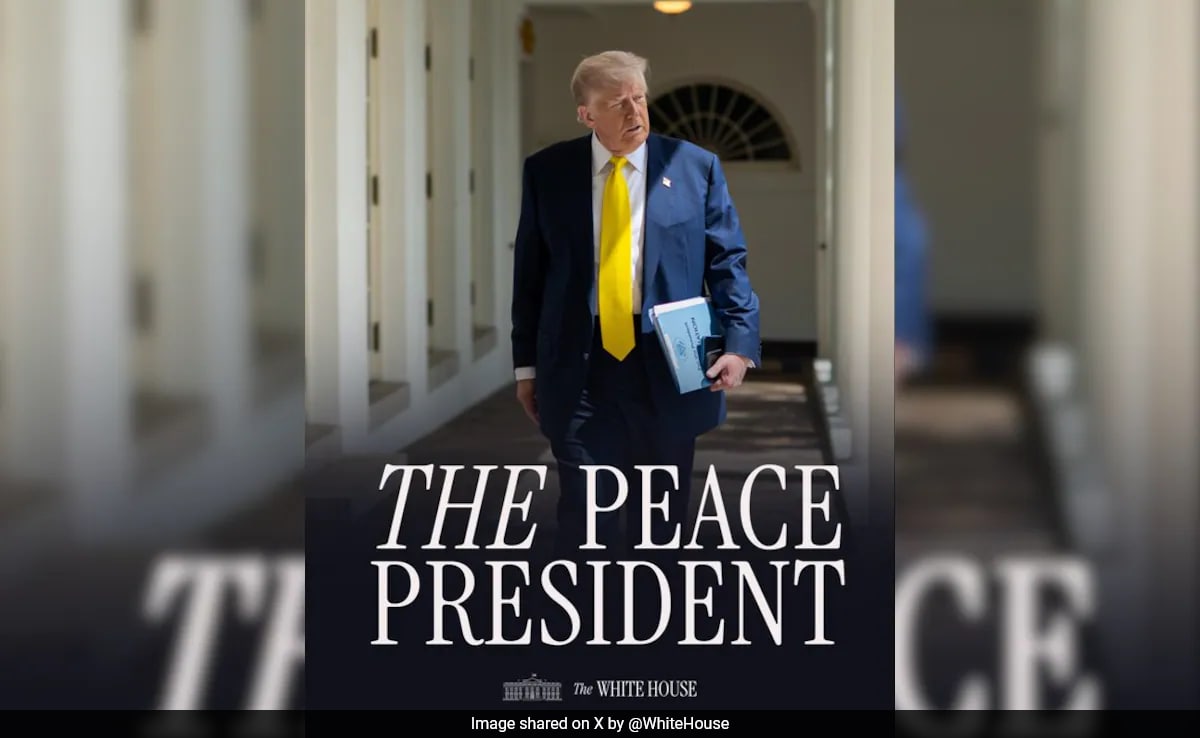
Donald Trump announced his plans to travel to Israel to witness the release of hostages following the ceasefire agreement with Hamas.
President Donald Trump stated he will visit Israel for the hostage release under the terms of a deal to end the war with Hamas, as Prime Minister Benjamin Netanyahu's security cabinet convened late Thursday to officially approve the agreement.
Hamas's chief negotiator also confirmed a deal to end the war, culminating a remarkable 24-hour period that began with Trump's announcement of the agreement and both parties confirming their readiness to proceed. This represents a significant breakthrough after months of unsuccessful attempts to halt the two-year conflict, which has devastated Gaza, caused tens of thousands of deaths, and destabilized the Middle East region.
"The hostages will be coming back Monday or Tuesday," Trump declared in the Oval Office on Thursday. "I hope to be there." He also mentioned the possibility of addressing Israel's parliament, the Knesset.
Despite celebrations among Israelis and Palestinians, concerns persist about the durability of the deal. Earlier Thursday, Israel's deputy foreign minister, Sharren Haskel, confirmed in a Bloomberg TV interview that a ceasefire was in effect. However, Israeli forces reported striking a Hamas cell in northern Gaza that allegedly threatened their troops.
Hamas reported at least four fatalities and called on mediators "and the U.S. administration to assume their responsibilities regarding these brutal crimes, to condemn them, and to intervene immediately to compel the occupation to stop targeting innocent children and unarmed civilians."
Significant challenges remain ahead. Two senior US officials, speaking anonymously to reporters on Thursday, explained the deal includes two phases - the hostage release followed by what they termed "almost a permanent ceasefire" during which other issues would be resolved, including weapons decommissioning, establishing Gaza's new government, and redeploying Israeli forces.
The officials acknowledged numerous potential pitfalls but noted Trump's hope to revitalize momentum for expanding the Abraham Accords, signed during his first term, which led several countries to normalize relations with Israel.
Currently, both sides affirm their commitment to the agreement terms. Iran-backed Hamas will return all remaining 48 hostages held in Gaza - with 20 believed to be alive. In exchange, Israel will release nearly 2,000 imprisoned Palestinians and permit increased aid to Gaza through UN agencies and other international organizations. Hamas stated it would open the Rafah crossing to facilitate aid delivery.
If the ceasefire holds and Israeli officials consent, their forces will conduct a phased withdrawal from Gaza's urban centers until reaching a buffer zone just inside the Palestinian territory's border.
Finance Minister Bezalel Smotrich, an ultra-nationalist member of Israel's governing coalition, indicated he would vote against the deal but stopped short of threatening to leave the government, suggesting likely approval.
Netanyahu celebrated "a national and moral victory for the State of Israel," mentioning a "very emotional and warm conversation" with Trump where they congratulated each other on the "historic achievement."
Hamas initiated the war with an attack on southern Israel on October 7, 2023, killing 1,200 people and abducting 250 others. Over 67,000 Gazans have died in the subsequent conflict, according to the Hamas-run health ministry. Approximately 450 Israeli soldiers have perished in combat in Gaza. A UN-supported panel has accused Israel of genocide, an allegation Netanyahu's government denies.
The conflict's impact has extended well beyond Gaza, with Israel targeting Iran-backed militias in Lebanon, Syria, Yemen, and Qatar. Israel also engaged in a 12-day aerial campaign against Iran in June, during which the US struck the Islamic Republic's nuclear facilities.
Under the ceasefire agreement, Israel will permit increased aid to the war-ravaged Palestinian enclave, where a humanitarian crisis prompted a United Nations-backed monitor to declare famine in parts of the territory.
"We and our partners are prepared to move - now," UN Secretary-General Antonio Guterres told reporters. "We have the expertise, the distribution networks, and community relationships in place to act."
People gathered in Tel Aviv's Hostage Square - a central location for Israeli demonstrators demanding the captives' release - to celebrate. Celebrations also occurred throughout Gaza, including in Khan Younis and Deir al-Balah, according to witnesses.
Images from Egypt showed Israeli and Qatari negotiators embracing, a previously unimaginable scene given the tensions between these nations. Just weeks earlier, Israel had provoked Qatar's anger by attempting to assassinate a prominent Hamas official with a missile strike on a residential compound in Doha.
Discussions in Sharm El-Sheikh are expected to continue regarding unresolved matters, including Gaza's reconstruction and future governance. Trump and Netanyahu have insisted that Hamas disarm and be excluded from governing the territory. The group, designated a terrorist organization by the US, European Union and others, has not yet formally agreed to these conditions.
Nevertheless, a Hamas spokesperson indicated to Al Jazeera on Thursday a willingness to compromise.
"Hamas will not be part of the governance of Gaza, and we have shown all necessary flexibility in this regard," he told the Qatari broadcaster. "We are discussing approaches with the mediators to reach a ceasefire, but not on the basis of surrendering weapons."
International leaders, including those from Germany and the UK, welcomed the breakthrough. Many have condemned Israel's Gaza campaign and some have moved to recognize a Palestinian state in response. French President Emmanuel Macron, who has repeatedly clashed with Netanyahu over the conflict, stated that the "agreement must mark the end of the war and the beginning of a political solution."
Source: https://www.ndtv.com/world-news/donald-trump-to-travel-to-israel-as-hamas-agrees-to-end-war-i-hope-to-be-there-9430037