
US Court Rejects Trump's Bid To Remove Federal Reserve Governor Lisa Cook
An appeals court ruled Monday that Lisa Cook can remain a Federal Reserve governor, rebuffing President Donald Trump's efforts to remove her just ahead of a key vote on interest rates.
- Date & Time:
- |
- Views: 109
- |
- From: India News Bull
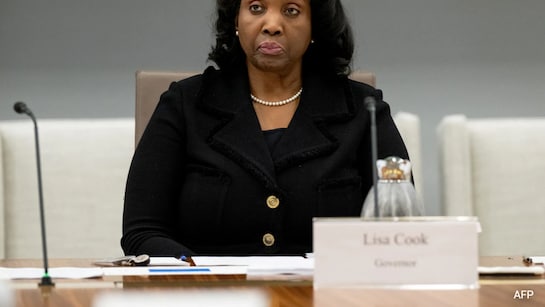
A federal judge blocked President Donald Trump's attempt to dismiss Lisa Cook from her position as Federal Reserve governor on August 25, ruling the removal was unlawful.
Washington:
On Monday, an appeals court upheld the decision that Lisa Cook should maintain her position as Federal Reserve governor, thwarting President Donald Trump's efforts to remove her just before a critical interest rate decision.
The Trump administration is anticipated to swiftly appeal to the Supreme Court in a final attempt to remove Cook before the Fed's meeting. Meanwhile, Cook's legal challenge to permanently prevent her dismissal continues through the judicial system.
The White House's campaign to oust Cook represents an unprecedented attempt to alter the composition of the Fed's seven-member governing board, which was established to function largely independent of political influence. Throughout the agency's 112-year history, no president has ever dismissed a sitting Fed governor. This ruling comes just as the Fed's interest rate committee begins a two-day meeting on Tuesday. Senate Republicans have confirmed Trump's nominee Stephen Miran to an existing vacancy on the Fed's board.
Trump attempted to remove Cook on August 25, but a federal judge determined last week that the dismissal was illegal and restored her to her position on the Fed's board. Trump appointee Bill Pulte has alleged that Cook committed mortgage fraud by apparently claiming two properties as "primary residences" in July 2021, prior to joining the board. Such claims can result in more favorable mortgage rates and reduced down payment requirements compared to declaring a property as a rental or second home. Cook has rejected these allegations.
The case threatens to undermine the Fed's long-established political independence. Economists generally favor independent central banks because they can more readily implement unpopular measures, such as raising interest rates to fight inflation, than elected officials can.