
Kim Seong-Min, Whose Broadcasts Relayed Foreign News To North Korea, Dies
Kim Seong-Min, a prominent North Korean defector who used radio broadcasts, USB sticks and a network of sources in the secretive country to inform the North Korean public about the truth of their authoritarian government, has died.
- Date & Time:
- |
- Views: 68
- |
- From: India News Bull
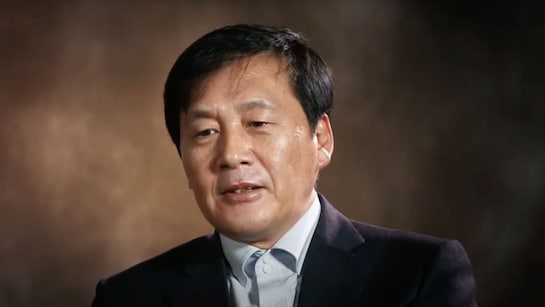
Kim Seong-Min, former North Korean military officer who defected to South Korea in 1999, has passed away at age 63.
Seoul:
Kim Seong-Min, an influential North Korean defector who dedicated his life to bringing uncensored information to North Korean citizens through radio broadcasts, USB drives, and an underground network of sources, has died at the age of 63.
The founder of Seoul-based Free North Korea Radio succumbed to complications from lung cancer that had metastasized to his liver on Friday at a Seoul hospital, according to his former colleagues. His remains were cremated and placed in a columbarium near the North Korean border.
"The defector community has lost one of our greatest leaders. It's uncertain if we'll ever see someone of his caliber again. He truly represented our aspirations," said Choi Jung-hoon, a defector who collaborated with Kim for seven years.
After arriving in South Korea in 1999 following his service as a North Korean army captain, Kim established the first civilian-run shortwave radio station operated by a defector in 2005, broadcasting into North Korea where the general population has virtually no legitimate access to international news.
His broadcasts covered diverse topics including success stories of North Korean defectors in South Korea, exposés on the lavish lifestyles of North Korea's ruling Kim dynasty, and political developments in South Korea, the United States, and beyond.
Prior to the 2012 U.S. presidential election, Kim told The Associated Press that his station produced a special program explaining the American electoral system in contrast to North Korea's, where single candidates routinely receive nearly 100% of votes in parliamentary elections.
"We explained that South Korean elections rarely see candidates winning more than 50% of votes due to diverse public opinions. In the U.S., incumbents frequently face challengers—something impossible in North Korea," Kim stated.
His operation also deployed innovative methods, including floating plastic bottles containing USB drives loaded with global news, South Korean dramas, and K-pop music toward North Korean shores. Kim maintained sources within North Korea who used contraband mobile phones to relay information, which his station would then broadcast back into various regions of North Korea.
Kim was a regular presence at demonstrations, forums, and television programs criticizing North Korea's widely condemned human rights violations.
His activities provoked North Korea's regime, which strictly controls information flow to its 26 million citizens as a means of preserving the Kim family's authority. North Korean state media labeled him "human garbage," while Kim received threatening packages containing dead mice and knife-pierced dolls, likely sent by pro-North Korean groups in South Korea.
In a 2014 interview with the AP, Kim addressed concerns about the accuracy of North Korean news obtained through telephone conversations with contacts inside the country, which sometimes proved false.
"There are numerous stories about North Korea, and I believe they're all valuable as long as they don't glorify the regime," Kim said. "I think they help people understand North Korea's dictatorship."
Kim told colleagues he felt profound satisfaction whenever North Korean defectors mentioned they had listened to his broadcasts while still in North Korea.
Among these was Lee Si-young, who worked alongside Kim for approximately 10 years and became the new director of their radio station in December when Kim's health deteriorated. Lee recalled recognizing Kim's voice from broadcasts she had heard before meeting him.
"Meeting and working with him here was incredibly exciting for me," she said.
Civilian initiatives to transmit outside information to North Korea have faced significant challenges under the current liberal South Korean government led by President Lee Jae Myung, which has cracked down on such activities since June in an effort to reduce tensions with North Korea.
Lee Si-young confirmed her organization has discontinued floating plastic bottles, while other groups have suspended balloon launches carrying propaganda materials and USB drives across the border. Lee's government has terminated key government-operated radio broadcasts to North Korea but hasn't requested civic groups to cease similar activities.
Free North Korea Radio continues to broadcast two hours daily. Lee Si-young mentioned that Kim participated in broadcasts until July and instructed colleagues that "our mission to deliver outside news to North Korea must continue until the very last defector remains."
Monday's broadcast available on the station's website still features Kim's pre-recorded introduction.
"Greetings, North Korean compatriots. We now begin Free North Korea Radio broadcasts from Seoul, the capital of the Republic of Korea," Kim announced. "Our goal is to overthrow Kim Jong Un's dictatorship and achieve a liberal unification of the Korean Peninsula."