
Qatar Hosts Summit After Israeli Strike In Doha, Seeks To Restrain Such Attacks
Qatar hosted a summit of leaders of Arab and Islamic nations in the hopes of presenting a united response to Israel's attack on Hamas leaders in Doha last week.
- Date & Time:
- |
- Views: 81
- |
- From: India News Bull
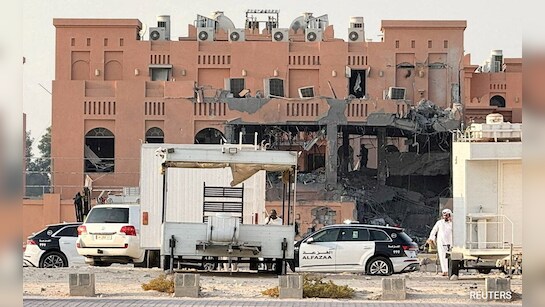
Israel conducted airstrikes on Qatar recently, targeting what they claimed were senior Hamas leadership figures.
Dubai:
Qatar convened a summit of Arab and Islamic nation leaders on Monday, aiming to formulate a unified response to Israel's attack on Hamas officials in Doha last week. However, the coalition faces significant limitations in its ability to constrain Israel as the Gaza conflict continues unabated.
Following Hamas' October 7, 2023 attack, Israel launched its Gaza invasion and has since carried out retaliatory operations against the militant group and other members of Iran's self-described Axis of Resistance across multiple countries including Iran, Lebanon, Syria, Yemen, and now Qatar. This escalation has intensified regional outrage over the reported 64,000 Palestinian casualties in Gaza and raised concerns about the adequacy of U.S. security commitments to Gulf Arab nations.
Nevertheless, the summit's potential impact remains questionable. Internal divisions among participating nations could hamper collaborative efforts, and their leverage options are limited. Condemnations from countries Israel considers hostile, such as Iran, will have minimal effect. Simultaneously, nations with diplomatic ties to Israel may be hesitant to sever those relationships.
"Considering the deep tensions between the Gulf states and other regional actors, assembling the summit in less than a week, especially given its scale, is a notable achievement that underscores a shared sense of urgency in the region," noted the New York-based Soufan Center. "The key question is whether ... (the summit will) signal a shift toward more consequential measures against Israel, including diplomatic downgrades, targeted economic actions and restrictions on airspace and access."
Qatar's Emir opened the proceedings with accusations that Israel is disinterested in rescuing its hostages in Gaza and instead focused on making "Gaza no longer livable." Israel maintains its war objectives include both hostage recovery and Hamas' defeat.
"If Israel wishes to assassinate the Hamas leaders, why then engage in negotiations?" Sheikh Tamim bin Hamad Al Thani questioned. "If you wish to insist on the liberation of hostages, why then do they assassinate all negotiators?"
The 45-year-old Qatari ruler's remarks were uncharacteristically forceful, particularly given Qatar's crucial mediating role in ceasefire negotiations.
"There is no room to deal with such a party that's cowardly and treacherous," he continued. "Those who work consistently to assassinate the party in these negotiations will certainly do everything to ensure the failure of these negotiations. When they claim that they seek the liberation of hostages, that's a mere lie."
Sheikh Tamim also condemned what he termed Israel's "genocide" in Gaza, an accusation Israel vehemently rejects. Israel contends that Hamas is prolonging the conflict by refusing to surrender and release hostages.
The summit attracted numerous regional figures, including Saudi Crown Prince Mohammed bin Salman, Turkish President Recep Tayyip Erdogan, Egyptian President Abdel-Fattah el-Sissi, and Syria's interim president, Ahmad al-Sharaa.
Despite tensions arising from Iran's strike on Qatar's Al Udeid Air Base following U.S. bombing of Iranian nuclear facilities in June, Iranian President Masoud Pezeshkian attended Monday's meeting. Before departing Tehran, he highlighted Israel's widespread regional attacks since October 7.
"This regime has attacked many Islamic countries," Pezeshkian stated. "It does whatever it wants, and unfortunately, the United States and European countries also support these actions."
On social platform X, Iranian Foreign Minister Abbas Araghchi wrote: "Iran stands with Qatar and indeed all Muslim brothers and sisters, particularly against the scourge that is terrorizing the region."
Neither Araghchi nor Pezeshkian addressed Iran's previous attack on Qatar and were welcomed with an honor guard upon arriving in Doha.
Qatar, a wealthy Arabian Peninsula nation that hosted the 2022 World Cup, has long served as a diplomatic intermediary. For years, it has hosted Hamas' political leadership at U.S. request, providing Israel with a negotiation channel with the Gaza-controlling militant group.
As the Israel-Hamas war has persisted, Qatar has faced increasing criticism from hardline elements within Netanyahu's government. Netanyahu himself has vowed to target all organizers of the 2023 Hamas-led attack on Israel. Following last week's strike, he reaffirmed that Qatar remains a potential target if Hamas leaders are present there.
On Sunday, U.S. President Donald Trump expressed continued support for Qatar.
"We're with them. You know, they've been a great ally," Trump remarked. "A lot of people don't understand about Qatar. Qatar has been a great ally, and they also lead a very difficult life because they're right in the middle of everything."
U.S. Secretary of State Marco Rubio visited Israel Monday to meet Netanyahu and other officials, expressing American concern over the Qatar attack and discussing Israel's planned Gaza City offensive.
While declining to address Israel's strike directly, Rubio stated America's desire to work with all regional partners to stop Hamas and achieve a ceasefire.
"We're going to continue to encourage Qatar to play a constructive role in that regard," Rubio said.
Netanyahu emphasized that Israel's decision to strike Qatar "was a wholly independent decision by us."
Netanyahu faces mounting public pressure to end the war and secure the return of 48 hostages still held in Gaza, of whom Israel believes 20 remain alive.
The Hamas-led October 7 attack killed approximately 1,200 people, mostly civilians, and resulted in 251 abductions.
Israel's subsequent Gaza operations have reportedly killed over 64,000 Palestinians according to Gaza's Health Ministry, which does not differentiate between civilians and combatants. The ministry reports that about half those killed were women and children.
The ministry operates under the Hamas-run government and is staffed by medical professionals. The UN and independent experts consider its casualty figures the most reliable available estimates, though Israel disputes them without providing alternative data.