
Why Mossad Refused To Target Hamas Officials In Qatar
Israel launched airstrikes on Qatar on Tuesday, claiming they targeted senior Hamas leaders.
- Date & Time:
- |
- Views: 73
- |
- From: India News Bull
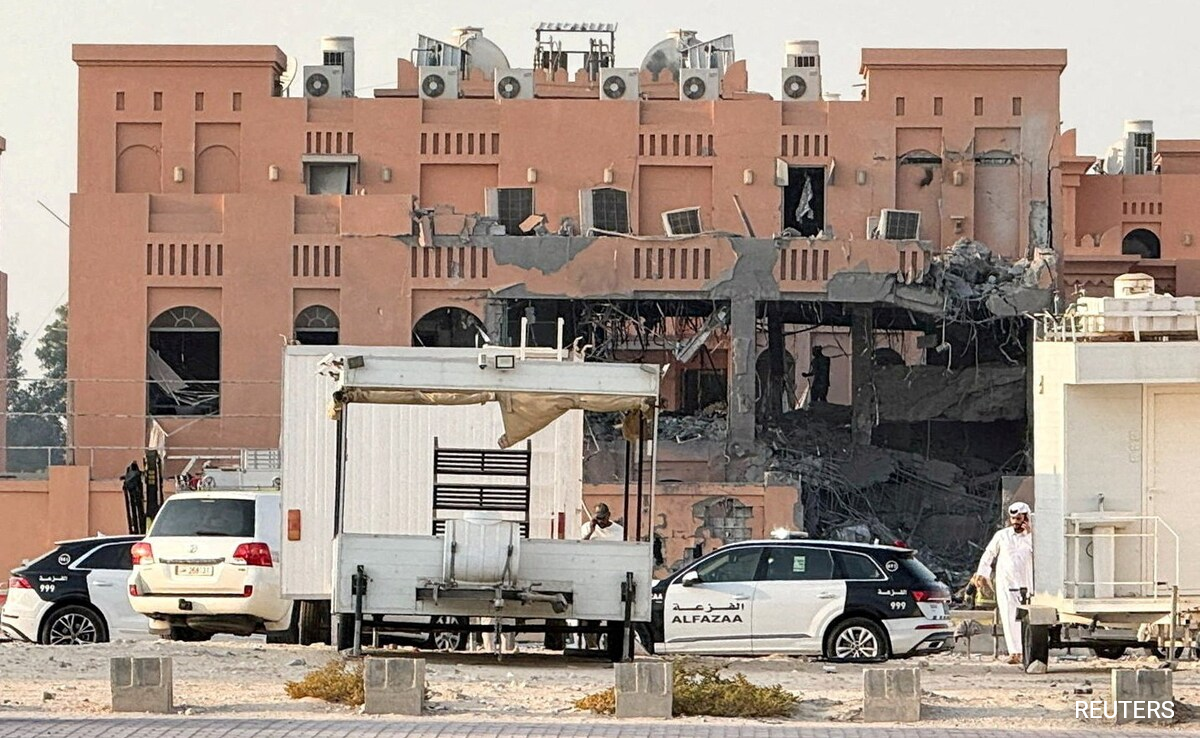
Israel conducted an airstrike on Doha Tuesday in an attempt to eliminate Hamas' political leadership
According to The Washington Post, citing officials, Israel's Mossad intelligence agency declined plans to assassinate Hamas officials in Qatar using ground operatives.
On Tuesday, Israel carried out airstrikes in Qatar, stating they were targeting senior Hamas leaders.
Notably, Mossad was absent from Israel's official statements regarding the operation. According to two Israeli sources familiar with the situation, the intelligence agency had recently rejected a plan for a ground-based assassination operation.
The Washington Post reported that Mossad director David Barnea opposed the operation "partly because such an action could damage the relationship he and his agency had developed with the Qataris." Sources noted that Qatar has hosted Hamas and served as a mediator in ceasefire negotiations.
Hamas stated that the airstrike failed to kill high-ranking officials, including acting leader Khalil al-Hayya, but resulted in the deaths of several relatives and aides, as well as a Qatari officer.
Analysts believe Israeli Prime Minister Benjamin Netanyahu may have grown impatient with ongoing ceasefire talks.
IDF Chief Lt Gen Eyal Zamir also expressed opposition to the timing of the strike, while Strategic Affairs Minister Ron Dermer and Defence Minister Israel Katz supported Netanyahu's decision. Senior IDF officer Nitzan Alon, who oversees hostage negotiations, was deliberately excluded from a planning meeting to avoid potential opposition.
The Mossad's concerns influenced both the timing and execution of the strike. "We can get them in one, two, or four years from now, and the Mossad knows how to do it," one Israeli source stated. "Why do it now?"
Qatar condemned the strike as "state terrorism" and a violation of the mediation process.
Israel defended the operation, citing a rare opportunity when Hamas leaders were gathered in one location, and as a response to a recent Hamas attack in Jerusalem that killed four soldiers in Gaza.
Netanyahu justified Israel's actions by drawing parallels to the US response to the September 11 Al Qaeda terrorist attacks. "I say to Qatar and all nations that harbour terrorists, you either expel them or you bring them to justice. Because if you don't, we will," he declared.
He referred to Hamas' October 7 attack on Israel as Israel's "9/11 moment" and accused Doha of providing terrorists with a safe haven.
US President Donald Trump expressed that he was "very unhappy about every aspect" of the operation.