
US, Israeli Attacks Inflicted 'Grievous Blow' On Global Trust: Iran At UN
- Date & Time:
- |
- Views: 68
- |
- From: India News Bull
Iranian President Masoud Pezeshkian addressed the UN General Assembly on Wednesday, condemning Israeli and US attacks from June as delivering "a grievous blow upon international trust and the very prospect of peace in the region."
This marks Pezeshkian's first appearance at a global forum since the 12-day Israel-Iran conflict earlier this summer, during which several high-ranking Iranian military and political leaders were assassinated.
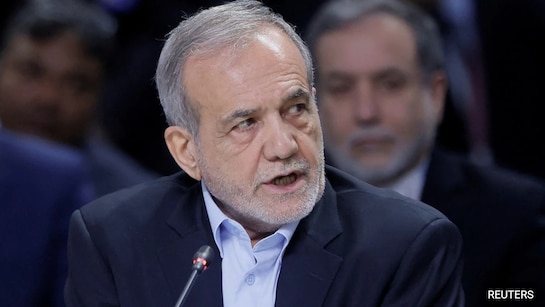
Pezeshkian's visit to New York comes as Tehran faces imminent UN sanctions unless an agreement with European leaders is reached by Saturday. However, diplomatic efforts by Pezeshkian and Foreign Minister Abbas Araghchi were undermined before their arrival when Supreme Leader Ali Khamenei explicitly rejected direct nuclear negotiations with the United States.
During his address, Pezeshkian reiterated Iran's position on nuclear weapons, stating: "I hereby declare once before this assembly that Iran has never and will never seek to build a nuclear bomb."
The Iranian president criticized Britain, Germany, and France (the E3) for triggering the "snapback" mechanism that would reinstate sanctions due to Iran's non-compliance with the 2015 nuclear agreement designed to prevent Tehran from developing nuclear weapons.
He accused these nations of operating in "bad faith" for years, claiming they "falsely presented themselves as parties of good standing to the agreement and they disparaged Iran's sincere efforts as insufficient," particularly after the US abandoned the deal in 2018.
Meanwhile, Iran's economic challenges intensified as its currency, the rial, plummeted to a record low of 1,074,000 to the US dollar just prior to Pezeshkian's UN address.
The currency's decline follows Khamenei's rejection of direct US talks, which significantly constrains the diplomatic options available to Pezeshkian and Araghchi in New York. This development suggests that last-minute negotiations between Iran and European nations are unlikely to prevent the reimposition of UN sanctions over Iran's nuclear program, with the 30-day window closing on Sunday.
The "snapback" mechanism was specifically designed to be veto-proof at the UN, initiating a 30-day period for sanctions resumption unless a diplomatic agreement is reached between Western powers and Iran.
European nations have expressed willingness to extend the deadline if Iran agrees to resume direct negotiations with the US, permits UN nuclear inspectors access to its facilities, and accounts for over 400 kilograms (880 pounds) of highly enriched uranium identified by the UN watchdog. Iran remains the only country enriching uranium to 60% without a declared weapons program, placing it just a technical step away from weapons-grade material.
Without a diplomatic breakthrough this week, sanctions will automatically "snapback" on Sunday, freezing Iranian assets abroad, halting arms deals, and penalizing Iran's ballistic missile program development, further straining the country's struggling economy.
Earlier this month, the UN nuclear watchdog and Iran signed an Egypt-mediated agreement to resume cooperation, including restarting inspections of Iran's nuclear facilities, though this agreement has yet to be fully implemented.
In July, Pezeshkian signed legislation suspending all cooperation with the International Atomic Energy Agency (IAEA) following Israel's 12-day war with Iran in June, during which Israeli and US forces bombed Iranian nuclear sites.
Iran has consistently maintained that its nuclear program is peaceful, despite assessments by Western nations and the Vienna-based IAEA indicating Tehran had an active nuclear weapons program until 2003. Khamenei reaffirmed on Tuesday that Iran does not seek atomic weapons, stating: "We do not have a nuclear bomb and we will not have one, and we do not plan to use nuclear weapon."
However, he also added a pointed remark: "Science will not be demolished by threats and bombing."