
Laid Off By DOGE, Trump Administration Calls Federal Employees Back To Work
- Date & Time:
- |
- Views: 73
- |
- From: India News Bull
Laid Off By DOGE, Trump Administration Calls Federal Employees Back To Work
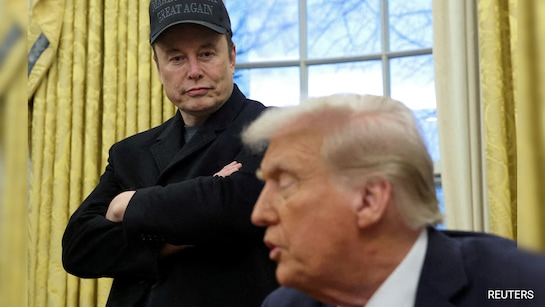
Tesla CEO Elon Musk and US President Donald Trump (File)
Hundreds of federal workers who were dismissed during Elon Musk's aggressive cost-reduction initiative are now being invited to resume their positions.
According to an internal memo acquired by The Associated Press, the General Services Administration has given these employees—who oversaw government workspaces—until the end of the week to accept or decline reinstatement offers.
Those who accept must return to work on October 6 following what effectively amounts to a seven-month paid absence, during which the GSA in several instances incurred significant taxpayer-funded expenses by maintaining dozens of properties that had been designated for lease termination or allowed to expire.
"The end result was a broken and understaffed agency," said Chad Becker, a former GSA real estate official. "They lacked the necessary personnel to perform essential functions."
Becker, who represents property owners with government leases at Arco Real Estate Solutions, indicated the GSA has been operating in "triage mode" for months. He noted that this sudden reversal of downsizing demonstrates how Musk and his Department of Government Efficiency had implemented changes that were too extensive and rapid.
GSA was established during the 1940s to centralize the acquisition and management of thousands of federal workspaces. Its return-to-work initiative mirrors rehiring efforts across several agencies targeted by DOGE. Last month, the IRS announced it would permit certain employees who had accepted resignation offers to continue their employment. The Labor Department has similarly reinstated some employees who took buyouts, while the National Park Service previously brought back numerous dismissed workers.
Central to these agencies' operations is the GSA, which administers many of their buildings. Beginning in March, thousands of GSA employees departed the agency through programs encouraging resignation or early retirement. Hundreds more—those subject to the recall notice—were terminated as part of an aggressive campaign to reduce federal workforce size. Though these employees stopped reporting to work, some continued receiving paychecks.
GSA representatives declined to address detailed inquiries regarding the return-to-work notice issued Friday. They also refused to discuss the agency's current headcount, staffing decisions, or potential cost overruns resulting from reversing plans to terminate leases.
"GSA's leadership team has evaluated workforce actions and is implementing adjustments that best serve our customer agencies and American taxpayers," an agency spokesperson stated via email.
Democrats have criticized the Trump administration's indiscriminate approach to cutting costs and jobs. Rep. Greg Stanton of Arizona, ranking Democrat on the subcommittee overseeing GSA, told AP there is no evidence that reductions at the agency "delivered any savings."
"It's generated costly confusion while undermining the very services taxpayers rely upon," he said.
DOGE identified the agency, which employed approximately 12,000 people at the beginning of the Trump administration, as a primary target in its campaign to eliminate fraud, waste, and abuse in federal government.
A small group of Musk's trusted advisers embedded themselves in GSA headquarters, occasionally sleeping on cots on the agency's sixth floor, pursuing plans to abruptly cancel nearly half of the 7,500 leases in the federal portfolio. DOGE also sought to have GSA sell hundreds of federally owned buildings with the objective of generating billions in savings.
GSA began by issuing more than 800 lease cancellation notices to landlords, often without informing government tenants. The agency also published a list of hundreds of government buildings targeted for sale.
Resistance to GSA's portfolio reduction was immediate, and both initiatives have since been scaled back. More than 480 leases originally scheduled for termination by DOGE have been preserved. These leases covered offices nationwide occupied by agencies such as the IRS, Social Security Administration, and Food and Drug Administration.
DOGE's "Wall of Receipts," which initially claimed the lease cancellations alone would save nearly $460 million, has since reduced that estimate to $140 million through July, according to Becker, the former GSA real estate official.
Meanwhile, GSA implemented extensive job reductions. The administration cut GSA's headquarters staff by 79%, its portfolio managers by 65%, and facilities managers by 35%, according to a federal official briefed on the matter. The official, unauthorized to speak with media, provided these statistics on condition of anonymity.
As a consequence of the internal disruption, 131 leases expired without government agencies actually vacating the properties, the official stated. This situation has exposed agencies to substantial penalties because property owners have been unable to lease these spaces to other tenants.
The public may soon receive a clearer understanding of events at the agency.
The Government Accountability Office, an independent congressional watchdog, is investigating GSA's workforce management, lease terminations, and planned building disposals, and expects to publish findings in coming months, according to David Marroni, a senior GAO official.