
Charlie Kirk Misquoted After Assassination. Here's What He Actually Said
- Date & Time:
- |
- Views: 100
- |
- From: India News Bull
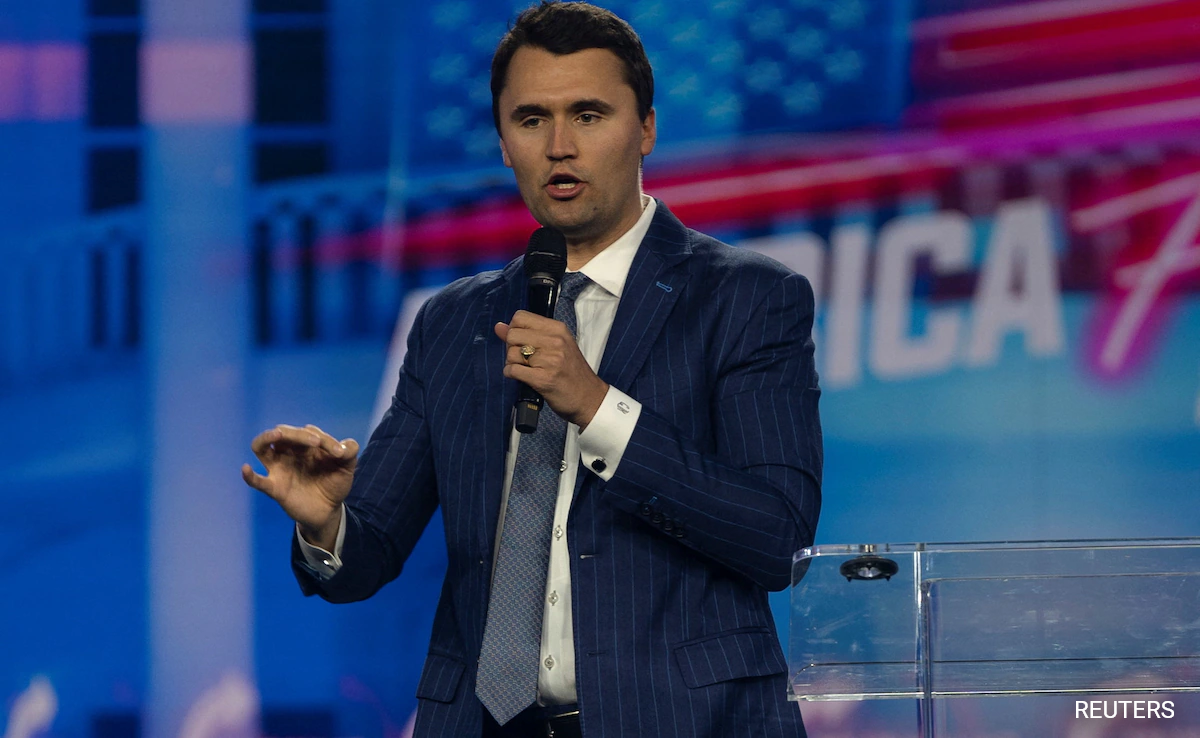
Right-wing commentator and activist Charlie Kirk was fatally shot at Utah University, triggering widespread misrepresentations of his statements on social media platforms.
In the aftermath of Charlie Kirk's assassination in Orem, Utah nearly two weeks ago, numerous social media posts have distorted his views and statements, presenting misleading interpretations of his actual comments.
Several claims circulating online suggested Kirk made derogatory comments about LGBTQ communities and Black women, while others accused him of advocating violence. An examination of his actual statements reveals these interpretations significantly misrepresent his words.
Regarding alleged comments about Black women, some posts claimed Kirk stated, "Black women do not have the brain processing power to be taken seriously." This mischaracterization suggests he insulted Black women as a demographic.
In reality, Kirk's July 14, 2023 show comments specifically addressed four individuals - Michelle Obama, Supreme Court Justice Ketanji Brown Jackson, commentator Joy Reid, and the late Congresswoman Sheila Jackson Lee - within a discussion about DEI (Diversity, Equity, and Inclusion) programs.
His actual statement was: "If we had said [those women] were affirmative action picks, we would have been called racists. Now ... They're coming out and saying 'I'm only here because of affirmative action.' We know. You do not have the brain processing power to be taken really seriously."
Congresswoman Alexandria Ocasio-Cortez criticized Kirk for supposedly believing the Civil Rights Act granting Black Americans voting rights was a mistake. This criticism confused the 1964 Civil Rights Act with the 1965 Voting Rights Act.
Kirk's comments at a December 2023 Turning Point USA event focused on how these laws have been interpreted in contemporary discussions around DEI policies, rather than opposing civil rights or voting rights.
Author Stephen King initially shared claims that Kirk advocated "stoning gays," suggesting he promoted violence against LGBTQ individuals. King later deleted this post and apologized after recognizing he had misunderstood Kirk's statement.
Kirk had actually responded to a YouTuber's selective use of biblical passages during Pride Month by referencing Leviticus 18 from the Bible: "By the way, Ms Rachel, you might want to crack open that Bible of yours. In a lesser reference, part of the same part of scripture, in Leviticus 18, is that 'thou shalt lie with another man, and thou shalt be stoned to death.' Just saying."
When speaking with a gay college student in Wisconsin, Kirk stated, "I don't think you should introduce yourself just based on your sexuality because that's not who you are."
Kirk faced criticism for allegedly doubting Black pilots' abilities when he said, "If I see a Black pilot, I'm going to be like 'I hope he's qualified.'" This comment was made during a discussion about DEI hiring programs for airline pilots, not as a general statement questioning Black pilots' capabilities.
Claims that Kirk said women should not vote are false. He actually expressed his belief that women should prioritize family and childbearing in their younger years before pursuing careers, stating: "Having children is more important than having a good career. And I would also tell young ladies, you can always go back to your career later, that there is a window where you should primarily pursue marriage and having children and that is a beautiful thing."
Former Washington Post columnist Karen Attiah described Kirk as "a white man that espoused violence" after his death. However, Kirk never advocated violence.
During a 2023 event, he drew an analogy about societal trade-offs: "Driving comes with a price - 50,000 people die on the road every year. But we have decided that the benefit of driving - speed, accessibility, mobility, having products, services - is worth the cost of 50,000 people dying on the road."
Kirk acknowledged that in a society permitting gun ownership, completely eliminating firearms-related deaths is impossible, but this was not an endorsement of violence.