
"No Longer Seeking Differential Rights": China Ends Special WTO Benefits, Easing US Tensions
- Date & Time:
- |
- Views: 61
- |
- From: India News Bull
China has announced it will cease claiming benefits allocated to developing nations at the World Trade Organization, addressing a longstanding point of contention with the United States that has hindered progress on reforming global trade governance.
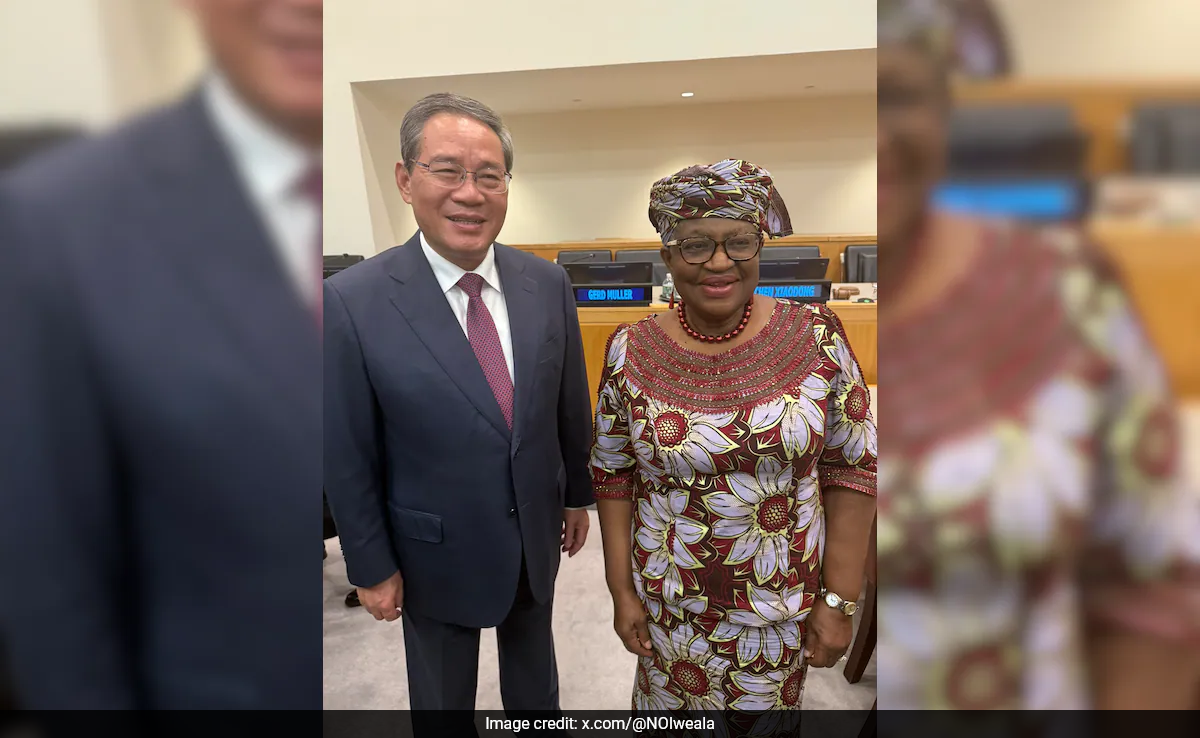
Chinese Premier Li Qiang and WTO Director General Ngozi Okonjo-Iweala
During his visit to New York for the United Nations General Assembly, Premier Li Qiang declared that China would discontinue seeking "special and differential" rights in current and future WTO negotiations, according to state media Xinhua News Agency and a statement from the WTO's Director General.
WTO Director General Ngozi Okonjo-Iweala welcomed China's decision on social media platform X, describing it as "a culmination of many years of hard work" and expressing gratitude to Chinese leadership for this significant step.
This diplomatic gesture comes at a crucial time when increased US tariffs are forcing China to redirect its exports toward emerging economies across Latin America, Africa, and Southeast Asia—a shift that has begun to encounter resistance worldwide.
The move likely represents an effort to improve relations with President Donald Trump's administration as Beijing seeks a more stable trade arrangement with the United States. Trump has previously criticized China's developing nation status as inappropriate for the world's second-largest economy.
China's status has been a major obstacle to negotiations on WTO reform. Earlier this year, trade officials from Asia-Pacific nations, including both China and the US, acknowledged the need for "meaningful, necessary, and comprehensive reform" of the organization.
Developing nation status at the WTO is self-designated and provides various advantages, including extended timeframes for implementing agreements. China has consistently identified itself as the world's largest developing country, using this position to assert leadership among emerging economies.
Despite China's remarkable economic transformation over four decades into the world's leading trading and manufacturing power, the UN still classifies it as developing. China ranks outside the top 50 countries by GDP per capita, according to IMF data, positioned below Serbia and slightly ahead of Montenegro and Turkmenistan.
Han Yong, a Chinese Ministry of Commerce official responsible for WTO relations, clarified on Wednesday that while China will no longer claim special treatment benefits, its fundamental status as a developing nation remains unchanged.
Wendy Cutler, senior vice president at the Asia Society Policy Institute and former US trade negotiator, commented that this announcement is "years too late" and will have "little practical effect" given the current slow pace of WTO reform efforts. Nevertheless, she noted it would help Beijing demonstrate commitment to multilateral trading while contrasting with Washington's reluctance to pay its dues to the organization.
Developing countries at the WTO traditionally receive several benefits: extended timeframes for implementing commitments, measures to increase their trading opportunities, requirements for other members to safeguard their interests, and capacity-building support for WTO-related activities.
China has positioned this decision as an extension of its role as a champion for developing nations. The Commerce Ministry characterized the move as "an important measure to safeguard and strengthen the multilateral trading system" that highlights "China's role as a major developing country."
The Ministry also framed it as "an important action to implement the Global Development Initiative and the Global Governance Initiative"—two recent Chinese proposals for reforming international relations. Premier Li made the announcement during an event focused on the Global Development Initiative.
The United States has consistently opposed China's developing country classification. In 2019, Trump stated that "the United States has never accepted China's claim to developing-country status, and virtually every current economic indicator belies China's claim."
China's status extends beyond trade implications, affecting climate negotiations as well. Developed nations are expected to contribute to a $100 billion annual fund supporting emerging countries' climate initiatives. Although China is now the world's largest carbon emitter, its developing status exempts it from contributing—a position criticized by both European nations and the United States.
Despite this concession from Beijing, numerous tensions between China and the US on trade and other issues are likely to persist. Chinese exports continue to grow strongly, increasing by nearly 6% in the first eight months of this year to reach record levels for that period.
In a statement made just hours after the WTO announcement, China's chief trade representative, Li Chenggang, criticized US policies, warning that "hegemony, unilateralism, and protectionism are rampant." He added that "a certain country has launched a trade war and then a tariff war, severely damaging the legitimate interests of WTO members and severely disrupting the global trade order, and bringing uncertainties and instability to the global economy."